


An Urban Stargazer's Guide
You don’t need to escape the city to enjoy the night sky. While light pollution can be a challenge, a few simple tricks can dramatically improve your view. Start by finding the darkest spot you can access, like a park, a rooftop, or even a balcony with
the lights turned off. Use buildings or trees to block direct glare from streetlights. The most important tip is to give your eyes time to adjust. It takes about 20 to 30 minutes for your vision to fully adapt to the dark, allowing you to see much fainter stars. Avoid looking at your bright phone screen during this time. For a better view of objects like the Moon's craters or the moons of Jupiter, a simple pair of binoculars can work wonders.
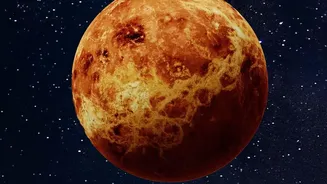
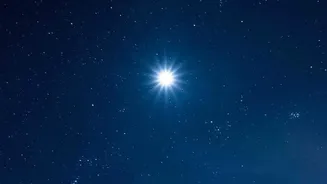
Venus: The Dazzling Evening Star
Throughout September, the planet Venus will be an unmissable, brilliant beacon in the western sky shortly after sunset. It will reach its peak brightness for the year around September 18-22, shining more brightly than any other star or planet. This peak luminosity happens as Venus gets closer to Earth in its orbit, and even though we see it as a crescent through a telescope, its increased size makes it appear exceptionally bright. For a particularly beautiful sight, look to the west just after sunset on September 14, when a slender crescent Moon will pass very close to Venus, creating a stunning celestial pairing. Even from a bright city, its radiance is easy to spot.
Antares: The Fiery Heart of Scorpius
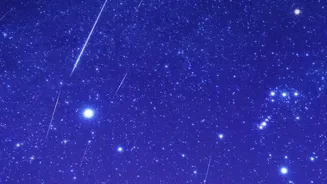
Look towards the south after sunset and you may spot a distinctly reddish star. This is Antares, a red supergiant and the brightest star in the constellation Scorpius, the Scorpion. Its name is ancient Greek for "rival of Ares" (the Greek god of war, known to the Romans as Mars), a nod to its fiery, Mars-like colour. Throughout the month, Antares will be a prominent fixture in the evening sky. The Moon offers a helpful guidepost; on the evenings of September 16 and 17, the waxing crescent moon will pass near Antares, making the star easy to identify. This star is immense—if placed at the center of our solar system, its outer edge would extend beyond the orbit of Mars.
The Luminous Harvest Moon
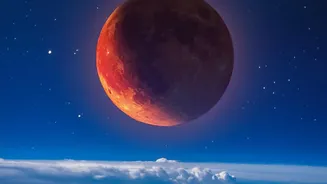
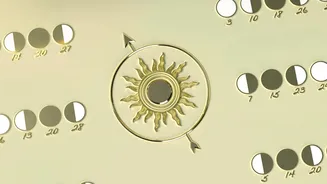
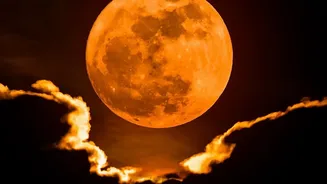
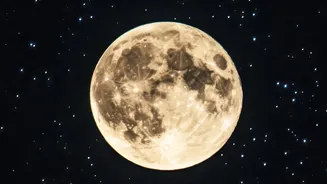
The grand finale of September's sky show is the full Harvest Moon on Saturday, September 26. In India, the Moon will reach its peak illumination at 10:19 pm IST, making it perfectly placed for viewing during the night. This full Moon is named the 'Harvest Moon' because it is the one closest to the autumnal equinox (which falls on September 22). In the days before electric lights, the bright moonlight for several evenings in a row around sunset gave farmers extra time to bring in their crops. This effect happens because the Moon's path across the sky in early autumn makes it rise only about 30 minutes later each night, instead of the usual 50. As it rises, look for a beautiful orange or reddish hue, a result of its light filtering through more of Earth's atmosphere. You might also spot the planet Saturn shining like a bright star nearby.