


The Ultimate Insurance Policy
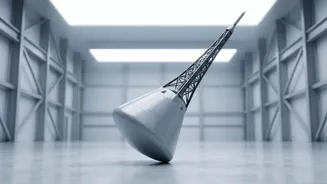
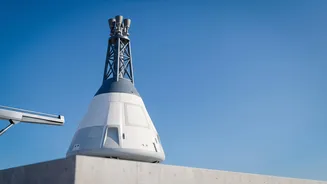
At the heart of India's ambitious Gaganyaan human spaceflight programme is a single, non-negotiable priority: astronaut safety. To ensure this, the Indian Space Research Organisation (ISRO) has developed a remarkable piece of technology called the Crew
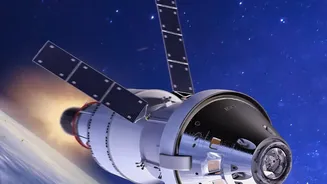
Escape System (CES). Think of it as the most advanced ejection seat in the world, but instead of ejecting just the pilot, it's designed to pull the entire crew capsule—with the astronauts inside—away from a failing rocket in milliseconds. This system is the ultimate life-saving measure, designed to function flawlessly during the most perilous phases of any space mission: lift-off and ascent.
Covering Every Contingency
A rocket launch can go wrong in two critical windows. The first is on the launchpad itself, before or during ignition, an event known as a 'Pad Abort'. The second is during the high-stress ascent through the atmosphere, where the rocket faces maximum aerodynamic pressure, known as an 'In-Flight Abort'. ISRO's CES is engineered to handle both scenarios. Whether it's a catastrophic fire on the pad or a vehicle veering dangerously off-course mid-flight, the system's job is to get the crew clear of the danger zone instantly.
Escaping a Ground-Level Crisis
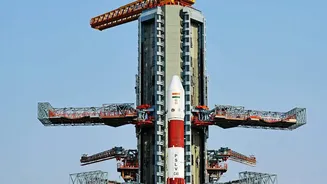
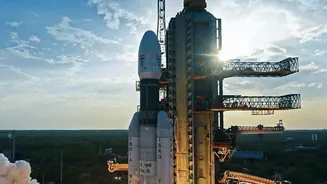
ISRO rigorously tested the first scenario with its Pad Abort Test (PAT) on July 5, 2018. In this test, a simulated crew module, weighing over 12 tonnes, was blasted away from the launch pad at Satish Dhawan Space Centre. A cluster of specially designed, quick-acting solid motors fired, generating immense thrust to pull the capsule upwards and away. The module reached an altitude of 2.7 km before its parachutes deployed for a safe splashdown in the Bay of Bengal just 259 seconds later. The test was a resounding success, proving the system could effectively rescue astronauts from a launchpad emergency.
Mastering a Mid-Air Abort
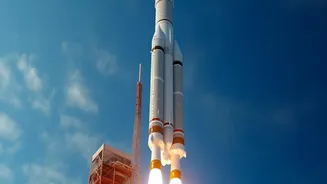
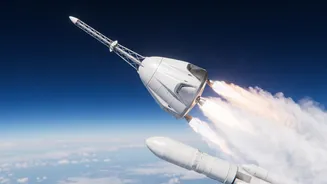
An in-flight abort is even more complex, requiring the system to function at high speeds and altitudes. ISRO demonstrated this capability with the Test Vehicle Abort Mission-1 (TV-D1) on October 21, 2023. A test vehicle launched the crew module, and at an altitude of about 17 km, an abort was deliberately triggered. The CES motors fired with incredible force, separating the crew module from the rocket and pulling it to safety. The module then jettisoned the escape system and deployed its own set of parachutes to slow its descent from hypersonic speeds to a gentle splashdown. This successful test proved the system works under the immense stress of high-speed atmospheric flight.
A System Built on Speed and Intelligence
The entire escape operation is governed by the rocket's Integrated Vehicle Health Management (IVHM) system. This is the autonomous 'brain' that continuously monitors thousands of parameters, from engine pressure to trajectory. The moment it detects a critical anomaly that could endanger the crew, it automatically triggers the Crew Escape System without any human intervention. This decision happens in milliseconds, far faster than any astronaut could react. The CES motors, which use high burn-rate propellants, then generate an acceleration far greater than the main rocket, ensuring a rapid and safe separation. This combination of intelligent monitoring and raw power is what makes the system so advanced.