








A Major Vote of Confidence
The 'bet' comes in the form of a major contract vehicle. Relativity Space was selected for NASA's Venture-Class Acquisition of Dedicated and Rideshare (VADR) program. This isn't a contract for a single, specific Mars mission just yet. Instead, it's a far
more strategic move. The VADR contract is a master agreement with a potential value of up to $300 million, making Relativity eligible to compete for NASA contracts to launch small satellites and science missions into Earth orbit. For a company with a new, unproven rocket, this is a monumental seal of approval. It signals that NASA's engineers have vetted Relativity's technology and believe the Terran R is a viable platform for the agency’s future needs, providing a crucial on-ramp for the rocket to gain flight heritage and prove its reliability.
The 3D-Printing Rocket Factory
So, who is Relativity Space? Founded in 2015 by former engineers from SpaceX and Blue Origin, the company's entire philosophy is built on a radical idea: what if you could 3D print an entire rocket? Their core innovation is a fleet of massive metal 3D printers, dubbed 'Stargate,' which fuse metal wire layer by layer to construct rocket fuselages, tanks, and engines. The goal is to drastically reduce complexity. A traditional rocket has over 100,000 parts; Relativity aims to get that number below 1,000. This approach promises to slash production times from years to just a couple of months, creating a more agile and cost-effective manufacturing process. While their first rocket, the smaller Terran 1, failed to reach orbit on its single test flight in 2023, it successfully proved that a 3D-printed structure could withstand the extreme forces of launch, providing invaluable data for its much larger successor.
Meet Terran R: Built for Reuse
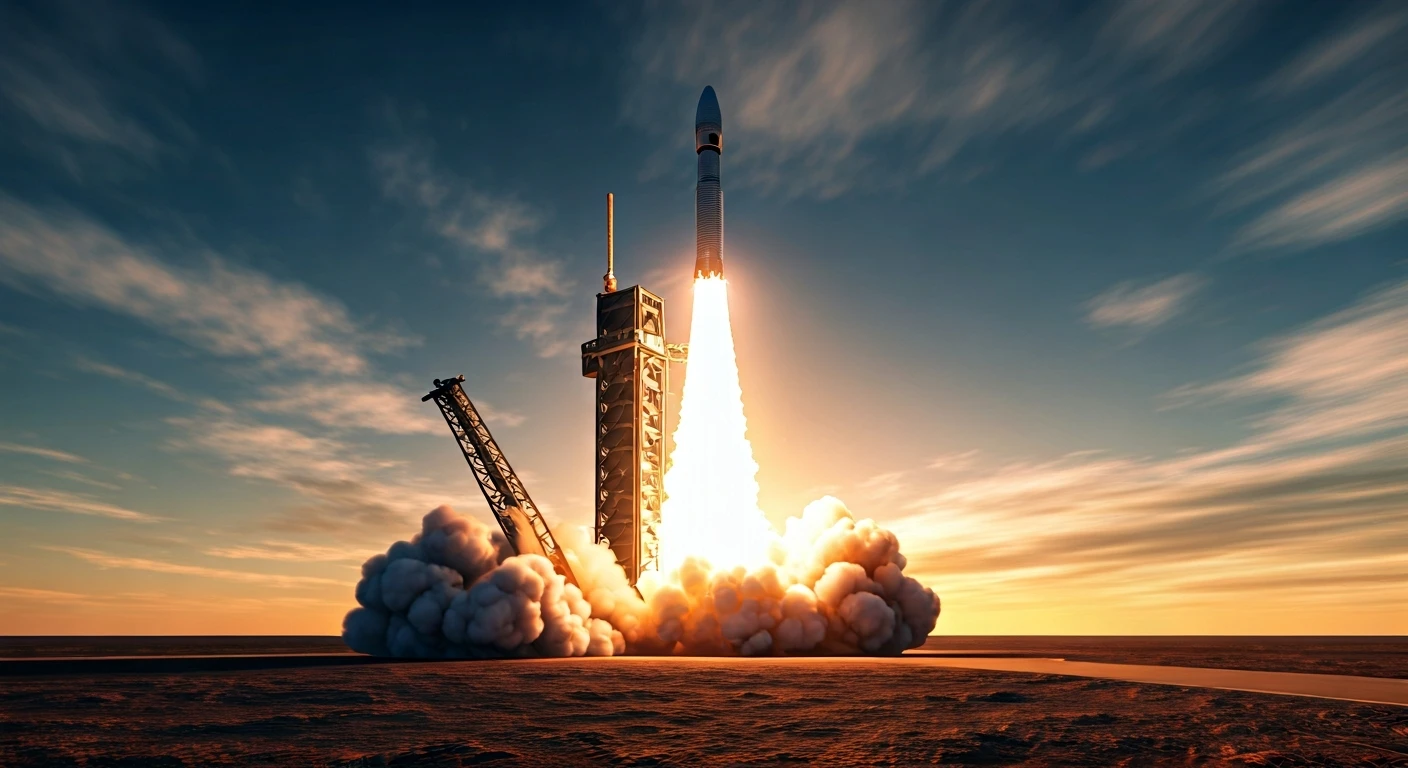
Terran R is the vehicle at the heart of NASA's bet. Unlike its predecessor, Terran R is designed from the ground up to be a fully reusable, two-stage, heavy-lift launch vehicle. Standing over 270 feet tall, it's designed to carry up to 23,500 kilograms to low Earth orbit—placing it in the same class as SpaceX's workhorse Falcon 9. Crucially, its first stage, interstage, and payload fairing are all intended to be reusable. This is the key to dramatically lowering the cost of access to space. By recovering and relaunching the most expensive components of the rocket, Relativity aims to compete directly with SpaceX on price and capability. The entire structure, including its Aeon R engines, is being manufactured using Relativity's advanced 3D-printing technology, making it the first fully reusable, 3D-printed rocket in the world.
The Pathway to the Red Planet
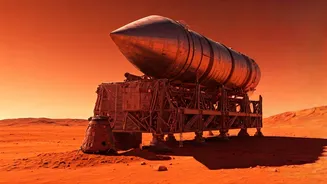
This is where the 'Mars bet' framing comes into focus. While the initial VADR contracts will be for Earth-orbiting satellites, the Terran R’s capabilities are explicitly aimed at deep space. A rocket powerful enough to lift over 20 tonnes to orbit is a prerequisite for any serious Mars campaign. Such missions require launching heavy components—habitats, landers, and transfer vehicles—that are assembled in space before beginning their journey to another planet. By awarding Relativity a spot on the VADR roster, NASA is effectively nurturing a second provider of heavy-lift, reusable launch services. This provides critical flight experience and revenue that Relativity can use to mature the Terran R system for the more demanding missions that lie ahead. It's a long-term investment in the industrial base required to build a sustainable presence on the Moon and, eventually, Mars.
Shaking Up the Launch Market
For nearly a decade, SpaceX has held a near-monopoly on reusable rocketry, fundamentally changing the economics of the space industry. NASA's strategy is now clearly focused on fostering competition to ensure it has multiple, reliable options for getting its valuable assets into space. The VADR program includes not just Relativity but a dozen other companies, creating a vibrant marketplace for launch services. This diversification is vital for mission assurance; if one company's rocket is grounded, NASA has other providers ready to step in. By backing Terran R, NASA is betting that 3D-printing is a key enabling technology for the future. If Relativity succeeds, it won't just be launching satellites; it will be launching a new era of space manufacturing.