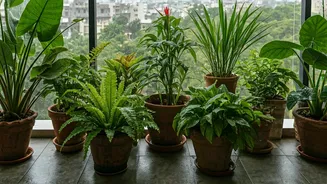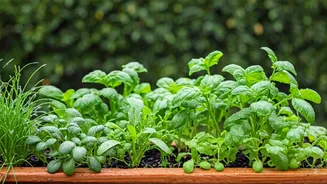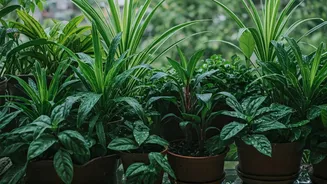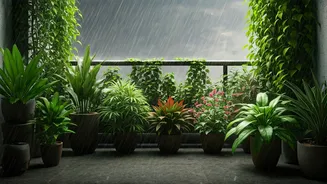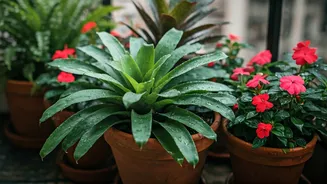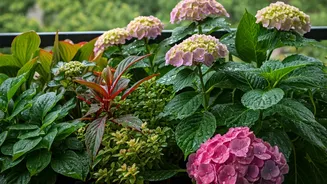





Choose Your Monsoon Champions
Not all plants enjoy the constant humidity and heavy downpours of the monsoon. The key to a colourful balcony is selecting species that thrive in these conditions. Hardy, rain-loving flowers are your best bet. Hibiscus, with its large, vibrant blooms,
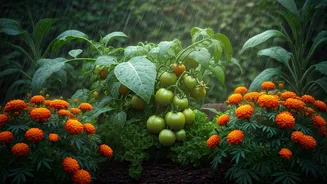
flourishes in moist climates. [8, 9] Bougainvillea is another resilient choice, known for its colourful bracts that can withstand heavy rain. [8, 9] For cheerful colour, consider Marigolds, which are easy to grow and also help repel pests. [9, 12] Jasmine, cherished for its intoxicating fragrance, also thrives in the humidity of the monsoon. [8] Other excellent choices that bloom profusely during this season include Petunia, Cosmos, and Impatiens. [9, 12]
The Foundation: Pots and Soil
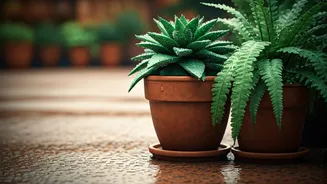
The single biggest threat to potted plants during the monsoon is waterlogging, which leads to root rot. [6] Your first line of defence is ensuring proper drainage. Every pot must have at least one, preferably multiple, drainage holes at the bottom. [15] It's also wise to elevate your pots using small bricks or plant stands to prevent them from sitting in puddles of water. [7, 15] Avoid using heavy garden soil alone, as it compacts and retains too much water. [23] Instead, opt for a light, well-draining potting mix. [7] A good combination includes garden soil, coco peat for structure, compost for nutrients, and perlite or coarse sand to improve aeration and drainage. [16, 22] This mix ensures that excess water flows out quickly, allowing the roots to breathe.
Rethink Your Watering Routine
During the rainy season, you need to shelve your regular watering schedule. With high humidity and frequent showers, plants often get more than enough moisture naturally. [6] Overwatering is a common mistake that can be fatal. [5] Before you even think about reaching for the watering can, check the soil. [20] A simple finger test works best: stick your finger about an inch or two into the soil. [6] If it feels moist, do not water. Let nature do its job. On days with no rain, water only if the soil feels dry to the touch.
Shelter, Support, and Sunlight
While some rain is welcome, constant, heavy downpours can physically damage delicate plants, breaking stems and flowers. [2] If possible, move more sensitive plants to a semi-covered part of your balcony during intense storms. [2] Taller plants or climbers will benefit from added support, like stakes or trellises, to help them withstand strong winds. [6] Sunlight can be scarce during overcast monsoon days. Rotate your pots occasionally to ensure all sides of the plants get some light. [2] Regularly pruning your plants by trimming off dead or yellowing leaves and spent flowers is also crucial. [7] This practice improves air circulation around the foliage, which helps prevent fungal diseases that thrive in damp conditions. [7]
Winning the War on Pests and Fungi
The damp, humid weather is an open invitation for pests like aphids, mealybugs, snails, and slugs, as well as fungal infections like powdery mildew. [10, 13] Regular inspection is key to catching any issues early. [6] Check the undersides of leaves for insects. [16] You can combat many of these problems with simple, organic solutions. A spray made from neem oil, liquid soap, and water is a highly effective natural pesticide and fungicide. [3, 13] For slugs and snails, which love the moist conditions, a barrier of crushed eggshells around the base of your plants can deter them. [3] Keeping the balcony clean and free of fallen leaves and debris will also eliminate potential hiding spots for pests. [19]