





The Problem with Moon Dust
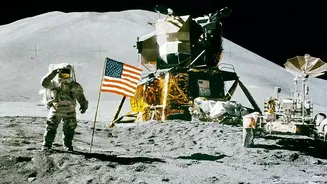
The Moon is covered in a layer of fine, abrasive dust and sharp rock fragments called regolith. Formed over billions of years by micrometeorite impacts, this material is nothing like the soft soil on Earth. During the Apollo missions, this ultra-fine
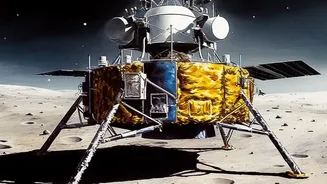
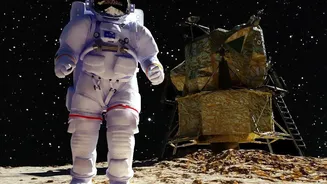
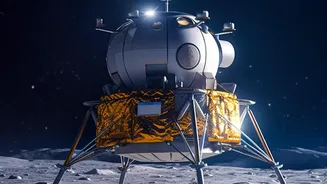
dust proved to be a major nuisance. It clogged equipment, eroded the outer layers of spacesuits, and was kicked up in massive, destructive plumes by landing modules. When Apollo 12 landed near the Surveyor 3 probe, the dust blasted from its engine sandblasted the older craft. For a future lunar base with regular traffic, controlling this dust isn't just a matter of cleanliness—it's critical for the survival of equipment and astronauts.
The Prohibitive Cost of Paving from Earth
The obvious solution to dust is to pave over it, creating stable roads, landing pads, and work areas. But hauling construction materials like asphalt or concrete from Earth is not a viable option. Launching anything into space is incredibly expensive; the cost to transport just one kilogram of material to the lunar surface can be astronomical. Building the necessary infrastructure for NASA's planned Artemis Base Camp would require thousands of tons of material, making the cost prohibitive. This reality has forced space agencies and private companies to embrace a concept called 'in-situ resource utilization' (ISRU), which basically means living off the land and using local materials, like regolith, for construction.
Melting Dust into Roads
The leading idea for lunar construction is a process called sintering. This involves heating the regolith to just below its melting point until the sharp, glassy particles fuse together, forming a solid, ceramic-like material. The European Space Agency's PAVER project has demonstrated this is feasible. Researchers used a powerful laser to melt simulated moondust, creating small, interlocking triangular tiles that could be pieced together to form a larger paved surface. On the Moon, instead of shipping a giant laser, astronauts could use a large Fresnel lens—essentially a powerful magnifying glass several meters wide—to concentrate sunlight and achieve the same effect. This method turns the hazardous dust into a stable, glass-like road surface using the Moon's most abundant resources: soil and sunlight.
Bricks, Binders, and 3D Printing
Sintering isn't the only game in town. Other researchers are exploring different ways to turn regolith into usable building blocks. One method involves mixing the lunar soil with a binder, like a biopolymer, to create a kind of lunar asphalt that can be laid down to form a road surface. Another approach is to compress regolith into bricks and then bake them using microwaves, which can be more energy-efficient than lasers. Several companies are also developing advanced 3D printing technologies. These robotic systems would first process the raw regolith to ensure a consistent particle size before using a laser to melt and deposit it layer by layer, building up structures like walls, radiation shields, and landing pads from the ground up.
Challenges on the Lunar Frontier
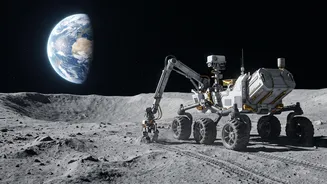
While these technologies are promising, building on the Moon presents immense challenges. The extreme temperature swings, from scorching hot in the sun to cryogenic cold in the shadows, can cause materials to crack. The vacuum of space also changes how materials behave and requires equipment designed to operate without an atmosphere. Furthermore, any construction will need to be done by highly autonomous robots that can perform complex tasks like excavating, processing, and printing with minimal human oversight from Earth. Despite these hurdles, the progress in turning lunar soil into a construction resource is a critical step toward establishing a sustainable human foothold beyond our home planet.