
Not a Malfunction, But By Design
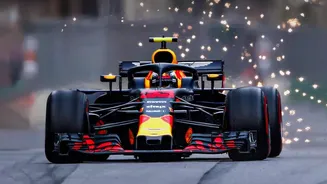
The first thing to know is that the sparks are intentional. Far from being a symptom of a car breaking apart, they are a visual confirmation that the car is performing exactly as its engineers designed it to. The phenomenon is a result of basic physics,
strict safety regulations, and a conscious decision to enhance the visual spectacle of the sport. The sparks tell you that the car is running at its optimal, super-low ride height, pushing the boundaries of aerodynamic performance right to the very edge.
The Plank and Skid Blocks
The story of the sparks begins underneath the car, with a component called the 'plank' or 'skid block'. Introduced as a key safety measure in 1994 following the tragic death of Ayrton Senna, the plank is a long slab of a wood-composite material that runs along the centre of the car's floor. Its purpose is to enforce a minimum ride height, preventing teams from running their cars dangerously low to the ground in pursuit of aerodynamic grip, known as 'ground effect'. To protect this plank from wearing away, teams embed small blocks of a much harder material into it. These are the skid blocks, and since 2015, regulations have mandated that they be made of titanium. Titanium is extremely durable, but when it scrapes against an abrasive surface like asphalt at high speed, the friction generates intense heat, shearing off tiny particles that ignite in the air, creating the brilliant sparks we see.
Aerodynamics and 'Bottoming Out'
Formula 1 cars are designed to be aerodynamic marvels. The airflow over and under the car generates immense 'downforce', which is like reverse lift, sucking the car onto the track. This allows drivers to take corners at incredible speeds. The closer the car is to the ground, the more powerful this effect becomes. As a car's speed increases, especially on long straights, the downforce becomes so powerful that it physically compresses the car's suspension and pushes it closer to the track. When the car goes over a bump or a kerb, or simply under the immense load of high-speed compression, its underside makes contact with the ground. This is called 'bottoming out'. It is during these moments that the titanium skid blocks scrape against the tarmac, lighting up the track.
A Return to Spectacle
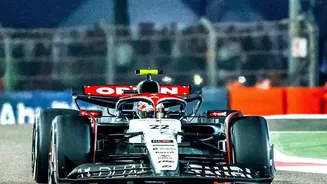
Sparks were a common sight in the 1980s and early 90s, before the plank was introduced, as teams experimented with aggressive low ride heights. After the 1994 rule changes, sparks became less frequent. However, in 2015, the sport's governing body, the FIA, made a deliberate choice to bring them back. By mandating the use of titanium for the skid blocks, which is known to produce more spectacular sparks than other hard metals, the FIA aimed to increase the visual drama of F1, especially for the growing number of night races in places like Singapore and Bahrain. It was a rare instance of a technical regulation being written with the express purpose of improving the show for the fans.
Safe for Cars, but Strict on Rules
The sparks themselves are completely harmless to the car and driver. The titanium blocks are designed to wear away, acting as a sacrificial part to protect the more critical wooden plank. While drivers have noted the sparks can be distracting, they pose no real danger. The real risk for teams is not the sparks, but what they represent: plank wear. The regulations are incredibly strict. The plank starts at a thickness of 10mm, and it is not allowed to wear down by more than 1mm. After each race, officials measure the plank at specific points. If it's thinner than the mandated 9mm, the car is disqualified. This famously happened to Lewis Hamilton and Charles Leclerc at the 2023 United States Grand Prix. So while the sparks are safe, they are a constant, fiery reminder of the fine line teams must walk between performance and legality.