








A Monumental Leap in Connectivity
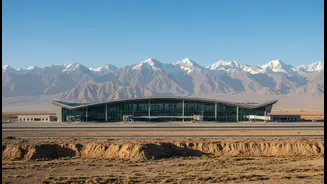
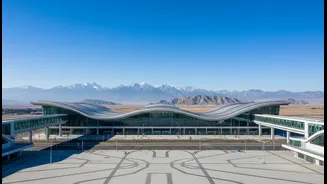
The new integrated terminal building at Leh's Kushok Bakula Rimpochee Airport has officially reached 83% physical completion, according to a recent announcement from Civil Aviation Minister Ram Mohan Naidu. This development is a critical part of the central
government's push to modernise aviation infrastructure across the country, with a special focus on strategically valuable and tourist-heavy regions. Once operational, the new terminal will be a game-changer for the high-altitude desert region. It is designed to handle up to 54 flights per day, a threefold increase from the airport's current capacity. This massive expansion will drastically enhance air connectivity to Ladakh, a region that remains cut off by road for several months during the harsh winter.
Designed for Growth and a Harsh Climate
The project, with costs estimated between ₹480 and ₹640 crore, is engineered to handle a significant increase in passenger traffic, with a projected capacity of 3.5 million passengers annually. This is a huge jump from the approximately 1.2 million passengers handled in the 2024-25 period. The three-level structure is packed with modern amenities, including 20 check-in counters, an inline baggage handling system, 15 lifts, 12 escalators, and eventually, three aerobridges. What makes the terminal particularly innovative is its sustainability-focused design. It is set to be one of India's first green-energy airports, using a combination of geothermal technology for heating and a large rooftop solar power system. This is a pioneering approach to building in an ecologically sensitive zone with extreme temperatures.
Boosting Tourism and the Local Economy
For Ladakh's tourism-dependent economy, the new terminal is a lifeline. Historically, flight operations to Leh are limited to the morning hours due to strong afternoon winds, creating a bottleneck for travel. By tripling flight capacity, the new terminal will reduce congestion, offer more flexibility to travellers, and make the region more accessible year-round. The increase in flights has already begun, with daily operations recently jumping from eight to 18 to accommodate the peak tourist season. This enhanced connectivity is expected to significantly boost tourist footfall, which in turn supports local hotels, tour operators, and other businesses, creating more livelihood opportunities for the residents of Ladakh.
The Strategic Gateway to the North
Beyond tourism, Leh's airport serves a critical dual role as a military airfield. Perched at an altitude of over 10,600 feet, it is the primary aerial gateway for sustaining India's military presence along the sensitive Line of Actual Control (LAC). The airport is a lifeline for transporting troops, supplies, and heavy equipment, especially during winter when land routes are impassable. The expansion of civilian infrastructure complements recent military upgrades, including a new parallel taxi track that enhances operational resilience. By improving overall capacity and efficiency, the new terminal strengthens the airfield's ability to support both civilian and military movements, bolstering India's strategic posture in the northern frontier.
The Final Stretch to Operation
While the Civil Aviation Minister confirmed the 83% completion mark, a final commissioning date has not yet been formally announced. However, earlier this year, Ladakh's Lieutenant Governor directed officials to expedite work with a target to complete the project by July 2026. Construction in the challenging Himalayan environment is subject to delays from weather, with the working season effectively paused between November and March. The final phase of the project involves completing interior finishing, equipment installation, and demolishing the old terminal to make way for new aircraft bays. As this landmark project nears the finish line, it promises a new era of accessibility and growth for one of India's most spectacular and strategic regions.