



The Astronaut's Meal Challenge
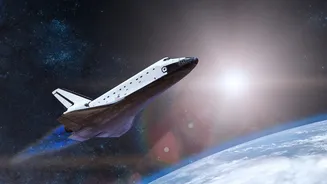
Feeding astronauts is one of the most complex nutritional challenges in science. Food must be lightweight, compact, and have a long shelf life without refrigeration. More importantly, it must be incredibly nutrient-dense to counteract the effects of zero
gravity on the human body, such as muscle and bone loss. This is where Indian scientists have stepped up. For the upcoming Gaganyaan mission, labs like the Defence Food Research Laboratory (DFRL) in Mysuru and Hyderabad's own National Institute of Nutrition (NIN) are crafting a unique menu. Forget bland paste in tubes; India’s astronauts will dine on items like thermo-stabilised biryani, nutrient-fortified khichdi, and mutton rolls, all designed to provide comfort and peak nutrition hundreds of miles above Earth.
Hyderabad's Critical Role
While DFRL in Mysuru has long been the hub for developing ready-to-eat meals, Hyderabad has emerged as a crucial centre for both the science and technology of space food. The National Institute of Nutrition (NIN) is at the forefront, meticulously calculating the precise balance of micronutrients, antioxidants, and vitamins needed for astronauts. They are developing meals in semi-solid and dehydrated forms that are easy to consume in microgravity. Beyond the food itself, the city's burgeoning space-tech ecosystem is contributing. Hyderabad-based firm Ananth Technologies, for instance, is working with DFRL to build smart food containers—essentially high-tech tiffin boxes—that monitor the food's condition, ensuring safety and quality on the journey. This combination of public health expertise and private engineering innovation places Hyderabad at the heart of India's space nutrition efforts.
From the Stars to the Store
The true revolution isn't just about feeding a handful of astronauts. The core principle behind this work is technology transfer. Government labs like DFRL have a long history of licensing their food technologies to private companies for mass production. In fact, past recipients of this technology include ITC-Agro Tech, based in Hyderabad's twin city of Secunderabad. The innovations developed for the extreme environment of space have immense potential for terrestrial life. These include techniques for creating preservative-free meals with a long shelf life, methods for fortifying everyday foods with essential nutrients, and creating balanced, ready-to-eat meals that are both healthy and convenient. This is the bridge where 'space food' becomes 'smart food' for the general public.
Reinventing the Indian Thali
So, how does this reinvent meal planning for the average Indian? The principles of space nutrition directly address many modern dietary problems. Instead of focusing solely on calories, the focus shifts to nutrient density—getting the maximum vitamins and minerals from every bite. The science used to control sodium and fat for astronauts can be applied to create healthier versions of our favourite meals. For busy professionals, the technology promises convenient, ready-to-heat meals that are genuinely nutritious, moving beyond the empty calories of typical fast food. For health-conscious families, it offers a new frontier of fortified foods that can help combat nutrient deficiencies. The work being done in Hyderabad is creating a blueprint for a new category of functional foods, where every meal is designed for optimal wellness.
A Taste of the Future
The convergence of expertise in Hyderabad is creating a unique opportunity. The city is already a booming hub for both food-tech and space-tech startups. As the technologies pioneered at NIN and DFRL become more accessible, we can expect to see a new wave of startups applying these 'space-grade' principles to consumer products. Imagine meal delivery services that offer plans based on astronaut-level nutritional science or packaged foods that guarantee a complete micronutrient profile. This isn't science fiction. It's the logical next step in a journey that begins with ensuring the health of our astronauts and ends with enhancing the well-being of a nation. The experts in Hyderabad are not just preparing a menu for a space mission; they are setting the table for the future of food in India.