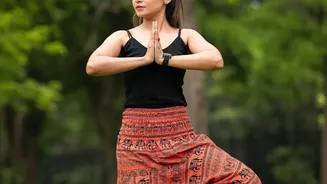




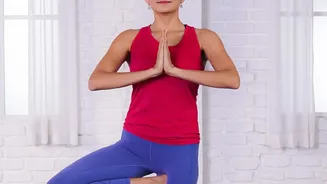


Tree Pose, or Vrikshasana, is a cornerstone of yoga, celebrated for its ability to cultivate focus and physical stability. But what if balance feels just out of reach? The wall is not a crutch, but a powerful ally in your practice.
The Quiet Power of Tree Pose
At its heart, Vrikshasana
is much more than just a test of balance. It's a foundational standing pose that strengthens the muscles in your ankles, calves, and thighs, creating a stable base for all movement. By rooting down through one foot, you build physical endurance and improve your posture. Mentally, the act of finding a single point of focus, or 'drishti', helps to quiet the mind's chatter, making it a moving meditation. The challenge of staying upright on one leg cultivates concentration and a sense of centeredness that can translate from your yoga mat into your daily life.
Why the Wall is Your Best Friend
Many people view props as a sign of weakness, but in yoga, they are intelligent tools for exploration and safety. The wall is perhaps the most accessible prop of all. Using a wall for Tree Pose provides immediate feedback on your alignment, helping you notice if your hips are level or if you are leaning to one side. This support removes the fear of falling, allowing you to hold the pose with more confidence and for a longer duration. Instead of struggling to stay upright, you can focus on the finer details: actively pressing your foot into your leg, opening your hip, and lengthening your spine. The wall provides stability so you can build strength and awareness safely.
A Step-by-Step Guide to Wall-Supported Tree
Ready to find your roots? Follow these simple steps to practice Tree Pose with the wall. First, stand with your side to the wall, about an arm’s length away, in Mountain Pose (Tadasana). Place one hand lightly on the wall for support. Shift your weight onto the foot closer to the wall, engaging the muscles of your standing leg. Bend your other knee and turn it out to the side. Place the sole of your lifted foot on your inner ankle, calf, or upper thigh—but never directly on your knee joint, as this puts pressure on it. Actively press your foot and your standing leg against each other to create a stable connection. Keep your core engaged and your hips facing forward. Find a steady point to gaze at in front of you. Breathe deeply and hold for 20-30 seconds before gently releasing and switching sides.
Exploring Your Branches
Once you feel steady, you can begin to explore variations. Start with one hand on the wall and the other at your heart in a prayer position. If you feel secure, you can try bringing both hands to your heart, using the wall only when you need it. For a greater challenge, try raising your arms overhead like the branches of a tree. Another way to deepen the pose is to experiment with foot placement. While the ankle is a great starting point, you can work toward placing the foot on your calf or inner thigh as your balance and hip flexibility improve. For a true test of stability, try closing your eyes for a brief moment while keeping your fingertips on the wall; you will feel the subtle adjustments your body makes to maintain balance.
Common Mistakes and Simple Fixes
Using a wall can help you correct common misalignments in Tree Pose. One frequent mistake is leaning heavily on the wall instead of using it for a light touch. Remember to keep the work in your standing leg. Another common issue is hiking up the hip of the lifted leg. With your back to the wall, you can physically feel if your hips are level and make adjustments. Also, ensure your lifted foot is placed either above or below the knee, never on it. Finally, resist the urge to let the bent knee drift forward; focus on gently guiding it outward to encourage hip-opening, but only as far as is comfortable without twisting your pelvis.