



The Eyes on the Sky
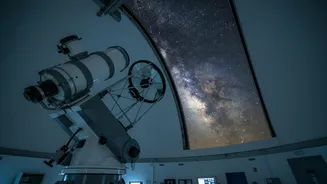
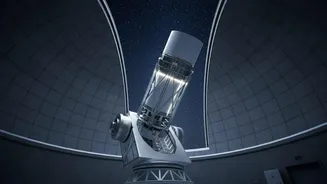
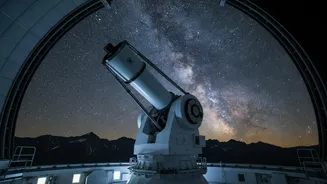
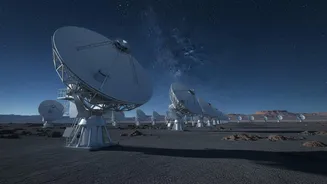
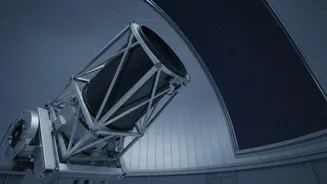
The first line of defense in protecting our planet is seeing what's out there. This monumental task falls to a handful of powerful, wide-field survey telescopes. Systems like the Catalina Sky Survey (CSS) in Arizona and the Panoramic Survey Telescope
and Rapid Response System (Pan-STARRS) in Hawaii systematically scan huge portions of the night sky. These are not your typical telescopes for gazing at distant galaxies; they are designed to take repeated images of the same sky region minutes or hours apart. By comparing these images, sophisticated software can flag any faint dot of light that has moved against the fixed background of stars. This moving dot is the first clue that a near-Earth object (NEO)—an asteroid or comet whose orbit brings it close to Earth—has been spotted.
From a Faint Dot to a Calculated Orbit
Spotting a moving dot is just the beginning. To determine if it’s a genuine threat, scientists need to calculate its orbit, a process known as orbit determination. This requires multiple observations over hours and days to measure the object's precise position in the sky, a science called astrometry. All these initial observations from telescopes around the globe are sent to a central clearinghouse: the Minor Planet Center (MPC). The MPC collects and validates these sightings. Once enough data points are gathered, orbital experts, like those at NASA's Center for Near-Earth Object Studies (CNEOS), use powerful computers to calculate the object's path around the sun. This mathematical model predicts where the asteroid will be weeks, months, or even decades from now, allowing scientists to see if its path will intersect with Earth's.
A Planet United in Defense
Planetary defense is a global team sport. No single country can monitor the entire sky. This is where international cooperation becomes critical. NASA’s Planetary Defense Coordination Office (PDCO), established in 2016, plays a leading role, but it works hand-in-hand with partners worldwide. These collaborations are formalized through the International Asteroid Warning Network (IAWN), which was endorsed by the United Nations. IAWN serves as a global partnership of observatories, space agencies, and researchers. If one observatory spots a potential threat, the IAWN coordinates follow-up observations from other telescopes around the world to quickly refine its orbit and assess the risk. This ensures that an object is tracked continuously as the Earth rotates, passing the baton from observatories in one hemisphere to another.
Sizing Up the Newcomer
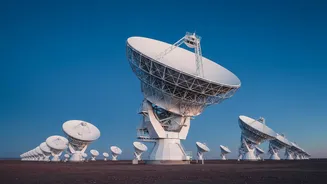
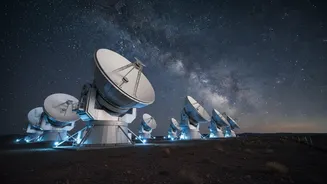
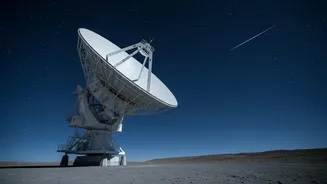
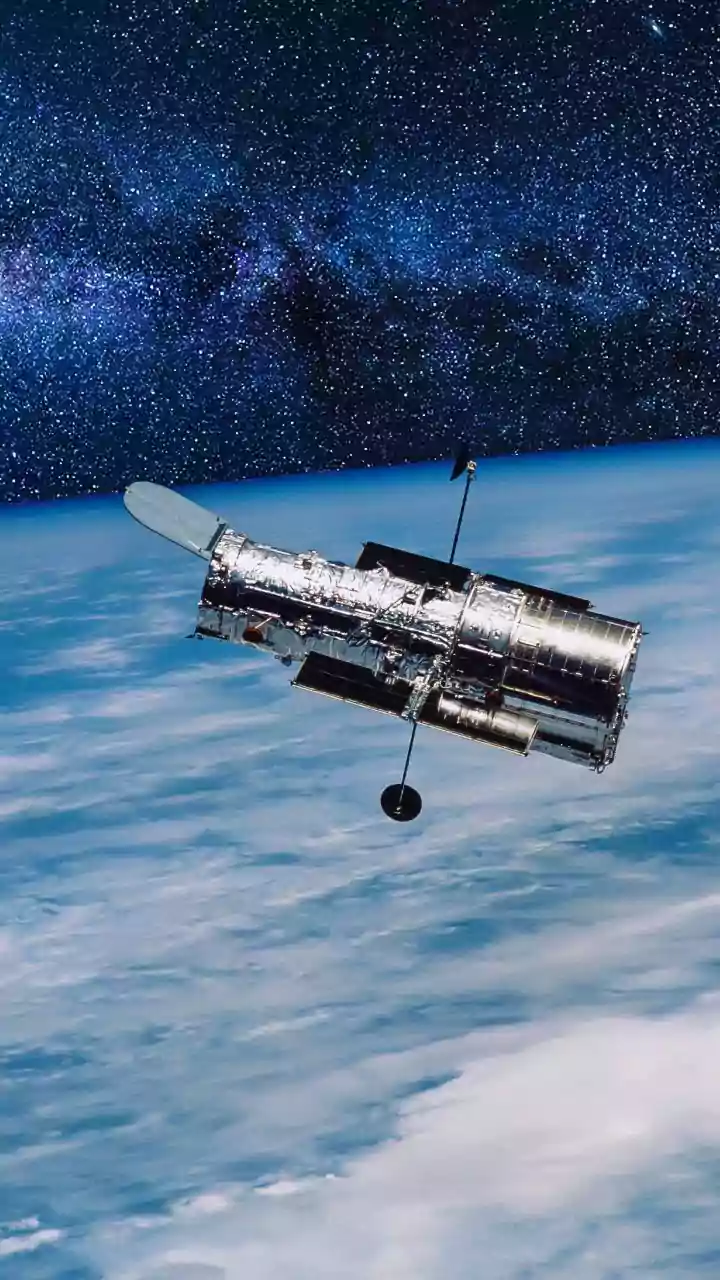
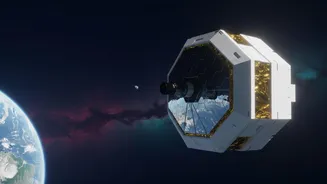
Once an asteroid's orbit is known to pass close to Earth, the next crucial step is to characterize it. Is it a 30-meter rock that might cause a localized airburst, or a 140-meter behemoth capable of regional devastation? While optical telescopes can estimate size based on brightness, this can be deceiving as a dark asteroid might appear small. This is where other technologies come in. Planetary radar systems can bounce radio waves off an asteroid to get precise details on its size, shape, rotation, and even whether it has its own tiny moon. Furthermore, space telescopes that see in infrared, like the upcoming NEO Surveyor, are invaluable. They detect the heat radiated by an asteroid, giving a much more accurate measure of its true size, regardless of whether it is bright and reflective or dark as charcoal.