





The Mountain of History
Winning a World Cup is incredibly difficult. Winning two in a row is almost impossible. In the tournament's 90-plus-year history, only two nations have ever managed the feat: Italy in 1934 and 1938, and a Pelé-led Brazil in 1958 and 1962. That’s it. Since
then, giants like West Germany, Argentina themselves (under Maradona), Brazil, and France have all tried and failed to defend their crown. The reasons are many: player burnout, tactical evolution that leaves champions behind, and the immense pressure of being the team everyone wants to beat. History tells us that repeating is a once-in-a-generation miracle, placing Argentina’s 2026 quest in daunting historical context from the very start.
The Messi Conundrum
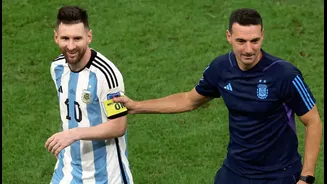
Any conversation about Argentina begins and ends with Lionel Messi. In 2026, he will be 39 years old. While his genius remains, expecting him to be the same dynamic, tournament-driving force he was in Qatar is unrealistic. Cristiano Ronaldo played at 37, but was a peripheral figure. Messi’s intelligence means he could adapt his game, perhaps playing a deeper, more creative role. His mere presence is a massive psychological boost for his teammates and an intimidating factor for opponents. He has stated he aims to play in the 2024 Copa América, but has been non-committal about 2026. If he plays, his role will be different. If he doesn’t, it leaves a void in leadership and magic that is simply irreplaceable.
The End of an Era
The 2022 victory was a fairytale ending for a generation of warriors. Ángel Di María, the man who scored in the Copa América and World Cup finals, has already confirmed the 2024 Copa América will be his last tournament for Argentina. Nicolás Otamendi, the rock in their defence, will be 38 in 2026. These players provided not just quality but immense heart and experience. Their departure is inevitable and necessary for renewal, but it marks the definitive end of the team that clawed its way to glory. Finding replacements with the same blend of talent and unbreakable mentality will be one of coach Lionel Scaloni’s biggest challenges. A team’s soul is often found in its veterans, and Argentina will be losing a huge part of its own.
The New Guard Has Arrived
This is the core of the argument for why Argentina *can* repeat. The 2022 triumph wasn’t just about the old guard; it was about the explosive arrival of the new. Enzo Fernández (Chelsea), Julián Álvarez (Manchester City), and Alexis Mac Allister (Liverpool) were not established starters before the tournament but became indispensable pillars. They are now elite players at top European clubs, entering their prime. Add to them Lisandro Martínez (Manchester United), Cristian Romero (Tottenham), and emerging talents like Alejandro Garnacho (Manchester United), and you have a core group of players aged 24-28 by 2026. This is the perfect age for a World Cup. They are young, hungry, and have already tasted the ultimate success. They are the engine that will power Argentina’s title defence.
The 'Scaloneta' Factor
Perhaps Argentina’s greatest asset is the man in charge: Lionel Scaloni. He took a broken, demoralised team after the 2018 World Cup and transformed it into a cohesive, pragmatic, and fiercely loyal unit known as the 'Scaloneta'. His genius lies in his tactical flexibility and man-management. He built the team *around* Messi, not just *for* Messi, allowing others to shine. He successfully integrated the younger players in Qatar and has fostered a dressing room environment that players clearly love being a part of. As long as Scaloni is at the helm, Argentina will be organised, tactically astute, and motivated. His leadership provides the stability and intelligence needed to navigate the long and difficult path to another final.