


The Moon's Dangerous Surface
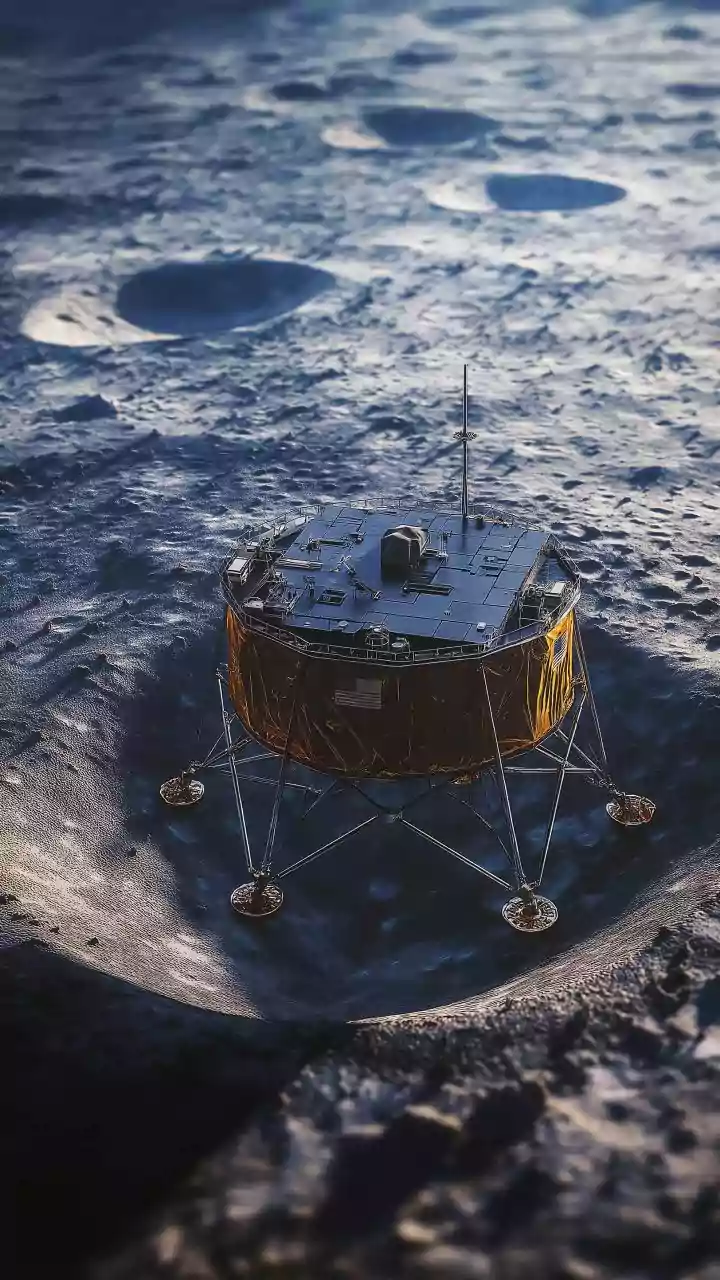
Before we can build a home on the Moon, we have to face the realities of its environment. Unlike Earth, the Moon has no significant atmosphere to act as a protective shield. This leaves its surface exposed to a constant barrage of threats. Intense solar
radiation and cosmic rays can harm astronauts and degrade equipment. Micrometeorites, some travelling at incredible speeds, pose a constant impact risk. Furthermore, the temperature swings are extreme, cycling from scorching highs of over 120°C in sunlight to frigid lows of -130°C or colder during the two-week lunar night. Building surface structures capable of withstanding these conditions would require transporting massive amounts of shielding material from Earth, an incredibly expensive and complex task.
Nature’s Underground Solution
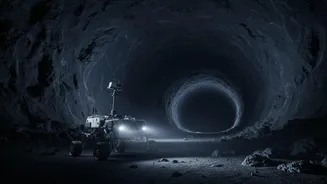
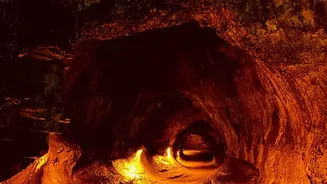
The answer to this daunting challenge may have been waiting for us all along, just beneath the lunar soil. Scientists have identified numerous pits on the Moon's surface that are believed to be collapsed 'skylights' leading into vast, hollow caverns known as lava tubes. Formed billions of years ago by flowing rivers of lava, these subterranean tunnels could be enormous, potentially stretching for kilometres. The thick layers of overhead rock would provide natural and highly effective protection from radiation, micrometeorites, and the wild temperature fluctuations on the surface. Inside a lava tube, the temperature remains at a stable, albeit cold, level. This makes them prime real estate for future lunar bases, offering a ready-made, secure environment for human habitats.
Enter the Robotic Cave Explorers
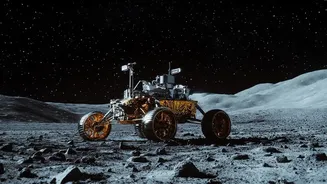
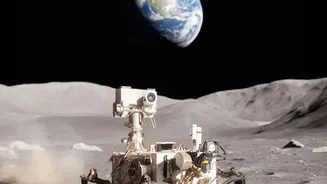
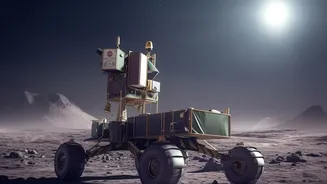
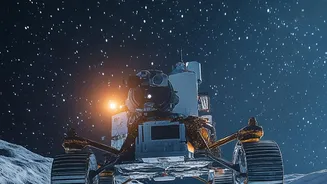
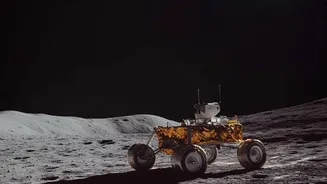
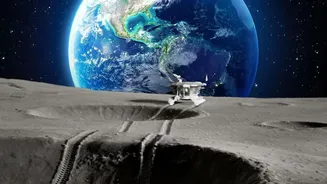
Before astronauts can move in, we need to know what’s inside these mysterious caves. They are dark, unknown, and potentially treacherous, making them far too dangerous for initial human exploration. This is a job for robots. Space agencies and private companies are developing a variety of robotic concepts designed specifically for this task. The challenges are immense. Without sunlight, rovers need their own power and lighting. Communication is another hurdle; once a robot enters a cave, it loses direct line-of-sight with Earth. Therefore, these robotic spelunkers must be highly autonomous, capable of navigating complex and rugged terrain on their own while mapping the interior in 3D.
A New Generation of Rovers
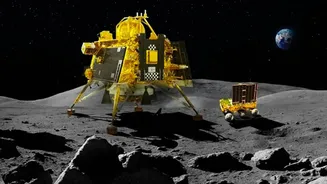
Several innovative concepts are currently under development. The European Space Agency (ESA) has studied missions involving various robots, including the spherical 'DAEDALUS' probe, designed to be lowered into a pit on a tether before rolling off to explore autonomously. Another European concept involves a team of three robots that work together: one to map the entrance, another to lower a scout rover into the cave, and the scout itself to explore the interior. More recently, NASA has funded a project by Stone Aerospace called the Lunar Underground eXplorer (LUX). This mission proposes a hovering drone that would be powered by a laser sent from a surface rover through a fiber-optic cable. This clever tether would also provide a high-speed data link, solving the communication problem.
Mapping Our Future Lunar Home
These robotic missions are a critical first step. The data they collect will be invaluable, creating detailed 3D maps of the tunnels, analysing the geology of the cave walls, and searching for resources like water ice, which could be trapped in the coldest, permanently shadowed regions of the tubes. This information will help scientists identify the most stable and suitable locations for building habitats. This work is not just abstract science; it directly supports ambitious plans like NASA's Artemis program, which aims to establish a sustainable human presence on the Moon. By sending robotic surveyors ahead, we are laying the groundwork and reducing the risks for the human explorers who will follow, turning science fiction into practical engineering.