


India's Next Interplanetary Frontier
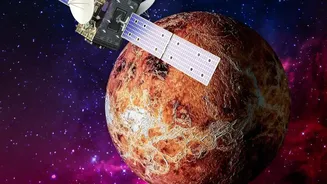
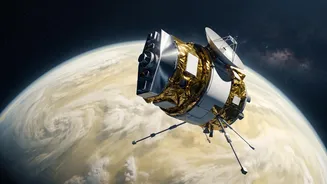
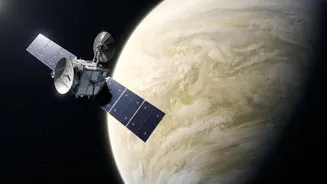
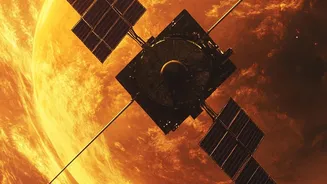
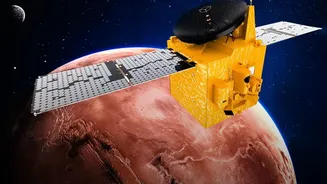
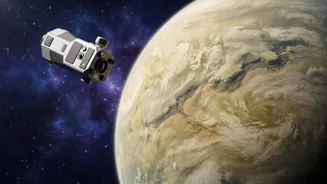
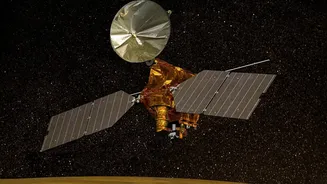
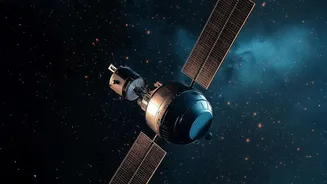
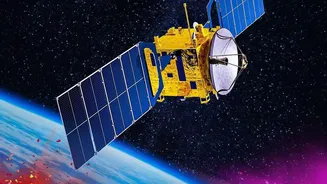
Fresh off the successes of its lunar and Martian campaigns, the Indian Space Research Organisation (ISRO) is embarking on its next great adventure: a journey to Venus. The mission, officially named the Venus Orbiter Mission but widely known as Shukrayaan,
represents India's first dedicated voyage to our so-called 'twin' planet. Approved by the Union Cabinet in September 2024, this project underscores India's growing capabilities and ambitions in deep-space exploration. Scheduled for launch on March 29, 2028, aboard the powerful LVM-3 rocket, Shukrayaan is tasked with unravelling the many secrets of a world that, despite its proximity, remains profoundly enigmatic. The mission aims to build on the legacy of Mangalyaan, proving once again that India can conduct complex interplanetary science with efficiency and ingenuity.
Venus: Earth's Hostile Twin
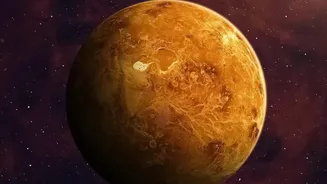
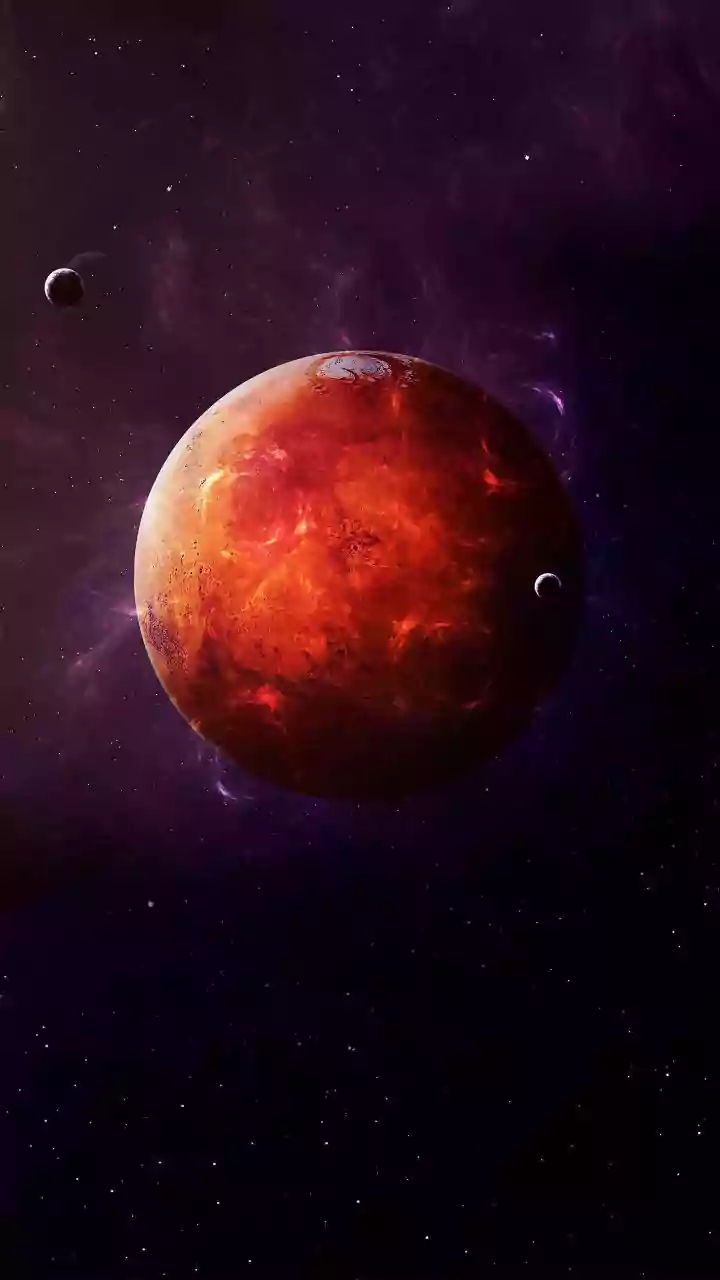
Venus is often called Earth's twin due to their similar size and mass, but the similarities end there. It is a world of extreme hostility. The planet suffers from a runaway greenhouse effect, with a dense atmosphere composed of over 96% carbon dioxide that traps heat relentlessly. This results in surface temperatures hovering around 460 degrees Celsius, hot enough to melt lead. The atmospheric pressure at the surface is more than 90 times that of Earth's at sea level, equivalent to the crushing force found nearly a kilometre deep in our oceans. To make matters worse, the planet is shrouded in thick, swirling clouds of corrosive sulfuric acid, obscuring its surface from conventional telescopes. Understanding how and why Venus diverged so drastically from Earth's evolutionary path is a key driver for this mission.
Peering Beneath the Poisonous Veil
The central challenge of exploring Venus is seeing through its impenetrable clouds. The headline feature of Shukrayaan is its powerful suite of sensors designed to do just that. The flagship instrument is a high-resolution Synthetic Aperture Radar (SAR), an advanced version of the one used on Chandrayaan-2. Unlike optical cameras, which need light and clear skies, SAR is an active system that bounces radar waves off the surface to create detailed images, regardless of weather or darkness. This will allow ISRO to map the Venusian surface with a resolution up to four times better than NASA's Magellan mission in the 1990s. Shukrayaan will also carry a ground-penetrating radar, a first for a Venus mission, to map subsurface structures and geology.
A Toolkit for Scientific Discovery
Shukrayaan is not just a mapping mission; it is a comprehensive scientific observatory. The orbiter will carry a payload of approximately 100 kg, comprising around 19 scientific instruments from India and international partners. These tools are designed to investigate everything from Venus's atmospheric chemistry to its interaction with the solar wind. Some instruments will study the mysterious 'super-rotation' of the atmosphere, where clouds whip around the planet in just four Earth days. Others will search for active volcanic hotspots, which may still be shaping the planet's surface today. The mission also includes international collaborations, such as the Venusian Neutrals Analyser (VNA) from Sweden, which will study how the solar wind strips particles away from Venus's atmosphere.
Unlocking Secrets of a Lost World
The overarching goals of Shukrayaan are to understand the planet's past and present. Scientists believe Venus may have once hosted liquid water and could have been habitable billions of years ago. By studying its geology and atmosphere, the mission hopes to find clues about what went so catastrophically wrong. These investigations are not just for academic curiosity; understanding Venus's extreme greenhouse effect can provide valuable insights into climate change and atmospheric dynamics here on Earth. After a 112-day journey, the spacecraft will enter a large elliptical orbit, which will then be carefully lowered over a year using aerobraking—a technique that uses the planet's own atmosphere to slow down and save fuel. From this final orbit, Shukrayaan will spend over four years collecting data, promising a new golden age in our understanding of the morning star.