
The Transit Method: A Cosmic Eclipse
The entire process starts with a simple, yet crucial, alignment. Scientists look for exoplanets that pass directly in front of their host star from our point of view on Earth. This event is called a 'transit'. As the planet makes its journey across the face
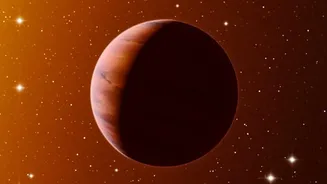
of the star, it causes a tiny, periodic dip in the star's brightness. While this dimming tells astronomers about the planet's size, the real magic happens at the edge of the planet's silhouette. For a brief moment, the starlight shines through the upper layers of the planet's atmosphere before reaching our telescopes. This fleeting moment provides the perfect opportunity for scientists to probe the atmospheric composition of a world they can never physically touch.
Spectroscopy: Reading Light's Barcode
The technique at the heart of this discovery is called transmission spectroscopy. Think of starlight as a pure, white light containing all the colours of the rainbow. When this light passes through an exoplanet's atmosphere, the gases present absorb very specific colours, or wavelengths, of that light. Each gas—be it water vapour, methane, or carbon dioxide—has a unique 'fingerprint' of absorption. The light that finally reaches the telescope is therefore missing certain colours, creating a pattern of dark lines in the star's spectrum, much like a barcode. By analysing which colours are missing, astronomers can definitively identify the chemical elements and molecules present in that alien atmosphere.
JWST: The Ultimate Atmosphere Detective
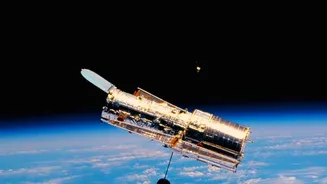
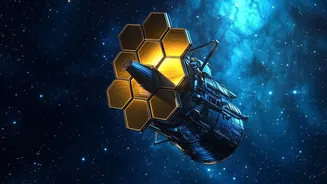
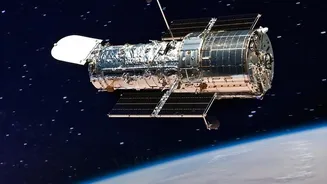
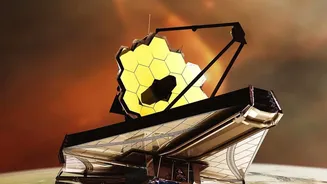
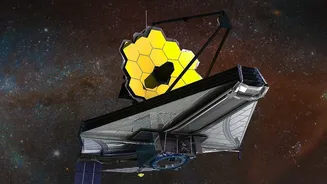
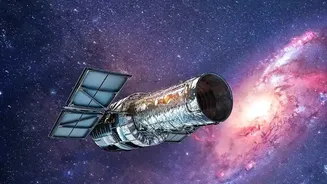
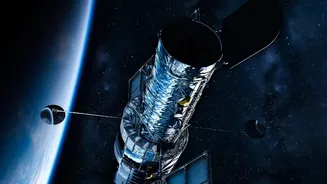
While the Hubble Space Telescope pioneered many of these observations, the James Webb Space Telescope (JWST) has revolutionised the field. JWST is specifically designed to observe in infrared light, which is invisible to the human eye. This is crucial because many of the most interesting molecules, including water, methane, and carbon dioxide, leave their most prominent absorption signatures in the infrared part of the spectrum. With its large mirror and incredible sensitivity, JWST can capture these chemical fingerprints with unprecedented detail, turning faint signals into clear, indisputable evidence. This capability allows scientists to not only detect the presence of certain gases but also to begin estimating their abundance.
From Barcodes to Biosignatures
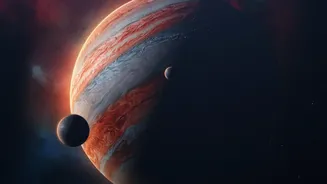
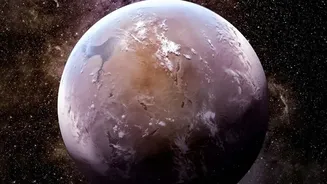
Identifying atmospheric elements is about more than just cataloguing chemicals; it's a critical step in the search for life beyond Earth. Scientists are on the hunt for 'biosignatures'—gases or combinations of gases that are strong indicators of biological processes. On Earth, life produces abundant oxygen, methane, and nitrous oxide. Finding a combination of gases like oxygen and methane on a rocky exoplanet would be incredibly exciting, as these gases tend to destroy each other and their simultaneous presence could imply they are being constantly replenished, possibly by life. JWST has already successfully detected key molecules like water, sulphur dioxide, and carbon dioxide in the atmospheres of gas giants, proving the technique works and paving the way for studying smaller, potentially habitable worlds.