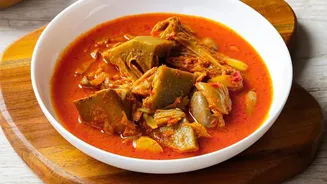









The Foundation of Flavor
Imagine a butter chicken or a chana masala without its rich, layered gravy. It’s nearly impossible, and that’s because the foundation of countless Indian dishes is the 'bhuna masala'—a slow-cooked paste of onions, tomatoes, ginger, and garlic. In this
base, the onion is the undisputed star, providing a subtle sweetness and deep, savory flavor that other ingredients are built upon. Whether it’s being caramelized to create depth, used as a thickening agent for curries, or simply sautéed until translucent, the onion’s role is fundamental. It can be sharp and crunchy when served raw as an accompaniment to kebabs, or transformed into crispy pakoras for a rainy day snack. This versatility makes it an indispensable component across the vast spectrum of Indian regional cuisines.
An Economic Bellwether
For millions of Indian households, the price of onions is a direct measure of economic comfort. As a staple consumed daily by people across all income levels, even a minor fluctuation in its cost can significantly strain a family's budget. When prices soar, it's not just an inconvenience; it forces households to cut back or seek out less effective substitutes, impacting the taste and quality of everyday meals. According to a recent report, the cost of a home-cooked vegetarian thali rose by 10% in September 2026, driven largely by an 89% year-on-year surge in onion prices. This makes the onion a key indicator of food inflation and a constant concern for both consumers and economists.
The Political Hot Potato
In India, the price of onions can make or break governments. The commodity is so politically sensitive that its price has been cited as a decisive factor in numerous elections. High onion prices have historically led to widespread public discontent and protests, putting immense pressure on the ruling party. For instance, the BJP's defeat in the 1998 Delhi state elections was widely attributed to its failure to control skyrocketing onion prices. Governments are acutely aware of this 'onion power'. When prices spike due to factors like erratic monsoons, crop failures, or supply chain disruptions, authorities often respond swiftly by banning exports, lowering import duties, or cracking down on hoarding to stabilize the market and appease voters.
The Fragile Supply Chain
The journey of an onion from farm to kitchen is fraught with challenges that contribute to its price volatility. India is the world's second-largest onion producer, with states like Maharashtra and Karnataka accounting for a significant portion of the output. However, the crop is vulnerable to weather conditions, particularly the monsoon. Unseasonal or excessive rains can damage harvests and delay their arrival in markets, leading to immediate shortages and price hikes. Furthermore, inadequate storage facilities lead to high spoilage rates, while hoarding by intermediaries to create artificial scarcity can also drive up costs. These supply chain inefficiencies mean that even with a good harvest, consumers are not always guaranteed a stable or affordable supply.