






Decoding the Tech Jargon
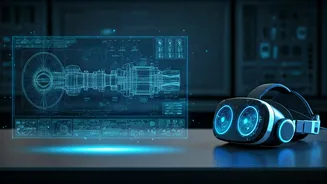
Before we get ahead of ourselves, let’s break down the headline. When we talk about ‘Predictive AI VR Models,’ we’re not talking about science fiction. We’re talking about a powerful combination of two distinct technologies. First, Virtual Reality (VR)
creates an immersive, 3D digital environment. Think of it as a flight simulator on steroids, where a student can ‘walk around’ a virtual spacecraft or ‘stand’ on the surface of Mars. The ‘Predictive AI’ component is the brain behind this virtual world. The Artificial Intelligence uses vast amounts of data—from past space missions, aerodynamic principles, and material stress tests—to predict how a student’s custom-designed rocket or satellite will behave under various conditions. Will the wing design fail at Mach 2? The AI can predict that. Will the satellite’s orbit decay faster than expected? The AI runs thousands of possible scenarios in seconds. Together, they create a digital sandbox where students can experiment with concepts that were once purely theoretical at the high school level.
The Virtual Launchpad in Action
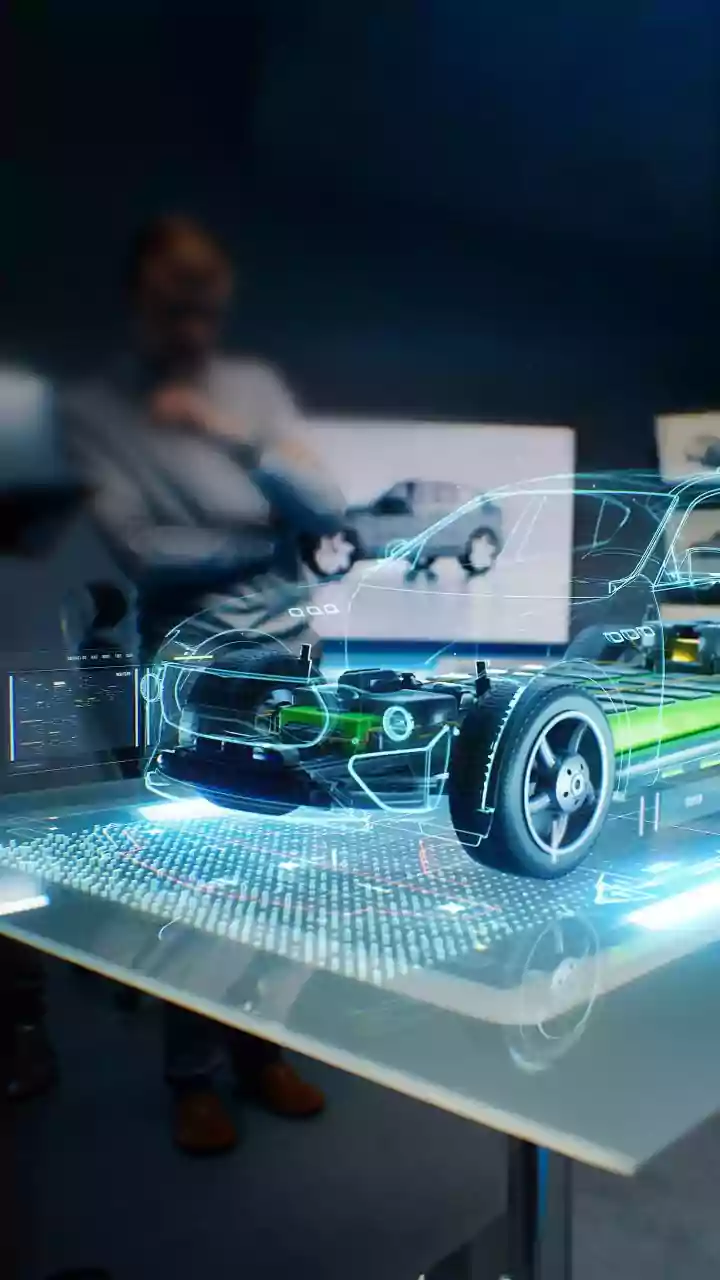
So, what does a day in one of these advanced labs look like? A student puts on a VR headset and is instantly transported to a hangar. In front of them is a 3D model of a satellite they need to design for a specific mission: observing weather patterns over the Indian Ocean. Using hand controllers, they can select different components—solar panels, thrusters, antennas—and assemble them. Every choice has consequences. Heavier components might require more fuel for launch, while larger solar panels might create instability. This is where the predictive AI kicks in. Once the design is complete, the student can run a simulation. The AI model subjects the virtual satellite to the harsh realities of space: extreme temperatures, solar radiation, and the vacuum of space. It might flag a potential weakness—perhaps the antenna is vulnerable to micrometeoroid impacts. The student can then go back to the drawing board, iterate on the design, and run the simulation again, all within a single class period. It’s a cycle of design, test, fail, and improve that mirrors the exact process used by engineers at organisations like ISRO.
A Revolution in Safety and Access
The benefits of this approach are transformative. The most obvious one is safety. Aerospace experiments can involve flammable chemicals and high-pressure systems—risks that are completely eliminated in a virtual environment. A virtual rocket explosion is a valuable learning experience, not a catastrophe. The second major advantage is cost and accessibility. Building physical prototypes of rockets or satellites is prohibitively expensive for even the best-funded schools. A VR lab, while requiring an initial investment in headsets and software, allows for infinite experiments with zero material cost. This democratises education. A student in a small town can have access to the same high-fidelity learning tools as a student in a major metropolitan hub, levelling the playing field and unlocking talent across the country. It also allows for a far greater scope of learning, enabling students to tackle complex orbital mechanics and mission planning that are impossible to demonstrate with traditional classroom equipment.
Fuelling India's Space Ambitions
This technological shift couldn’t come at a better time for India. With the success of missions like Chandrayaan-3 and the rise of a dynamic private space-tech sector, the demand for skilled aerospace engineers and scientists is set to explode. The National Education Policy (NEP) 2020 itself emphasizes the need for experiential, hands-on learning and the integration of technology into the classroom. These AI-powered VR labs are a perfect embodiment of that vision. They move beyond rote memorization of physics formulas and towards genuine problem-solving. By giving students a feel for the real-world challenges of aerospace engineering early on, we can ignite their passion and build a robust pipeline of talent ready to contribute to India’s journey as a global space power. It’s about training not just engineers, but innovators who are comfortable with digital tools and iterative design from day one.