


Bringing a piece of Mars back to Earth is one of the most ambitious goals in space exploration, promising a revolution in our understanding of the Red Planet. Now, NASA is rethinking its complex and costly strategy to make this historic feat a reality.
The Priceless Cargo Waiting on Mars
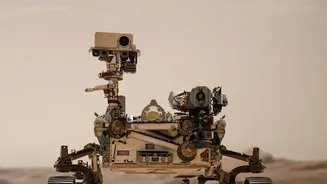
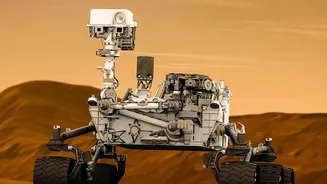
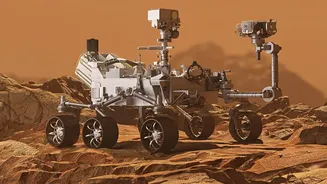
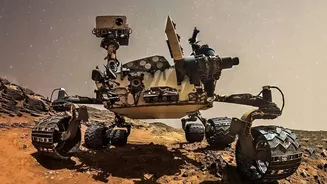
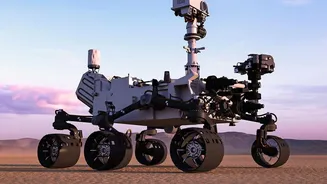
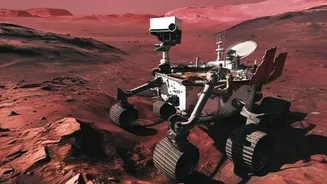
Since its landing in 2021, NASA's Perseverance rover has been diligently working in Jezero Crater, an ancient lakebed that may hold signs of past microbial life. The rover has been drilling into rocks and collecting cigar-sized core samples, sealing them in ultra-clean titanium tubes. Some of these tubes have been carefully placed on the Martian surface, creating a depot for a future pickup mission, while others remain aboard the rover. Scientists believe that studying these pristine samples in advanced labs on Earth is the best, and perhaps only, way to definitively answer the profound question: did life ever exist on Mars?
The Original Plan Hits a Wall
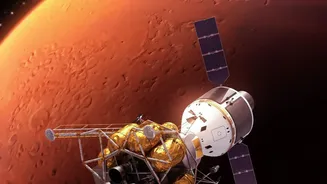
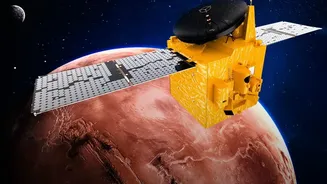
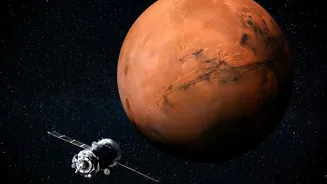
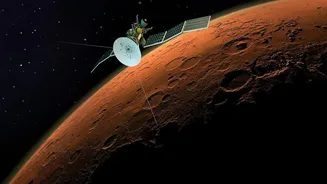
The initial joint plan between NASA and the European Space Agency (ESA) was a multi-stage marvel of engineering. It involved sending at least two more landers to Mars. One would deploy a fetch rover to collect the samples left by Perseverance, and another would carry the Mars Ascent Vehicle (MAV) — a small rocket that would launch the samples into orbit. From there, an ESA-built orbiter would capture the orbiting container and begin the long journey back to Earth. However, independent reviews revealed a sobering reality: the mission's complexity was driving its cost to a projected $11 billion, with a potential return date slipping to 2040. NASA leadership deemed this timeline and price tag 'unacceptable'.
A Fresh Start for a Troubled Mission
Faced with an unsustainable path forward, NASA effectively hit the reset button. In early 2026, the original Mars Sample Return program was ended by Congress. But the goal of retrieving the samples remains a top priority. On November 9, 2026, NASA announced a new initiative called the Perseverance Sample Retrieval Architecture (PSRA). This isn't a new mission just yet, but a formal process to re-evaluate every aspect of the project. The goal is to develop a faster, more affordable, and more achievable plan to get the job done. The PSRA strategy team will review prior lessons, assess new technologies, and deliver recommendations for a new path forward.
Simplification and Commercial Partners
While the new plan is not yet set, the focus is on simplification and leveraging the burgeoning commercial space industry. One leading idea involves replacing the multiple landers with a single, more capable vehicle. This lander would be responsible for both retrieving the samples and launching the MAV. To drive down costs, NASA is also exploring proposals from private companies like Lockheed Martin, which has suggested a mission architecture using flight-proven designs for less than half the previously estimated budget. This new approach involves looking at every option, from using a proven NASA 'sky crane' landing system to enlisting a commercial heavy lander. A decision on the final architecture is expected to be made after the new strategy team delivers its report in the winter of 2027-2028.
A New Space Race?
The pressure to find a workable solution is not just scientific and financial; it's also geopolitical. China is moving forward with its own ambitious Mars sample return mission, Tianwen-3, which aims to launch around 2028 and return samples to Earth as early as 2031. This has added a sense of urgency to NASA's efforts, with some observers calling China's progress a potential 'Sputnik moment'. While NASA officials note their planned sample collection is more scientifically rigorous than a simple 'grab and go' mission, the race is on to become the first nation to bring back pieces of the Red Planet. This new planning phase for NASA represents a critical step in ensuring the invaluable samples collected by Perseverance don't remain stranded 100 million miles away.