



The All-Too-Familiar Cycle of Failure
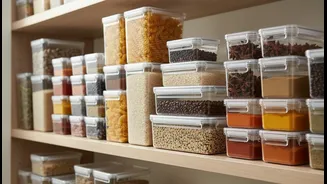
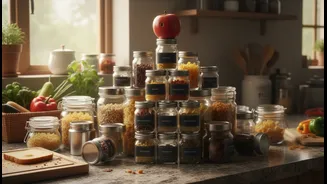
It starts with the best of intentions. Inspired by a pristine pantry on social media, you dedicate hours to creating the 'perfect' kitchen. Every spice is decanted into a matching jar, all pasta is in airtight containers, and your cans are lined up with military
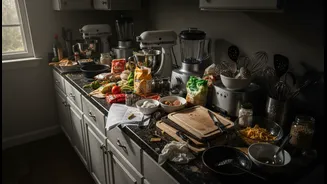
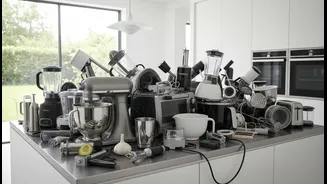
precision. It looks incredible. For about three days. Then, a busy Tuesday evening hits. You're tired, the kids are hungry, and you grab the flour without putting it back perfectly. By Friday, the perfectly organised system is a distant memory, replaced by the familiar, functional chaos you were trying to escape. This cycle isn't a personal failing; it’s a design flaw. Many organisation methods are created for an ideal world, not for the realities of daily life with its fluctuating energy levels and unpredictable demands. When a system requires you to be your best, most-organised self every single moment, it's doomed to fail.
The Psychology of a Messy Kitchen
The reason these flawless systems crumble is rooted in basic behavioural science. Humans naturally choose the path of least resistance. A system that requires you to take three extra steps—like opening a decorative box to get a tea bag, or carefully refilling a custom-fit container when you’re in a rush—adds 'friction'. Each point of friction is a small barrier. On its own, it’s nothing. But add up dozens of these tiny hurdles throughout a busy day, and your brain will start taking shortcuts. Professional organisers and behavioural scientists agree: a system that isn't easy, obvious, and rewarding is fighting against human nature. The clutter that accumulates is not evidence of laziness; it's data. It’s telling you that a part of your system is too complicated for your real-life routines.
Design for Your 'Tired Self,' Not Your 'Ambitious Self'
The secret to a kitchen that stays organised is to create systems for your worst day, not your best one. Instead of designing for the energised, weekend-project version of yourself, design for the exhausted, end-of-a-long-day version. Ask yourself: what is the absolute easiest way I can put this away? Sometimes, that means forgoing the aesthetically pleasing solution for the brutally practical one. Maybe it's a large, open-top basket for all the snack bars instead of a perfectly stacked row. Perhaps it's keeping frequently used cooking oils on a tray by the stove instead of hidden away in a cabinet. The goal isn't to create a kitchen that looks untouched, but one that is effortlessly functional. The system should serve you, not the other way around.
Practical Strategies for Realistic Organisation
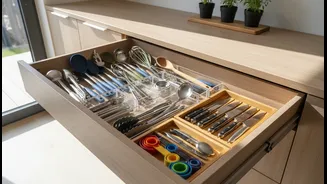
So what does this look like in practice? It's about reducing friction and embracing 'good enough'. Start by grouping similar items into broad zones instead of micro-categories. For example, create a 'Breakfast Zone' with the toaster, cereal, coffee, and mugs all in one area. This supports your actual habits. Use clear bins in the pantry, but don't obsess over decanting everything. A bin labelled 'Grains' that holds bags of rice and quinoa is just as effective and much easier to maintain. For cabinets, use vertical dividers for baking sheets and cutting boards, and tiered risers for cans and jars so you can see everything at a glance. The key is to make things easy to see and easy to grab. Adding pull-out drawers to lower cabinets can transform them from black holes into accessible storage.
Embracing a Functional, Flexible System
Ultimately, the goal of organisation is to reduce stress, not create a new source of it. An organised space has been shown to lower levels of the stress hormone cortisol, but only if the system itself is sustainable. A successful kitchen organisation system is one that you barely notice because it works so seamlessly with your life. It anticipates that things will get messy and makes it simple to reset. Instead of aiming for constant perfection, focus on a quick 5-minute tidy-up at the end of the day to put things back in their zones. Let go of the guilt associated with a kitchen that looks 'lived-in'. Organisation is a tool, not a performance. When you build a system around your real habits and embrace flexibility over rigidity, you create a space that not only functions better but also feels better to be in.