





A New Blueprint for the Red Planet
For generations, exploring the cosmos was the domain of national governments. NASA designed, built, and flew its own missions from start to finish. This approach gave us iconic moments and monumental achievements, but it was also incredibly expensive
and time-consuming. Now, NASA's 'Moon to Mars' architecture is changing the game. This strategic blueprint outlines the capabilities needed for long-term human exploration, explicitly including commercial and international partners as key players. The goal is to create a sustainable and more frequent cadence of missions by leveraging the innovation and investment of the private sector. Instead of building everything in-house, NASA is increasingly looking to buy services—from launch to spacecraft operations—from commercial providers, a model successfully pioneered with cargo and crew missions to the International Space Station.
The Commercial Pioneers Step Up
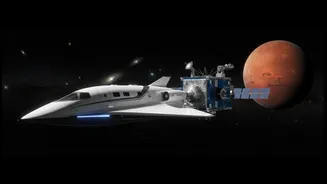
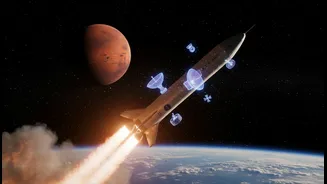
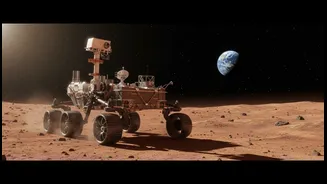
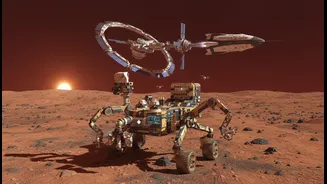
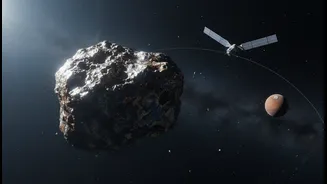
This new model has opened the door for a new breed of aerospace companies. While established giants have long supported NASA, a wave of agile startups and ambitious billionaires are now taking on larger roles. A prime example is a new partnership with Relativity Space for a Mars mission scheduled for 2028. Under the agreement, NASA will provide a sophisticated suite of scientific instruments, called Aeolus, to study the Martian atmosphere. Relativity Space, in turn, is responsible for providing the rocket, the spacecraft, and the flight operations to get the payload to Mars. This division of labor allows NASA to focus its resources on pure science, while the private partner handles the logistics of space travel. This isn't just a one-off deal; it's a template. NASA is actively encouraging commercial proposals for everything from robotic surface mobility to delivering scientific payloads, effectively creating a new market for deep space services.
The Upside: Faster, Cheaper, More Innovative
The primary driver behind this public-private model is efficiency. Proponents argue that commercial competition can significantly lower costs and accelerate timelines. By serving as a reliable first customer, NASA enables companies to develop new technologies and capabilities that might otherwise be too risky to fund. In a recent statement about the Relativity partnership, NASA Administrator Jared Isaacman called this approach a "force multiplier for science," allowing the agency to "deliver more science, more often." The data from the Aeolus mission, for instance, will provide the first daily, global view of Martian weather, which is critical for planning future robotic and human landings. Getting this data sooner rather than later could dramatically reduce the risks associated with navigating Mars's thin but treacherous atmosphere. Ultimately, this collaborative ecosystem is designed to become self-sustaining, fostering an entire economy around cislunar and interplanetary logistics.
Navigating the Inevitable Risks
Despite the immense potential, this new model is not without its challenges. Handing over critical aspects of a mission to a commercial entity means ceding a degree of control. NASA has rigorous safety and engineering standards honed over decades, and ensuring private partners meet those standards is paramount. There's also the risk of mission delays if a commercial partner's rocket or spacecraft isn't ready on time, a common occurrence in the fast-moving private space sector. Furthermore, the priorities of a for-profit company may not always align perfectly with the scientific goals of a public agency. Balancing commercial interests with the public good requires careful management and robust contractual frameworks, like the Space Act Agreements NASA is using to structure these deals. The agency must ensure that in the race to get to Mars faster and cheaper, the reliability and scientific integrity of the missions are not compromised.