


India’s Ambitious Leap to the Morning Star
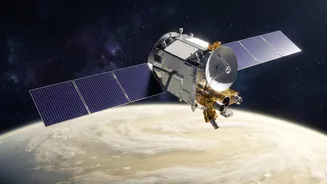
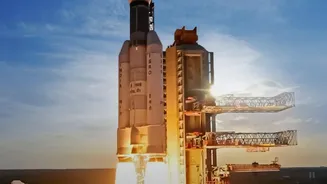
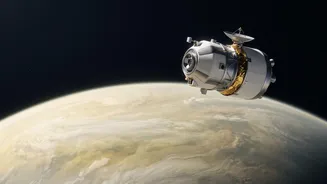
Following the monumental success of its lunar and Martian missions, the Indian Space Research Organisation (ISRO) is setting its sights on the second planet from the Sun. Named Shukrayaan, from the Sanskrit words for Venus ('Shukra') and craft ('Yaan'),
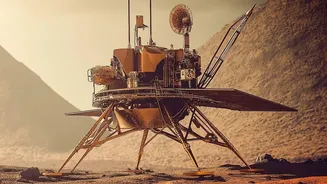
this orbiter represents India's first dedicated mission to our mysterious neighbour. The mission, which received cabinet approval in September 2024, is currently slated for a launch in March 2028. Shukrayaan is more than just another space mission; it's a bold statement of India's growing capabilities in interplanetary exploration. It aims to place India in the elite group of space agencies that have successfully sent probes to study the most inhospitable planet in our solar system. The primary goal is to conduct a comprehensive, long-term study of Venus, investigating everything from its enigmatic surface to the complex dynamics of its upper atmosphere.
The Puzzle of Earth's 'Evil Twin'
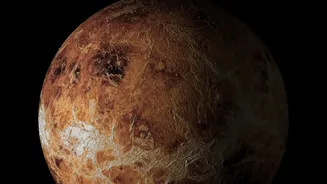
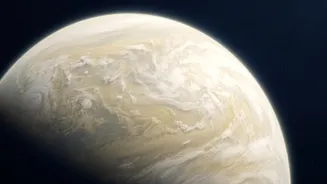
Scientists call Venus 'Earth's twin' for a reason. Both planets are nearly identical in size, mass, and density, and they formed around the same time. Yet, their evolutionary paths diverged dramatically. While Earth became a haven for life, Venus transformed into a hellscape. It suffers from a runaway greenhouse effect, trapping heat under a thick blanket of carbon dioxide. This results in surface temperatures exceeding 460 degrees Celsius, hot enough to melt lead. The atmospheric pressure on the surface is over 90 times that of Earth's, equivalent to the pressure found nearly a kilometre deep in our oceans. To top it off, the planet is shrouded in dense clouds of corrosive sulfuric acid. Understanding why and how Venus became so different is a key scientific question that holds valuable lessons for understanding Earth's own climate and its future.
Decoding the Clouds with Advanced Tech
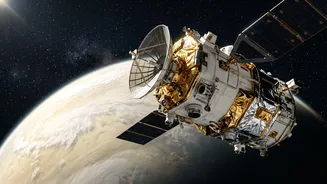
The headline feature of Shukrayaan is its powerful suite of scientific instruments, designed to pierce the veil of Venus's thick clouds. The headline instrument is a high-resolution Synthetic Aperture Radar (SAR), which can map the planet's surface in incredible detail, regardless of the cloud cover or time of day. ISRO's radar is expected to have a resolution up to four times better than NASA's Magellan mission from the 1990s. Even more groundbreaking is the inclusion of a ground-penetrating radar, a world-first for a Venus mission, which will probe beneath the surface to study its geology. To study the complex cloud chemistry, Shukrayaan will carry a host of other sensors. These include instruments for atmospheric analysis like the Venus Infrared Atmospheric Gases Linker (VIRAL), a collaboration with French and Russian agencies, which will hunt for specific gases like phosphine, a potential, though highly debated, indicator of biological processes. Other instruments will measure cloud composition, wind dynamics, and lightning.
An International Effort for a Global Puzzle
While Shukrayaan is an Indian mission, its scientific payload reflects a spirit of global collaboration. Of the roughly 19 instruments aboard, several are the result of partnerships with other nations. Sweden is providing the Venusian Neutrals Analyzer (VNA) to study the interaction between the solar wind and the planet's atmosphere. There are also collaborative payloads with Germany and France/Russia, enhancing the mission's scope. This international cooperation is vital for tackling a planet as complex as Venus. The challenges are immense, from the extreme heat and pressure to the corrosive atmosphere that has limited past surface missions to just a couple of hours of operation. By combining domestic ingenuity with international expertise, ISRO's Shukrayaan will not only gather unprecedented data about Venus but also strengthen India's position as a key player in the global scientific community.