

Dal Baati Churma: The Quintessential Meal
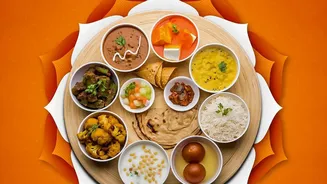
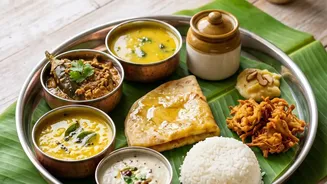
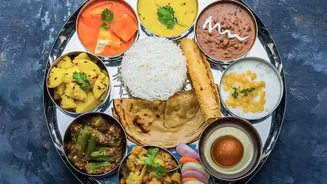
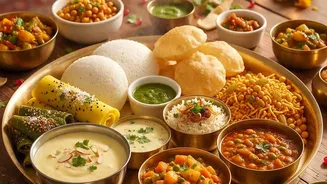
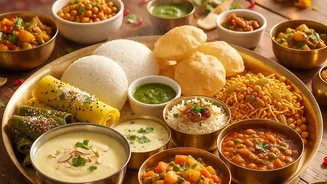
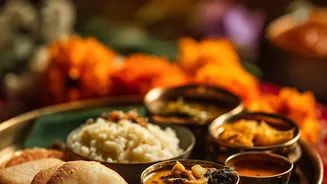
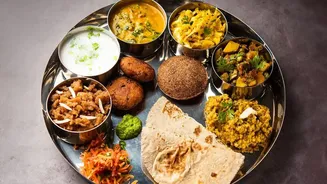
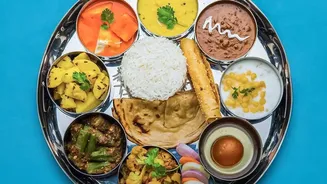
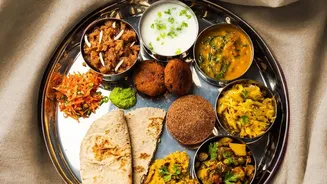
No culinary exploration of Rajasthan is complete without experiencing Dal Baati Churma. This iconic trio is more than a dish; it's a full-course meal and a cultural symbol of hospitality. The 'Dal' is a flavourful mix of lentils, typically five different
kinds, simmered with spices and ghee. The 'Baati' are hard, unleavened wheat balls that are traditionally baked in a charcoal oven until they are crisp on the outside and soft inside. These are then broken and generously dunked in ghee before being eaten with the dal. The 'Churma', a sweet counterpart, is made by crumbling baked baatis and mixing them with ghee and sugar or jaggery. One story suggests it was an accidental creation when a cook mistakenly poured sugarcane juice over baatis, creating a softer, sweeter version.
Laal Maas: A Fiery Royal Delicacy
Literally translating to 'red meat', Laal Maas is a legendary mutton curry that embodies the state's royal heritage. Its origins are traced back to the hunting expeditions of Rajput kings, who needed a way to cook game meat while masking its strong odour. The dish is famous for its fiery heat and vibrant red colour, which comes from a generous use of Mathania chillies, a special variety native to the region. The mutton is slow-cooked in a rich gravy of yoghurt, garlic, and a host of potent spices, resulting in incredibly tender meat and a robust, smoky flavour. While traditionally made with game, today it is almost always prepared with mutton and remains a must-try for any meat lover visiting Rajasthan.
Mirchi Vada: Jodhpur’s Spicy Street Food Star
Hailing from the city of Jodhpur, the Mirchi Vada is a beloved street food snack that packs a punch. It consists of a large, non-spicy green chilli that is stuffed with a zesty filling of spiced mashed potatoes. This stuffed chilli is then coated in a thick batter of gram flour (besan) and deep-fried until it turns golden brown and crispy. Often served hot with a side of tamarind or mint chutney, it offers a delightful contrast of a soft, flavourful interior and a crunchy exterior. This savoury treat is a staple for breakfast or an evening snack across Rajasthan, enjoyed by locals and travellers alike.
Pyaaz Ki Kachori: The Flaky Onion Pastry
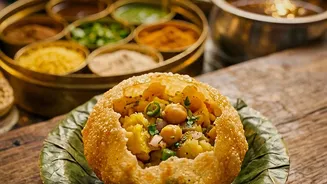
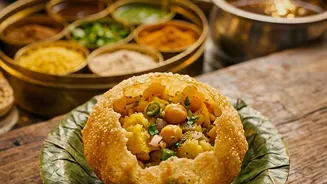
Another gem from the world of Rajasthani street food is the Pyaaz Ki Kachori. Originating from Jodhpur and popularized in Jaipur, this deep-fried pastry is a breakfast favourite. The kachori has a flaky, crispy shell made from all-purpose flour, which encases a savoury and slightly sweet filling of sautéed onions mixed with a blend of spices like fennel, cumin, and chilli powder. Often served with chutneys, these kachoris are larger and more flavour-packed than their lentil-filled counterparts found elsewhere in India. Their irresistible combination of textures and tastes makes them a snack you can't have just one of.
Ker Sangri: A Desert Delicacy
Ker Sangri is a unique and traditional dish born out of the scarcity of fresh vegetables in the arid Thar Desert. It's a flavourful stir-fry made from 'Ker', a tart wild berry, and 'Sangri', a long bean that grows on the Khejri tree. Both ingredients are typically dried and can be stored for long periods. Legend has it that the dish was discovered during a famine when villagers found these to be the only edible things left. The dish is prepared with a tangy and spicy mix of local spices, often including dried mango powder for sourness and raisins for a hint of sweetness, creating a complex flavour profile that is truly Rajasthani.
Ghevar: The Intricate Festive Sweet
Ghevar is a disc-shaped sweet that is as beautiful as it is delicious. Made from a batter of flour and ghee, it is deep-fried to create an intricate, honeycomb-like texture. This crispy disc is then soaked in sugar syrup and often garnished with rabri (thickened sweet milk), chopped nuts and silver leaf. Ghevar is traditionally associated with the monsoon season and festivals like Teej and Raksha Bandhan. While its origins are tied to the royal kitchens, it has become a beloved festive sweet across North India, with Jaipur being particularly famous for its renditions. It comes in several varieties, from plain and sweet to rich and decadent.