


1. Build a Pillow Fort Obstacle Course
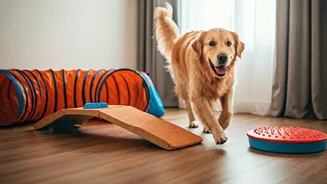
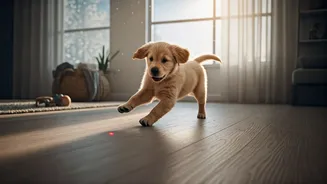
You don't need fancy equipment to create an exciting physical challenge for your pet. Use household items like sofa cushions, pillows, blankets, and sturdy cardboard boxes to build a mini obstacle course in your living room. Create tunnels for them to crawl
through, low hurdles to jump over, and different textures to walk on. Lure them through the course with a favourite toy or a high-value treat. This activity not only burns physical energy but also builds confidence as your pet navigates the new terrain. It’s a fantastic way to tire out a high-energy dog on a day when a long walk isn't possible.
2. Master the Art of Scent Work
A pet's nose is incredibly powerful, and putting it to work is one of the best ways to provide mental stimulation. Start simple by having your pet sit and stay while they watch you 'hide' a strong-smelling treat under a blanket or behind a furniture leg. Give them a release command like "Find it!" and praise them enthusiastically when they succeed. As they get better, you can make it more challenging by hiding treats in different rooms or inside cardboard boxes. This 'nose work' is deeply satisfying for animals and can be more tiring than a physical run, making it perfect for small apartments.
3. Introduce Puzzle Toys and Feeders
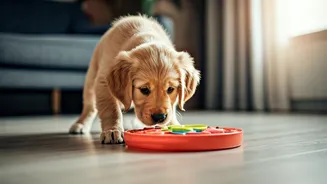
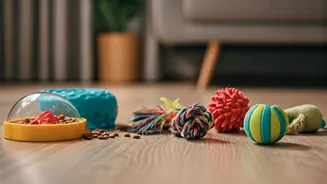
Instead of serving your pet's meal in a simple bowl, make them work for it. Slow feeders and puzzle toys require your pet to paw, nudge, and problem-solve to get their food. This mimics their natural foraging instincts and can prevent boredom-related behaviours. You can find a wide variety of these toys online or in pet stores, with different difficulty levels. You can also create a DIY version by placing kibble inside an old plastic bottle (with the cap off and lid ring removed) or in the cups of a muffin tin with balls placed on top. It turns mealtime into a brain game.
4. Play the Classic 'Shell Game'
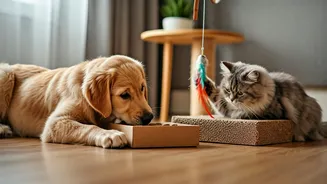
This simple game is a fantastic brain teaser for dogs and even some clever cats. All you need are three opaque cups and a small, smelly treat. Let your pet sniff the treat, then place it under one of the cups. Slowly shuffle the cups around in front of them. Encourage them to indicate which cup holds the prize by nudging it with their nose or paw. When they get it right, lift the cup and let them have the reward. This game sharpens their focus, tests their memory, and reinforces the bond between you and your pet.
5. Set Up 'Cat TV'
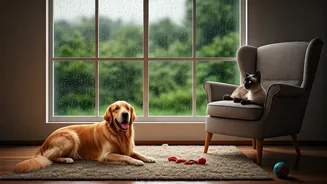
For our feline friends, visual stimulation is just as important as physical play. If you have a window with a safe, secure ledge or a nearby chair, you can create 'Cat TV'. Set up a bird feeder or a bird bath just outside the window. The sight of birds and squirrels coming and going provides hours of entertainment. It taps into their innate prey drive in a safe, non-destructive way. Ensure the window is securely closed to prevent any accidents. This passive form of entertainment is perfect for keeping your cat engaged while you're busy with work.
6. Teach a New Trick
An indoor day is the perfect opportunity for a training session. Teaching your pet a new trick—whether it's 'shake,' 'roll over,' 'spin,' or something more complex—is a powerful form of mental exercise. Keep training sessions short, positive, and fun, using plenty of praise and rewards. A 10-15 minute session can be surprisingly tiring for a pet's brain. Not only does it combat boredom, but it also strengthens their obedience skills and deepens your connection. You can find countless free tutorials online for tricks of all difficulty levels.