






Puri: The Perennial Epicentre
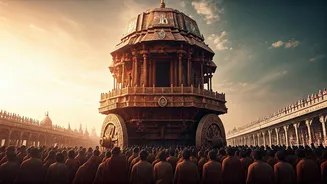
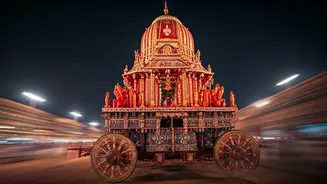
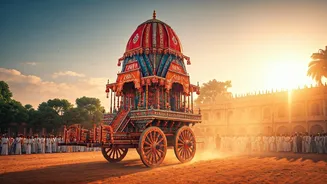
The Jagannath Puri Rath Yatra is one of the world's oldest and largest chariot festivals. [13] Every year, on Ashadha Shukla Dwitiya, the deities of Lord Jagannath, his elder brother Balabhadra, and sister Subhadra journey from their home temple to the Gundicha
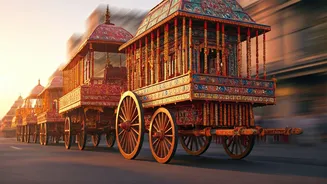
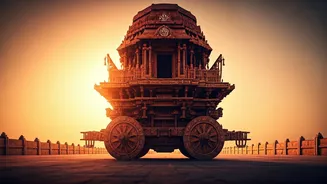
Temple, their aunt's abode, for a nine-day sojourn. [8, 9] This procession, a spectacle of unwavering faith, sees millions gather to pull the massive, newly constructed wooden chariots. [15] It’s a festival that breaks down barriers, allowing the deities to come out to meet all devotees, regardless of caste or creed. [8, 15] This tradition, steeped in ancient scriptures like the Puranas, sets the spiritual benchmark for every other Rath Yatra. [13, 16] For 2026, this grand event will take place on July 16th. [7, 8, 9]
Ahmedabad: A Legacy of Harmony and Scale
Second only to Puri in sheer scale, the Ahmedabad Rath Yatra boasts a rich history dating back to 1878. [11, 14] Started by Mahant Narsinhdasji, it transforms the city into a vibrant hub of devotion. [11, 14] The procession embarks on a 14-kilometre journey from the Jagannath Temple in the Jamalpur area. [14, 21] What makes Ahmedabad’s celebration particularly poignant is its route, which passes through communally sensitive areas, often becoming a symbol of unity. [21] The day begins with the Mangla Aarti, often performed by top political leaders, followed by the ‘Pahind Vidhi,’ a ritual where the Chief Minister of Gujarat symbolically sweeps the path for the chariots with a golden broom, signifying that all are servants before the Lord. [11, 14] With its decorated elephants, akhadas, and lakhs of devotees, Ahmedabad’s Yatra is a powerful cultural statement. [11, 21]
Kolkata: A Modern Tradition with Global Reach
While Ahmedabad’s Yatra is steeped in 19th-century history, Kolkata’s mainstream celebration is a more modern phenomenon with an international flavour. The International Society for Krishna Consciousness (ISKCON) organized its first Rath Yatra in the city in 1972, which was also the first in India for the organization. [6] This event was a sensation, with the sight of Western disciples in traditional Vaishnava attire drawing huge crowds. [6] Today, the Kolkata Rath Yatra is considered the third largest in India, after Puri and Ahmedabad. [14, 24] The procession carves a path through the city's heart, turning it into a week-long festival of faith, complete with cultural programs and the distribution of prasad. [24] It's important to note, however, that Bengal has an even older tradition in Mahesh, Serampore, which has hosted a Rath Yatra since 1396 CE and is considered the second oldest in India. [5, 18]
From Regional Ritual to National Spectacle
The headline's claim is more than just about size; it's about cultural resonance. While Puri remains the irreplaceable origin, Ahmedabad and Kolkata have become vital secondary centres that amplify the festival's reach and meaning. Each city infuses the Yatra with its unique local character. Ahmedabad’s procession carries a strong message of social harmony and public participation, reflected in its status as a ‘Lokotsav’ or public festival of Gujarat. [14, 21] Kolkata's celebration, driven by ISKCON, highlights the festival’s universal appeal, connecting a global spiritual movement to a deeply traditional Indian event. [6, 24] Together, they create a broader, more diverse narrative for the Rath Yatra. They demonstrate how a festival rooted in Odia tradition has been embraced and reinterpreted, solidifying its identity as a shared heritage for all of India.