




Understanding the Extended Triangle Pose
Extended Triangle Pose, or Utthita Trikonasana in Sanskrit, is a foundational standing yoga posture renowned for its ability to stretch and strengthen the entire body. [1, 16] Its name comes from the various triangles your body forms during the pose.
[8] While it looks simple, it is a powerful tool for lengthening the hamstrings and groin, opening the shoulders and chest, and improving balance. [3, 14] The pose encourages a deep, targeted stretch along the back of your front leg, making it particularly effective for addressing hamstring stiffness. [14] Unlike some deep forward folds, Triangle Pose allows you to stretch the legs while extending the back sideways, which can be a safer option if you have lower back sensitivity. [22]
A Step-by-Step Guide
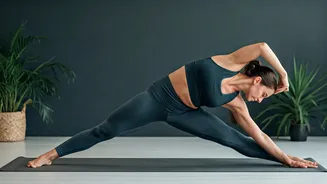
To practice Extended Triangle Pose safely, follow these steps. Start by standing with your feet about three to four feet apart. [4] Turn your right foot out 90 degrees so it's parallel to the side of your mat, and turn your left foot in slightly. Align the heel of your right foot with the heel or arch of your left foot. [1] Inhale and raise your arms parallel to the floor, reaching them out to the sides with palms down. [23] As you exhale, hinge from your right hip joint—not your waist—and extend your torso directly over your right leg. [4] Lower your right hand to your shin, ankle, or a yoga block placed outside your foot, ensuring you don't distort your torso's length. [1] Extend your left arm toward the ceiling, creating a straight line with your right arm. You can keep your head in a neutral position, look up toward your left hand, or gaze down at the floor. [4] Hold for 30 to 60 seconds before inhaling to rise, then repeat on the other side. [1, 4]
Common Mistakes to Avoid
Proper alignment is key to reaping the benefits and preventing injury. A common mistake is focusing too much on touching the floor, which causes the spine to round and the chest to collapse forward. [9, 24] Instead, prioritize keeping both sides of your torso long and open. [1] Another frequent error is locking the front knee, which places unnecessary strain on the joint. [24] Always maintain a tiny micro-bend in the front knee and engage your thigh muscles for support. [9, 6] Also, avoid putting too much weight on your lower hand; it should be used for light support while your core and legs do the work of holding the pose. [24] Finally, resist the urge to push your hips too far back, which can misalign the pose. Try to keep your body in a single plane, as if you were between two walls. [22]
Modifications for Every Fitness Level
The beauty of yoga is its adaptability. If your hamstrings are especially tight, don't force the pose. Use a yoga block under your lower hand; this brings the floor closer to you, allowing you to maintain a long spine. [2, 4] You can place the block at its highest, middle, or lowest height depending on your flexibility. If you feel unsteady, practice with your back against a wall for added support. [2, 4] This can help you find your balance and focus on the stretch. For those who cannot comfortably reach their shin, simply resting the hand on the thigh is a great starting point. [2] If you experience any neck strain while looking up, keep your gaze straight ahead or down toward your front foot. [4, 6]
More Than Just a Hamstring Stretch
While Extended Triangle Pose is a champion for tight hamstrings, its benefits don't stop there. This pose strengthens the thighs, hips, and core muscles, which contributes to better stability and posture. [1, 3] It creates a wonderful opening across the chest and shoulders, counteracting the slouched posture many of us adopt while sitting at desks. [8] According to some yoga traditions, the gentle twisting and activation of the core can also stimulate the abdominal organs and aid digestion. [3, 7] Furthermore, the combination of stretching, strengthening, and focused breathing required for the pose can help relieve stress and calm the mind. [3, 5]