





Meet the Universe's New Detective
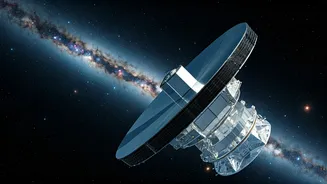
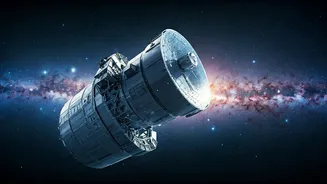
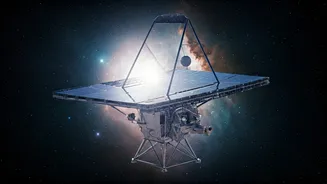
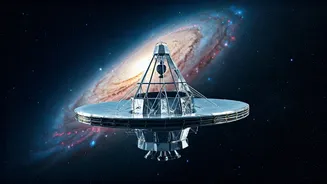
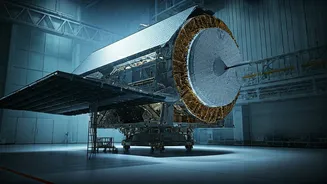
The mission set to define this new era is the launch of NASA's Nancy Grace Roman Space Telescope, slated to lift off on August 30, 2026. [7] Named after NASA's first chief of astronomy, the 'mother of Hubble,' the Roman telescope is not just another instrument
pointed at the sky; it's a cosmic surveyor of unprecedented scale. While telescopes like Hubble and Webb provide stunning, detailed images of small patches of the universe, Roman is designed for the big picture. Its primary mirror is the same size as Hubble's, but its Wide-Field Instrument will give it a field of view 100 times larger. [12] This means that where Hubble might capture a single galaxy in breathtaking detail, Roman can capture thousands in a single snapshot. This capability will allow it to map the structure of the universe and survey the sky with incredible speed, fundamentally changing how we approach the study of cosmology and planetary science.
The Hunt for Dark Energy and Rogue Planets
Roman has two primary, ambitious goals. The first is to tackle one of the biggest puzzles in physics: dark energy. This mysterious force is believed to be responsible for the accelerating expansion of our universe, but scientists know very little about it. By imaging billions of galaxies and measuring their distances and distribution across cosmic time, Roman will help astronomers test theories of general relativity and understand the force that is pushing the universe apart. [12] Its second major objective is a grand search for exoplanets—planets outside our solar system. Using a technique called gravitational microlensing, Roman is expected to find thousands of new worlds, from gas giants to rocky planets like Earth. [12] This method is sensitive enough to even detect 'rogue' planets, which are worlds that wander through space untethered to a star. Discovering and cataloguing these planets will provide crucial data on how common planetary systems are throughout our galaxy.
A New Eye in a Golden Age of Astronomy
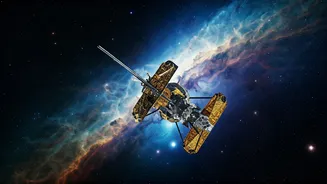
The launch of the Roman Space Telescope comes during what is already a golden age for astronomy. It will work alongside observatories like the James Webb Space Telescope, each complementing the other's strengths. While Webb excels at deep, high-resolution studies of specific objects, Roman will be the ultimate discovery machine, identifying countless new targets for Webb and other telescopes to investigate further. For audiences in India, this global endeavour resonates with our own nation's soaring space ambitions. As ISRO prepares for milestones like the Gaganyaan human spaceflight program and other advanced missions, the data from international projects like Roman will be invaluable. [11] The science of space is increasingly collaborative, and the discoveries made by Roman will benefit the entire global scientific community, inspiring a new generation of astronomers and engineers in India and beyond.
What Happens After the August Launch?
The telescope is scheduled to launch aboard a SpaceX Falcon Heavy rocket from Kennedy Space Center. [12] After its launch at the end of August, it will travel to its destination, a gravitationally stable point in space known as the Sun-Earth L2 Lagrange point, about 1.5 million kilometres from Earth. [12] This is the same orbital neighbourhood where the James Webb Space Telescope resides. Once in position, the telescope will undergo a period of commissioning, where its instruments are tested and calibrated. After that, its five-year primary mission will begin, with the potential for it to be extended. The sheer volume of data it will generate is staggering, promising to keep astronomers busy for decades and rewriting textbooks with its findings.