


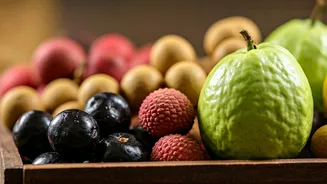


Jamun: The Purple Powerhouse
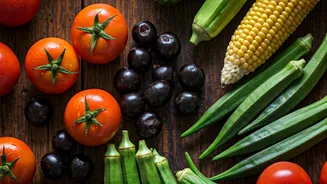
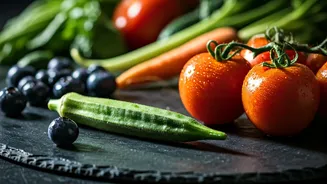
Arguably the king of monsoon fruits, the jamun (or black plum) is a seasonal superstar. Its arrival is synonymous with the rains. The deep purple, almost black fruit has a unique sweet, sour, and astringent taste that is hard to forget. Beyond its distinctive
flavour, jamun is celebrated for its health benefits. It is packed with vitamin C and iron, which help boost immunity—a welcome benefit during a season known for coughs and colds. Traditionally, it's also valued in Ayurveda for its properties that help manage blood sugar levels, making it a good choice for those with diabetes. The simple joy of eating a handful and getting a tell-tale purple-stained tongue is a core monsoon memory for many.
Corn (Bhutta): The Ultimate Rainy Day Snack
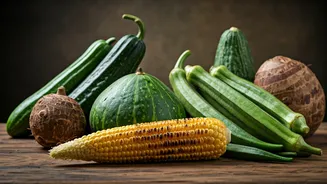
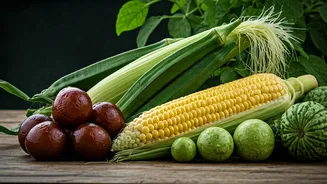
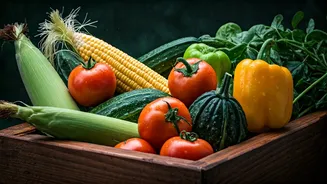
Is it even a monsoon without the smell of roasting bhutta in the air? The humble corn on the cob undergoes a magical transformation during this season, becoming the nation's favourite snack. Whether it’s roasted over hot coals and rubbed with salt, chilli, and lime, or steamed and served with butter, bhutta provides warmth and comfort on a gloomy, rainy day. It's more than just a treat; corn is a great source of dietary fibre, which aids digestion, and contains essential minerals like zinc and magnesium. It’s a wholesome, low-calorie snack that captures the very essence of the season.
Peaches and Plums: Stone Fruit Sweetness
While often associated with cooler climates, the Indian varieties of peaches (aadu) and plums (aalubukhara) hit their peak right at the beginning of the monsoon. The increased humidity and cooler temperatures help them ripen into perfectly sweet and juicy orbs. These stone fruits provide a burst of sunshine-like sweetness that can brighten any grey day. They are rich in antioxidants and an excellent source of vitamins A and C, which are crucial for skin health and a robust immune system. Enjoy them fresh, add them to salads, or stew them into a simple, delicious dessert.
Gourds Galore: Nature's Humble Hydrators
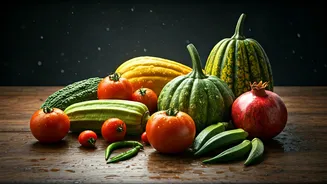
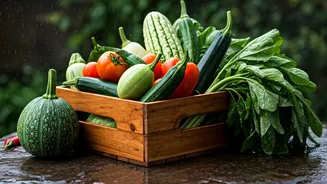
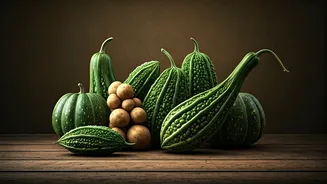
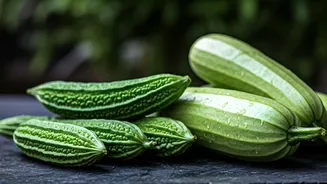
The monsoon is the prime season for a variety of gourds, including bottle gourd (lauki), bitter gourd (karela), and ridge gourd (tori). While they may not be as glamorous as colourful fruits, these vegetables are nutritional workhorses. They thrive in the damp, humid conditions of the monsoon. Rich in water content, they are incredibly hydrating and easy to digest, which is ideal for the season's sluggish digestive system. Lauki is cooling, karela helps regulate blood sugar, and tori is packed with fibre. Including these in your curries, dals, and sabzis is a simple and effective way to eat seasonally and stay healthy.
Pomegranate (Anar): The Resilient Jewel
While available for a good part of the year, the monsoon crop of pomegranates is often considered superior in terms of juiciness and flavour. These ruby-red seeds, or arils, are packed with powerful antioxidants like punicalagins and anthocyanins, which have anti-inflammatory effects and support heart health. A handful of pomegranate seeds can be a great way to boost your energy levels and strengthen your body's defences against common seasonal infections. It’s a versatile fruit that works equally well sprinkled over a salad, blended into a juice, or simply eaten on its own.
Cherries: A Fleeting and Precious Treat
The Indian cherry season is short, sweet, and perfectly timed to coincide with the early weeks of the monsoon. These bright red fruits are a delight, offering a burst of sweetness with a tart finish. They are not just delicious but also a great source of antioxidants and anti-inflammatory compounds. Their brief availability makes them feel like a precious, limited-edition treat from nature. Enjoying a bowl of fresh cherries while listening to the rain is one of the season's simplest and most profound pleasures. Their presence in the market is a clear sign that the best of the monsoon's bounty has truly arrived.