





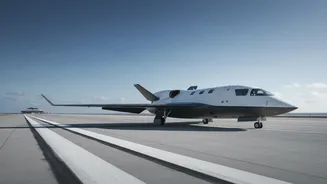


From Use-and-Throw to Reusable
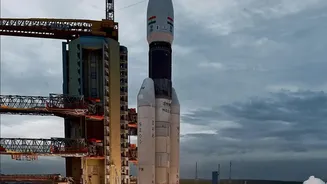
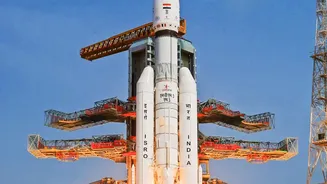
Traditionally, sending a satellite into space has been a costly, one-shot deal. Rockets, known as expendable launch vehicles, are used once and then discarded, with their expensive components burning up in the atmosphere or falling into the ocean. This
makes the hardware—the physical structure of the rocket—the most expensive part of any launch, accounting for over 80% of the total cost. By developing a vehicle that can be recovered and reused, the massive cost of manufacturing a new rocket for every mission is eliminated. Think of it like the difference between building a new car for every single trip and using the same one over and over again.
Pushpak: The Star of the Show
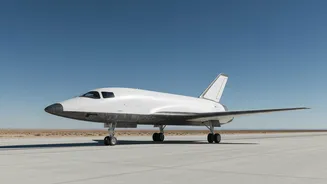
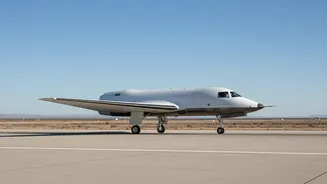
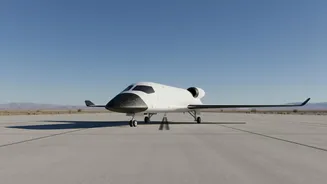
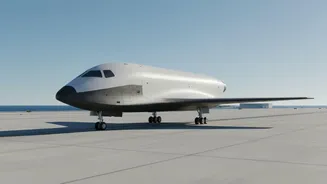
ISRO's solution is a winged vehicle technology demonstrator named 'Pushpak'. This space plane is the key to India's reusable rocket ambitions. To test its capabilities, ISRO has conducted a series of groundbreaking Landing Experiments (LEX). In these tests, an Indian Air Force Chinook helicopter lifts Pushpak to an altitude of 4.5 kilometres and releases it. From there, the vehicle has to find its own way back to a runway and land safely, all by itself.
Nailing the Autonomous Landing
The hardest part of reusing a space vehicle is getting it to land safely and precisely. During re-entry from space, a vehicle travels at extreme speeds. ISRO's LEX missions were designed to simulate these exact conditions. After being dropped mid-air, Pushpak successfully performed complex manoeuvres, corrected its path, and landed on a runway at a speed of over 320 kmph, faster than a commercial aircraft. The success of these autonomous landings, demonstrated in a trio of tests, proves ISRO has mastered the crucial technologies needed for a vehicle returning from orbit. What's more, the same winged body was used in the second and third tests, proving the hardware's reusability.
The Economics of Reusability
The economic implications of this technology are enormous. Private companies have already shown that reusing rocket stages can slash launch costs by 30-40%. Former ISRO Chairman K. Sivan once estimated that reusable technology could cut launch costs by as much as 80%. Such a drastic reduction would make access to space more affordable for a wider range of customers, including commercial satellite operators, researchers, and even other nations. This would give India a significant competitive edge in the global launch services market, which is projected to grow to over a trillion dollars by 2035.
The Bigger Picture: A Two-Stage Future
These landing experiments are a vital first step towards ISRO's ultimate goal: developing a Two-Stage-to-Orbit (TSTO) reusable launch vehicle. In this concept, the first stage—a scaled-up version of the winged RLV—would carry the second stage with the satellite to a certain altitude before detaching and flying back to Earth to be used again. The smaller, expendable second stage would then carry the satellite into its final orbit. This approach is seen as a more practical and cost-effective method for achieving fully reusable launch capabilities, bringing down the cost per kilogram to orbit dramatically.