
What Are Festival Special Trains?
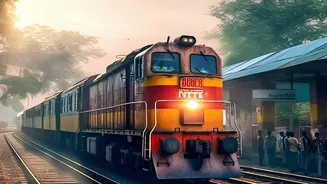
Festival special trains are temporary services introduced by Indian Railways to handle the massive surge in passenger demand during peak seasons like Diwali and Chhath Puja. You can identify them by their 5-digit number, which typically starts with a '0'.
Unlike regular trains that run year-round on a fixed schedule, these services are announced for a limited period, usually a few weeks, to connect major cities with regions experiencing high travel demand. For Diwali 2026, hundreds of such services have been announced, connecting hubs like Mumbai, Delhi, Pune, and Bengaluru with destinations in Uttar Pradesh, Bihar, West Bengal, and other states.
Booking Window: Planning vs. Spontaneity
For regular trains, the booking window typically opens 120 days in advance, and for popular Diwali routes, tickets can vanish within minutes. Special trains, however, have a much shorter and more unpredictable booking window. They are often announced just 15 to 30 days before their run, with bookings opening shortly after the announcement. For the 2026 Diwali season, bookings for many special trains began in late September for journeys in October and November. This makes them a great option if you missed the 120-day window, but it also means you need to be vigilant, constantly checking the IRCTC portal and railway announcements to grab a seat.
Cost: The Price of a Confirmed Seat
A confirmed ticket during Diwali is priceless for many, but special trains come at a literal premium. These trains are subject to 'special charges', which means fares are higher than for regular mail or express trains on the same route. The surcharge is typically around 10% for Second Sitting and can be as high as 30% for Sleeper and all AC classes. Furthermore, concessions for senior citizens or other categories are generally not applicable on these trains. So, while a special train might save you from a long waitlist, be prepared to pay a bit more for the convenience.
Routes and Timings: Convenience vs. Compromise
Special trains are strategically planned to serve high-demand corridors. For Diwali 2026, numerous services connect major metropolitan areas to hometowns across the country. However, since they need to be slotted into an already congested network, their timings can be less than ideal. You might find them departing or arriving at odd hours, such as late at night or early in the morning. Regular trains, being part of the permanent timetable, often have more convenient and established schedules. The choice here is between getting a confirmed ticket on a special service at an inconvenient time or trying your luck with a waitlisted ticket on a perfectly-timed regular train.
Punctuality and Priority: The Million-Rupee Question
Here's a critical trade-off: special trains generally have lower priority on the tracks compared to regular superfast mail and express trains like the Rajdhani or Shatabdi. Because they are not part of the regular schedule, they are often looped or held at stations to allow higher-priority trains to pass. This can lead to significant delays, sometimes running into several hours. If you have a time-sensitive connection or engagement at your destination, a regular, higher-priority train might be a safer bet, even with the uncertainty of a waitlisted ticket. If your main goal is simply to reach your destination with a confirmed seat, the potential delays on a special train might be a worthwhile compromise.
Onboard Experience: Comfort and Crowds
Regular trains offer a predictable level of comfort based on their class. Special trains, on the other hand, can be a mixed bag. They are often formed using spare or idle coaches, which might be older or show more signs of wear and tear. While they provide essential amenities, the primary focus is on adding capacity rather than offering a premium experience. Both types of trains will be extremely crowded during the festival period, but the desperation for a confirmed ticket can sometimes lead to more intense crowding on and around special services. Booking a higher class (AC) can mitigate some of these comfort issues on any train.