







Decoding the Different Loan Types
Financing for a digital media project isn't a one-size-fits-all solution. The type of funding you secure will depend on your business's scale, stage, and specific needs. The options range from traditional bank loans and government schemes to more flexible
digital lenders and equity-based venture capital. Each has its own criteria and, most importantly, covers different types of expenses. For a solo creator, a small, unsecured personal or MUDRA loan might be perfect for new equipment. For a media-tech startup looking to scale, venture capital might be the only viable path to cover aggressive marketing and team expansion. Understanding these distinctions is the first step toward securing the right financial backing for your project.
Traditional Term and Working Capital Loans
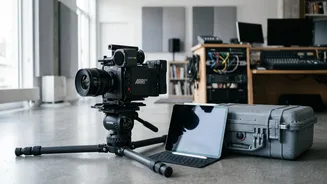
For established digital media businesses with a steady revenue stream, traditional banks offer term loans and working capital loans. A term loan provides a lump sum of cash upfront, which is ideal for significant, one-time investments. This can cover the purchase of high-end cameras, editing suites, servers, or even the renovation of a studio space. Working capital loans, on the other hand, are designed to finance day-to-day operational expenses. This includes paying staff salaries, covering software-as-a-service (SaaS) subscriptions for editing or analytics tools, paying rent for an office or co-working space, and managing other immediate costs that keep the business running smoothly. These loans typically require a solid business history and credit profile.
Government Schemes: MUDRA and Stand-Up India
The Indian government has launched several initiatives to support micro and small enterprises, which are highly relevant for individual creators and early-stage digital businesses. The Pradhan Mantri MUDRA Yojana (PMMY) offers collateral-free loans up to ₹10 lakh, which can be used to purchase equipment, software, or cover initial setup costs. The Stand-Up India Scheme is designed to finance women and SC/ST entrepreneurs, offering composite loans between ₹10 lakh and ₹1 crore for new projects in the manufacturing, services, or trading sectors, which includes many digital media ventures. These government-backed loans are accessible through major banks and are specifically designed to empower entrepreneurs at the grassroots level.
The Rise of NBFCs and Digital Lenders
Non-Banking Financial Companies (NBFCs) and modern fintech platforms have become a popular choice for digital entrepreneurs due to their speed and flexibility. These lenders often have a fully digital application process and can approve loans within 24-72 hours. They are particularly useful for covering urgent needs like funding a social media marketing campaign, purchasing new software licenses, or bridging a short-term cash flow gap while waiting for client payments. Many NBFCs offer unsecured loans, meaning no collateral is required. They often use alternative data points, beyond just a traditional credit score, to assess the eligibility of creators and digital businesses, making them more accessible to new-to-credit applicants.
Venture Capital: Funding for Growth and Scale
For digital media startups with high growth potential, venture capital (VC) is a distinct form of financing. Unlike a loan, VC funding involves selling an equity stake in your company to investors. This money isn't just for buying equipment; it's for scaling the business exponentially. VC funds typically cover large-scale expenses like aggressive marketing and user acquisition campaigns, hiring a larger team of developers or content producers, expanding into new markets, and investing in proprietary technology. While this path means giving up some ownership, it provides the significant capital required to compete at a national or global level and is a common route for media-tech platforms and large-scale digital content networks.
What Expenses Are Typically Covered?
Regardless of the financing type, digital media loans are intended to cover a mix of tangible and intangible assets essential for operation and growth. Common covered expenses include: Hardware, such as cameras, microphones, lighting, laptops, and servers. Software licenses for editing, design, analytics, and project management. Studio or office setup, including rent and interior costs. Marketing and promotion, such as social media advertising, collaborations, and PR campaigns. Working capital needs like salaries for staff and freelancers, utility bills, and other daily operational costs. Finally, funds can be used for upskilling, such as enrolling in courses for new software, digital marketing, or production techniques.