


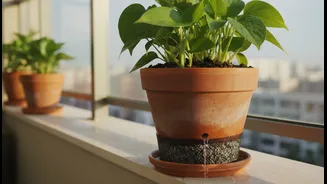


Start with a Lighter Soil Mix
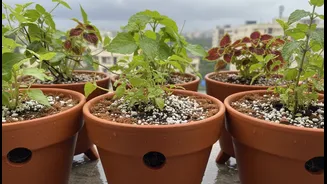
The foundation of a waterlog-proof balcony garden is the soil itself. Heavy, dense garden soil holds too much water for too long, which is a recipe for disaster in a pot during the monsoon. Instead, opt for a lightweight and well-draining potting mix.
A good combination often includes garden soil, coco peat or perlite, and compost. The coco peat and perlite create air pockets, allowing excess water to drain away quickly while still retaining enough moisture for the plant. You can buy pre-made potting mixes or create your own by combining parts like soil, coco peat, and vermicompost to ensure your plants' roots can breathe even during heavy showers.
Prioritise Excellent Drainage
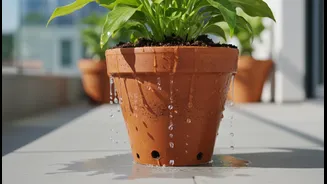
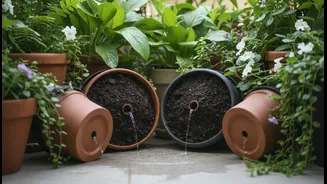
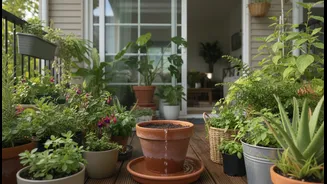
Every pot that remains outdoors during the monsoon absolutely must have drainage holes. A pot without a hole is just a bucket, and a plant in a bucket of rainwater will not survive long. Check all your pots before the heavy rains begin. Ensure the holes are clear and not blocked by compacted soil or roots. For extra protection, you can place a piece of broken pottery or a small piece of mesh over the hole before adding soil. This prevents the soil from washing out or clogging the opening, ensuring a clear path for excess water to escape. Also, if you use saucers or trays under your pots, make sure to empty them promptly after rain to prevent the pot from sitting in stagnant water.
Give Your Pots a Lift
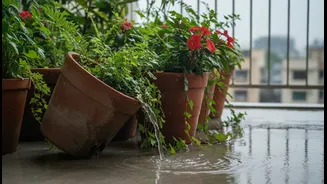
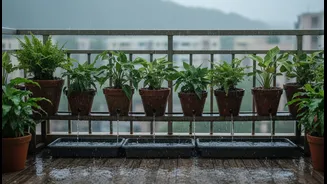
One of the simplest yet most effective tricks is to elevate your pots. When a pot sits directly on the balcony floor, its drainage hole can easily get blocked, preventing water from escaping. Lifting the pots even by just an inch or two can make a huge difference. You can use pot feet, bricks, broken pieces of tile, or dedicated plant stands. This small gap allows for better airflow underneath the pot and ensures that excess water has a clear exit path. It’s a low-effort solution that significantly reduces the risk of roots sitting in a puddle after a downpour.
Rethink Your Watering Routine
During the monsoon, you need to throw your regular watering schedule out the window. The rain will do most of the work for you. Overwatering is one of the biggest mistakes gardeners make during this season. Before you even think about picking up a watering can, check the soil. The best way to do this is the finger test: stick your finger one to two inches into the soil. If it feels dry at that depth, then you can water it lightly. If it’s damp, leave it alone. Plants that are kept under a covered part of the balcony will still need manual watering, but much less frequently than in the hot summer months.
Prune for Better Airflow
High humidity and constantly wet leaves create the perfect environment for fungal diseases like powdery mildew and root rot. To combat this, regular pruning is essential. Trim away any overgrown branches, crowded leaves, and any yellowing or diseased parts of the plant. This thinning-out process improves air circulation around the plant, allowing leaves and stems to dry faster after a rain shower. Good airflow is one of your best defences against the fungal infections that thrive in the damp conditions of the monsoon.
Provide Strategic Shelter and Support
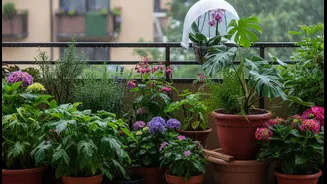
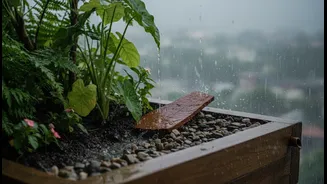
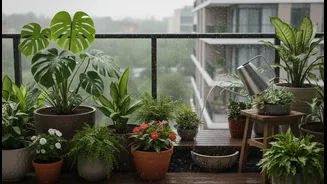
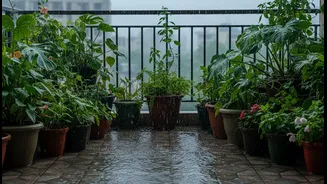
Not all plants enjoy a direct hit from the torrential rains. Delicate plants or those prone to rot, like succulents and cacti, should be moved to a covered spot on your balcony where they get the humidity but not the direct downpour. For other plants, consider grouping them together. This can help protect them from strong winds that often accompany the rain and can also reduce soil erosion from the pots. For taller or more slender plants, providing support with stakes can prevent their stems from snapping under the weight of the water or in strong gusts of wind.