

The Seated Forward Bend, or Paschimottanasana, is a fundamental yoga pose known for its deep stretch. But for many, tight hamstrings and a stiff back make it a challenge. A supportive yoga strap can be the key to unlocking this pose safely.
Understanding Paschimottanasana
Paschimottanasana
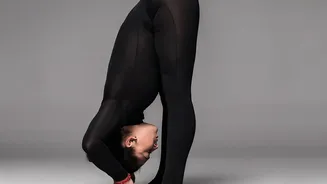
is a forward bend that offers a significant stretch to the entire back side of the body, from the heels to the neck. Its benefits are extensive, including lengthening the hamstrings, stretching the spine and shoulders, and promoting a sense of calm and grounding. The goal is to hinge forward from the hips while maintaining a long spine, eventually bringing the torso to rest on the legs. However, this is where many practitioners encounter difficulty, as flexibility in the hamstrings and lower back is essential for performing the pose correctly.
The Common Hurdle: Tightness and Misalignment
The most frequent mistake in the Seated Forward Bend is rounding the back to force the hands to reach the feet. This 'hunching' action shifts the stretch away from the hamstrings and places undue strain on the lower back and spine, negating the pose's benefits and increasing the risk of injury. This often happens because of tightness in the hamstrings, which pulls on the pelvis and makes it difficult to hinge forward from the hips with a straight back. Attempting to push through this resistance can lead to strain rather than a productive stretch.
Enter the Yoga Strap: Your Ally in Alignment
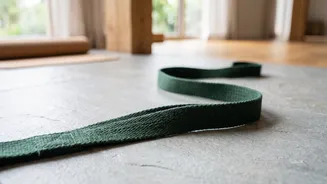
A yoga strap is a simple prop, typically a long piece of woven cotton with a buckle, that effectively acts as an extension of your arms. Its primary purpose is not to pull you deeper into a pose, but to help you maintain proper form and alignment while you work within your current range of motion. For Paschimottanasana, a strap bridges the gap between your hands and your feet, allowing you to keep your spine long and your shoulders relaxed as you fold forward.
How to Use a Strap for Seated Forward Bend
Using a strap in Paschimottanasana is straightforward and transformative. Begin by sitting on your mat with your legs extended in front of you. Loop the middle of the strap around the balls of both feet. Hold one end of the strap in each hand. Inhale to sit up tall, lengthening your spine from your tailbone to the crown of your head. As you exhale, begin to hinge forward from your hips, leading with your chest. Keep your spine straight and avoid rounding your back. Hold the strap taut and use the gentle tension to help guide your torso forward without yanking or forcing the movement. Your belly should move toward your thighs first, not your head toward your knees.
Mistakes to Avoid With a Strap
While a strap is a helpful tool, it can be misused. The most common error is using the strap to aggressively pull yourself into the fold. This can lead to overstretching and injury. The strap is a guide, not a winch. Ensure your shoulders remain relaxed and away from your ears; if they are hunching, you're pulling too hard. Also, remember to breathe. Holding your breath creates tension in the body, which is counterproductive to the goal of the stretch. With each inhalation, try to lengthen your spine, and with each exhalation, see if you can gently deepen the fold.
Choosing the Right Yoga Strap
Yoga straps come in various lengths and materials. For most people, an 8nd foot strap is a versatile choice that works well for Paschimottanasana and other poses. Taller individuals or those with very limited flexibility might prefer a 10nd foot strap for extra reach. In terms of material, cotton is generally preferred as it is soft, durable, and less likely to slip in your hands compared to nylon. The buckle is typically a metal Dnd ring, which is secure and easy to adjust.