





AI: The New Colleague, Not the Competition
Artificial intelligence is no longer a far-off concept; it is a present-day reality in the Indian workplace. From software development to marketing and human resources, AI is being integrated not to replace employees, but to augment their capabilities.
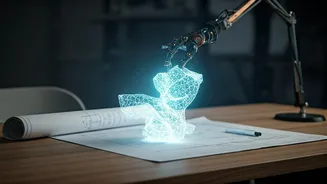
The narrative is shifting from automation to augmentation. Think of AI as a tireless assistant, adept at handling routine, repetitive tasks. It can sift through massive datasets, generate boilerplate code, and manage initial customer queries, freeing up human workers to focus on more complex, strategic, and creative endeavours. A recent NASSCOM report highlights that this human-AI collaboration is already redefining roles, with the most effective partnerships seen in higher-order activities like system architecture and scope definition. This change means the future isn't about competing with AI, but learning to collaborate with it effectively.
The Irreplaceable Value of Human Ingenuity
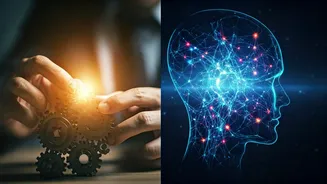
While AI excels at processing data and recognising patterns, it lacks the distinctly human traits that drive true progress and innovation. As technology handles the 'what', the demand for people who can handle the 'why' and 'how' is soaring. Experts consistently point to a set of core human skills that are becoming more valuable in the AI era. These are not soft skills, but power skills that enable us to steer technology toward meaningful outcomes. They include critical thinking to analyse information objectively, creativity to innovate beyond what existing data suggests, and complex problem-solving to navigate ambiguous situations where there are no clear right or wrong answers. In a world awash with AI-generated content and data, the ability to apply human judgment, challenge assumptions, and bring novel ideas to life is what truly sets us apart.
Emotional Intelligence: The Ultimate Human Advantage
Perhaps the most critical differentiator is emotional intelligence (EQ). AI can mimic human language, but it cannot replicate genuine empathy, build trust, or foster the psychological safety needed for a team to thrive. Skills like communication, collaboration, and leadership are fundamentally rooted in our ability to understand and connect with other people. An AI cannot mentor a junior colleague, navigate a delicate negotiation, or inspire a team through a difficult project. These actions require an understanding of nuance, non-verbal cues, and the complex motivations behind human behaviour—all hallmarks of high emotional intelligence. As routine tasks become automated, the roles that depend on building relationships and managing people become even more crucial and irreplaceable.
Future-Proofing Your Career in India
For India, with its vast and young workforce, this transition presents both a challenge and a monumental opportunity. The demand for AI-skilled professionals is projected to reach over one million by 2026, but there's a significant gap between demand and supply. However, the solution isn't just about learning to code. It's about building a dual competency: technical literacy combined with strong human skills. The new playbook for staying relevant involves continuous learning and upskilling. Major Indian tech companies are already investing heavily in training their workforce, not just on AI tools but on the collaborative skills needed to work with them. For individuals, the message is clear: adaptability is key. A mindset of lifelong learning and a focus on developing skills like critical thinking, creativity, and empathy will be the best preparation for a future where humans and AI work together.