







The Bright Spark of Acidity
Acid is the ingredient that makes your food sing. Think about that squeeze of lime over a bowl of hot dal or on top of fresh poha; it instantly lifts and brightens all the other flavours. Acidity, one of the five basic tastes, provides balance. It cuts
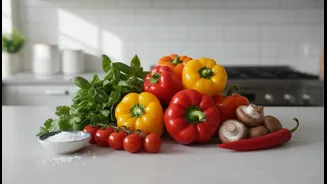
through richness and fat, making heavy dishes feel lighter and more vibrant. For example, a creamy curry or a rich biryani can be beautifully balanced with a side of raita (yogurt) or a kachumber salad with a tangy lemon dressing. When a dish tastes dull or one-dimensional even after you have salted it properly, it almost always needs a touch of acid. This doesn't mean the food needs to taste sour; rather, a small amount of an acidic ingredient like vinegar, citrus juice, tamarind, or even tomatoes enhances all the other notes, from salty to sweet, making the overall flavour profile feel complete.
The Deep Flavour of Toasting
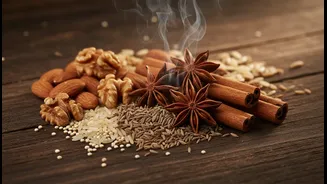
Toasting is a simple step that unlocks a huge amount of flavour, especially in spices, nuts, and seeds. When you gently heat whole spices like cumin, coriander, or peppercorns in a dry pan, you awaken their volatile oils. This process not only makes your kitchen smell incredible but also deepens their flavour, adding nutty, complex notes that raw spices simply don't have. This technique is central to much of Indian cooking, from the 'bhunao' process of roasting a masala base to the final flourish of a 'tadka', where spices are bloomed in hot oil or ghee to release their essence over a dish. The magic behind this transformation is a chemical process called the Maillard reaction, which occurs when proteins and sugars are heated, creating hundreds of new aroma and flavour compounds. This is the same reaction that gives toasted bread and roasted meats their delicious brown colour and savoury taste. Just a few minutes of toasting can make the difference between a good dish and an unforgettable one.
The Finishing Touch of Fresh Herbs
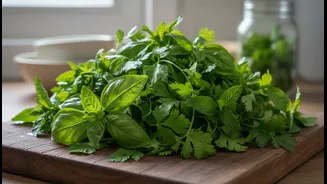
Fresh herbs are the final layer of flavour, adding aroma, colour, and a delicate complexity that dried herbs can't replicate. There’s a crucial difference in how to use them. Hardy, woody herbs like rosemary and thyme have robust flavours that can withstand heat, so they are best added earlier in the cooking process to infuse the entire dish. However, delicate, soft herbs like coriander, mint, and basil have subtle oils that are quickly destroyed by prolonged heat. These are best used as a finishing touch, stirred in a minute or two before serving or scattered on top as a garnish. Think of the burst of freshness from a handful of chopped coriander over a finished curry, or the cooling effect of mint in a chutney served with hot samosas. These herbs provide a bright, clean top note that contrasts beautifully with the deeper, cooked flavours of a dish, making each bite more interesting and dynamic.
Putting It All Together
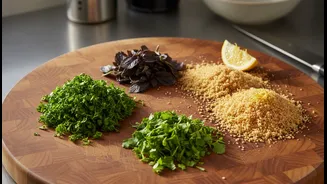
These three elements rarely work in isolation; they are a team. A simple chickpea salad becomes a gourmet experience with a sharp lemon vinaigrette (acidity), toasted cumin seeds (toasting), and a generous amount of fresh parsley and mint (herbs). A basic grilled chicken breast can be marinated in yogurt and lemon (acidity), seasoned with a toasted spice rub (toasting), and served with a vibrant green chutney made of fresh coriander and mint (herbs). Understanding how these principles interact allows you to move beyond simply following a recipe and start cooking more intuitively. When you taste a dish and identify what it needs—a little brightness, a deeper base note, or a fresh finish—you gain the power to make any food taste more complete.