

When we explore new worlds, we need special tools to read the stories written in their rocks and dust. One of NASA's most important tools is the Gamma-Ray and Neutron Spectrometer, a sophisticated instrument that acts like a geological detective.
What is a Gamma-Ray and Neutron Spectrometer?
A Gamma-Ray
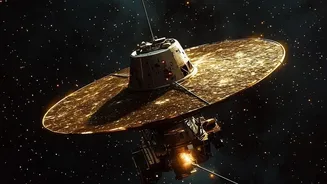
and Neutron Spectrometer, or GRNS, is a scientific instrument designed to figure out what a planet, moon, or asteroid is made of without ever touching it. It does this by measuring two types of invisible particles: gamma rays and neutrons. Celestial bodies are constantly bombarded by high-energy cosmic rays from deep space. When these rays strike atoms on the surface, the elements become 'excited' and emit their own gamma rays and neutrons in response. Each element gives off a unique energy signature, like a fingerprint. The GRNS instrument detects these particles, measures their energy levels, and sends the data back to Earth. Scientists can then analyze these signatures to create a detailed map of the elements present on the surface, such as iron, silicon, potassium, and even frozen water.
How Does It Work?
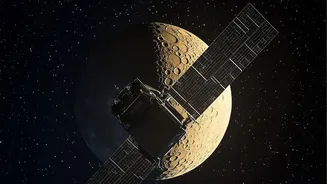
The instrument is actually two devices in one. The Gamma-Ray Spectrometer (GRS) typically uses a high-purity sensor, often made of germanium, to detect the energy of incoming gamma rays. The Neutron Spectrometer (NS) uses special sensors to count neutrons across different energy levels. By combining the data from both, scientists get a much more complete picture of the surface composition. This technology is not new; it has been a reliable workhorse for NASA for years. A similar GRNS instrument was used on the MESSENGER mission to map the surface of Mercury and on the Psyche mission to study a unique metal-rich asteroid. Each new version of the instrument builds upon the success of its predecessors, becoming more sensitive and precise.
The Mission to a 'Lunar Swirl'
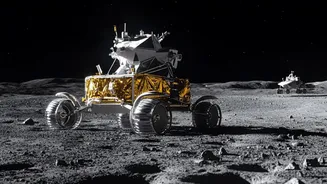
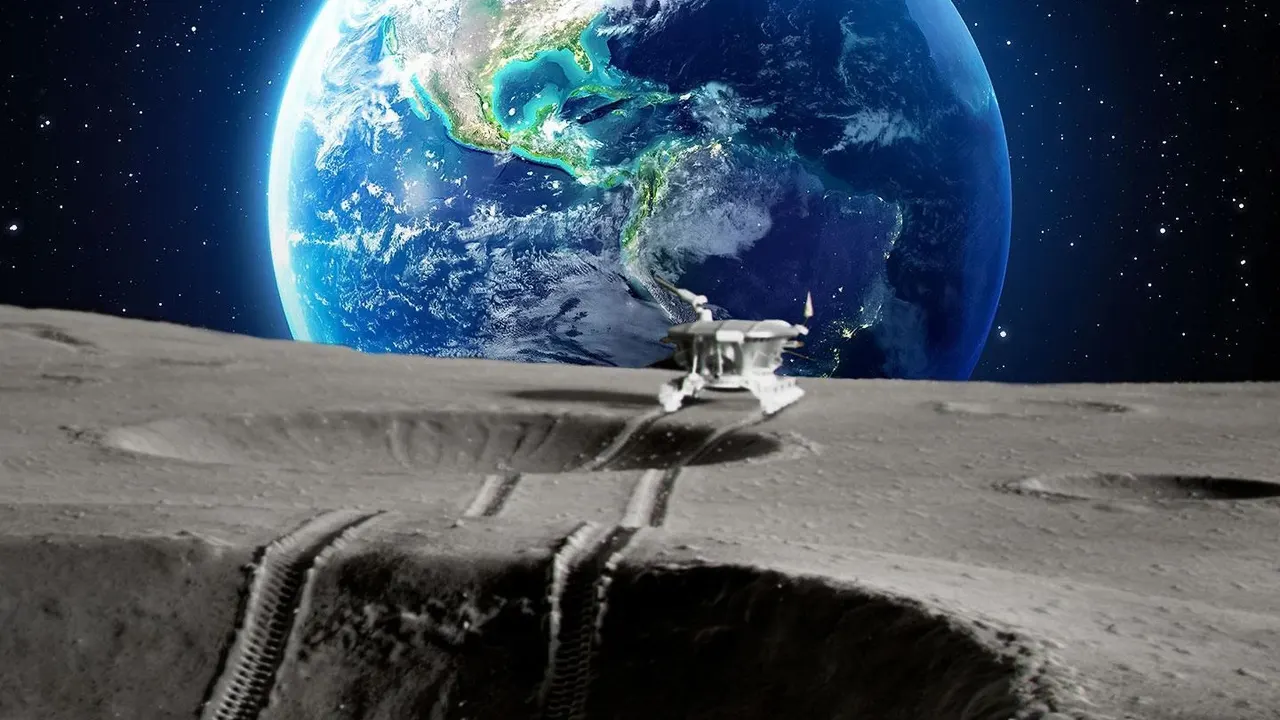
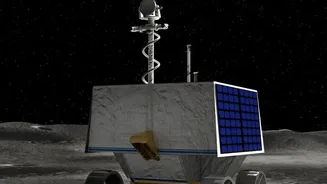
While GRNS instruments are used on many missions, one of the most exciting upcoming uses is tied to the Lunar Vertex mission, which is part of NASA's Commercial Lunar Payload Services (CLPS) initiative. This mission is set to explore a mysterious and beautiful feature on the Moon called Reiner Gamma. Visible from Earth with a backyard telescope, Reiner Gamma is a 'lunar swirl'—a bright, snake-like pattern on the dark lunar plains that casts no shadow. Scientists are fascinated by these swirls because they are associated with localized magnetic fields. The Moon, unlike Earth, does not have a global magnetic field, but it does have these strange patches of remnant magnetism. The Lunar Vertex lander and rover will be the first to study one of these magnetic anomalies up close on the surface, and its instruments will help solve the puzzle of how these swirls form.
Solving a Magnetic Mystery
The leading theory is that these magnetic fields act as a sort of 'sunscreen', deflecting the constant stream of charged particles from the Sun known as the solar wind. This solar wind normally darkens the lunar soil over millions of years through a process called space weathering. Areas protected by the magnetic field would remain brighter, creating the swirl patterns we see today. The Lunar Vertex mission, with its suite of instruments including magnetometers, will directly test this hypothesis. While the headline instrument for this specific mission is a magnetometer, the principle of using spectroscopy to understand surface composition—a technique perfected by GRNS systems—is central to understanding the 'why' behind the swirls. Data from missions like India's Chandrayaan-1 have also contributed to our understanding of these magnetic anomalies, highlighting the global effort to unravel the Moon's secrets.
Pioneering the Future with Commercial Partners
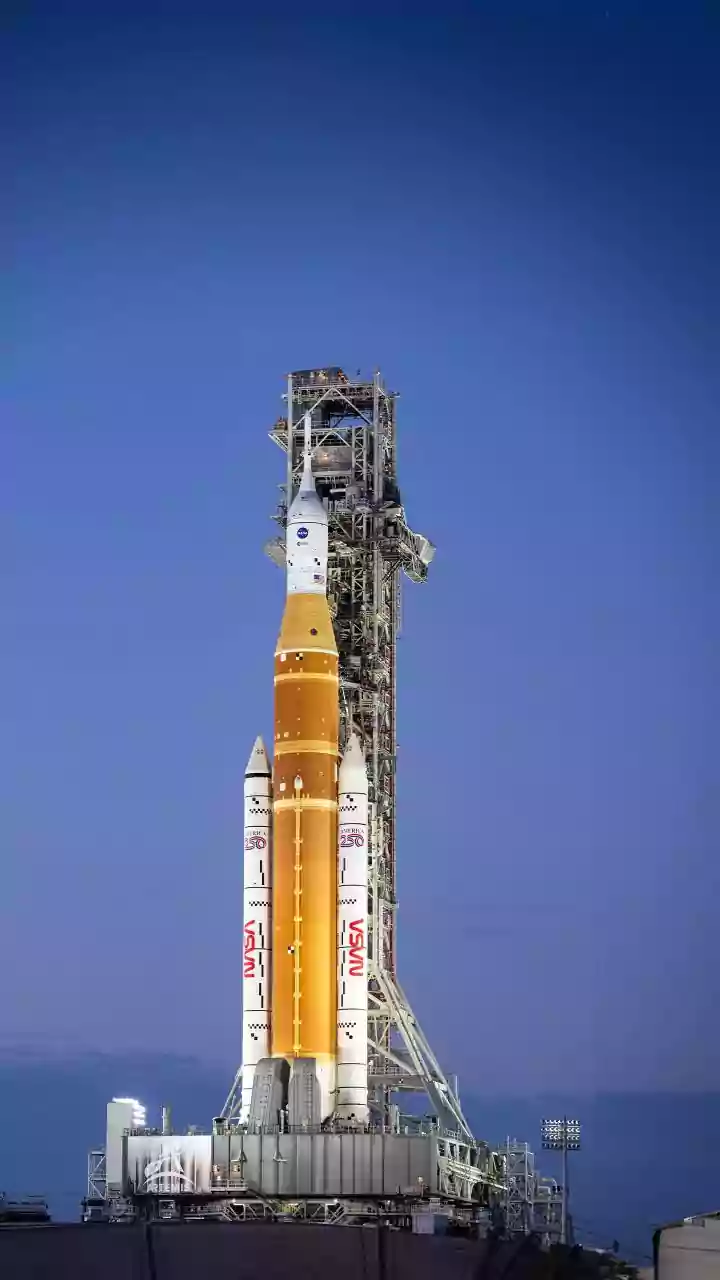
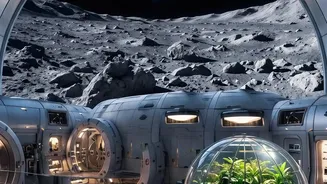
The Lunar Vertex mission is a prime example of NASA's modern approach to space exploration through the CLPS program. Instead of building and flying every mission itself, NASA is contracting with private American companies to deliver its scientific payloads to the Moon. This model is designed to accelerate the pace of lunar science, reduce costs, and foster a commercial space economy. By sending robotic scouts like Lunar Vertex, NASA gathers crucial data to prepare for the return of astronauts to the Moon under the Artemis program. These smaller, faster missions help identify resources, assess environmental conditions, and test new technologies, paving the way for a sustainable human presence on our nearest celestial neighbour.