




The Perennial Problem of Perishability
Bengaluru and its surrounding rural districts like Chikkaballapura are major hubs for floriculture in India, with roses being a cornerstone of the local agricultural economy. For generations, small-scale farmers have faced the same daunting challenge:
their product is highly perishable. Once harvested, roses have a very short window before they wilt and become unsellable. This forces farmers into what is often called a distress sale. They must sell their entire harvest immediately at the morning market, a time when supply is at its peak. When everyone is selling at once, market prices plummet. Farmers are left with little to no negotiating power, often forced to accept whatever rates are offered by middlemen and traders, watching their hard work yield minimal profits. Any unsold flowers by the end of the day often become waste, representing a total loss of investment and labour.
A Sun-Powered Solution Emerges
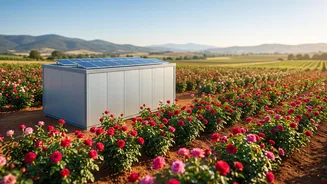
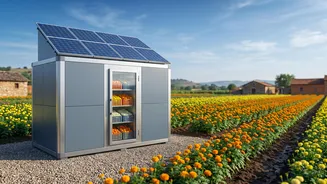
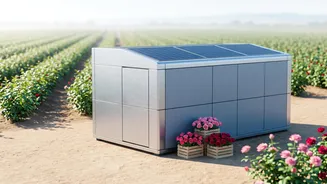
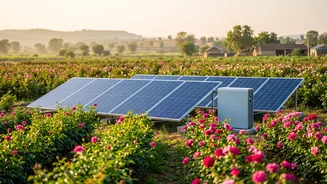
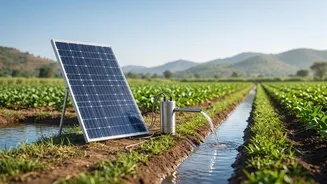
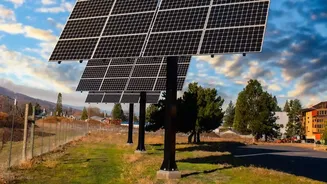
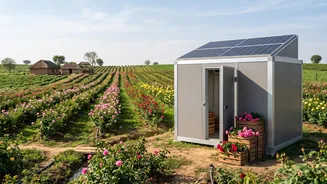
The game-changer is the advent of off-grid, solar-powered micro-warehousing, or more simply, solar cold storage. These are small, decentralized cold rooms, often with a capacity of around 5 to 10 metric tonnes, powered entirely by solar panels. Companies like Ecozen, Ecosaras, and others are developing these units, which are designed for rural areas where grid electricity can be unreliable or completely absent. The technology uses solar energy generated during the day to run a refrigeration compressor. Instead of relying on expensive batteries that need frequent replacement, many modern systems use innovative thermal storage units that can keep the chamber cool for over 36 hours, ensuring produce stays fresh even on cloudy days or overnight. This makes the running costs virtually zero, a critical factor for smallholder farmers.
How Cold Storage Flips the Market Dynamic
By gaining access to cold storage, farmers are fundamentally altering their relationship with the market. They are no longer forced to sell their roses immediately after harvest. Instead, they can safely store the flowers for several days. This simple act gives them unprecedented control. They can wait out the morning glut and sell their produce later in the day, or even a few days later, when supply has dwindled and demand, particularly during wedding and festival seasons, drives prices up. According to one customer story, flower prices can increase two to three times during peak festive seasons. This newfound ability to choose when to sell transforms them from price-takers to price-negotiators. Farmer Producer Organisations (FPOs) are playing a crucial role, often leasing or managing these units and offering storage to members at a nominal fee, making the technology accessible without a large upfront investment from individual farmers.
From Surviving to Thriving
The economic impact is immediate and tangible. Access to cold chains can boost farmer incomes by an estimated 15-20%, according to the National Bank for Agriculture and Rural Development (NABARD). By reducing spoilage and enabling sales at peak prices, these solar warehouses provide a more stable and significantly higher income. For rose farmers near Bengaluru, this means being able to capture the higher rates offered during Valentine's week or the busy wedding season, which can be several times the normal daily rate. This financial stability allows farmers to invest back into their farms, diversify into other high-value crops, and improve their families' livelihoods. In Sadali, Karnataka, a Farmer Producer Organisation renting out a solar cold room at a reduced rate has seen dozens of local farmers use it to store perishables like roses and marigolds, generating income for the FPO while saving farmers from financial losses.
A Blueprint for Indian Agriculture
The success of solar micro-warehousing for Bengaluru's rose growers is more than just a local story; it's a potential blueprint for empowering small farmers across India. The country loses a significant portion of its horticultural produce to post-harvest wastage, largely due to a lack of cold chain infrastructure. Decentralized, solar-powered solutions are perfectly suited to India's agricultural landscape, where farms are often small and located in areas with poor grid connectivity. Government bodies and private enterprises are increasingly recognizing this potential, with programs aimed at deploying hundreds of such units nationwide. By bringing the cold chain directly to the farm gate, this technology not only secures better rates for farmers but also strengthens food security, reduces waste, and promotes sustainable economic growth in rural India.