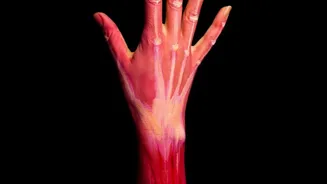







Persistent, Localised Pain
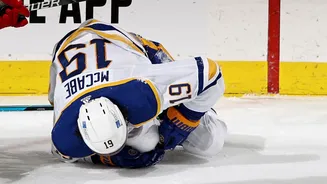
One of the most common signs of any fracture is pain, but the type of pain is important. Unlike a general ache from a muscle strain, fracture pain is often sharp, deep, and highly localised. You can often point to the exact spot on the bone that hurts.
This pain typically worsens with activity or when you put pressure on the area, and improves with rest. If the pain from an injury is intense and doesn't subside after a few hours of rest and ice, it’s a strong signal of a more serious injury than a simple bruise.
Swelling and Bruising
After an injury, some swelling is normal as your body begins its healing process. However, with a fracture, swelling can be significant and appear rapidly, sometimes within minutes. This happens because a break can damage surrounding blood vessels. Deep, dark bruising that appears quickly is also a tell-tale sign. While a sprain can also cause swelling, the swelling associated with a fracture is often more severe and concentrated around the bone itself.
Inability to Bear Weight or Move
One of the clearest signs of a fracture is a loss of function. If you find it impossible to put any weight on an injured leg or foot, that's a major red flag. Similarly, if you can't move a limb like an arm or wrist without experiencing intense pain, the bone's structural integrity may be compromised. It's a myth that if you can move it, it isn't broken. Many people with smaller, hairline fractures can still move the limb, but it will almost always cause increasing pain.
A Snapping Sound or Grinding Sensation
At the moment of injury, some people report hearing or feeling a 'snap' or 'crack'. This audible sound can be the bone itself breaking under pressure. Following the initial injury, you might experience a grating or grinding feeling, known as crepitus, if you attempt to move the area. This sensation is caused by the broken ends of the bone rubbing against each other and is a definitive sign of a fracture.
Numbness, Tingling, or Coldness
A broken bone can sometimes compress or damage nearby nerves and blood vessels. If you feel numbness, a 'pins-and-needles' sensation, or coldness in the area below the injury—for example, in your fingers after a wrist injury—it requires immediate medical attention. These symptoms suggest that nerve signals or blood flow may be blocked, which can lead to serious and sometimes permanent complications if not treated quickly.
When an X-ray Isn't Enough
Sometimes, a person may have all the symptoms of a fracture, but an initial X-ray comes back normal. These are known as occult or hidden fractures. The break may be too small or fine to appear on the first scan. In these cases, a doctor might recommend a repeat X-ray in a week or two, by which time the healing process can make the fracture more visible. More sensitive imaging tests like an MRI, CT scan, or bone scan are also effective tools for diagnosing these hidden injuries.