

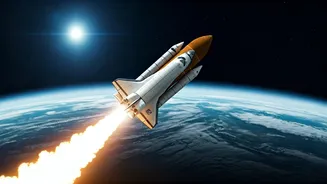



The Grand Vision: Gaganyaan's Goal
At its heart, the Gaganyaan programme is India's ambitious endeavour to demonstrate human spaceflight capability by launching a crew of three astronauts into an orbit of 400 kilometres for a mission lasting several days. The goal is to bring them back
safely, with a splashdown in Indian sea waters. Spearheaded by the Indian Space Research Organisation (ISRO), this mission will make India the fourth nation in the world—after the United States, Russia, and China—to independently send humans into space. The programme, first announced in 2018, represents a monumental leap in India's scientific and technological prowess.
Why Uncrewed Flights Come First
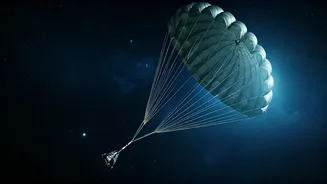
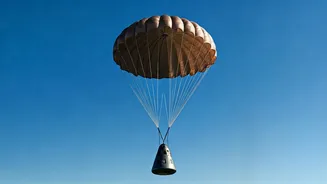
Before any Indian astronaut, or 'Gaganyatri', boards the spacecraft, ISRO has committed to a rigorous schedule of uncrewed test flights. This 'safety first' philosophy is the cornerstone of the Gaganyaan mission. Human spaceflight is an inherently risky and complex undertaking, and these preliminary missions are designed to validate every single system in the harsh environment of space without endangering lives. ISRO will conduct a series of uncrewed launches to thoroughly test the human-rated LVM3 rocket, the life support systems, and the crucial re-entry and recovery procedures. Every component, from the crew escape system that can pull astronauts to safety in an emergency to the massive parachutes that slow the capsule for splashdown, must be proven to be reliable. These missions are not delays; they are a necessary and disciplined dress rehearsal for the main event.
Meet Vyommitra: The Humanoid Stand-In
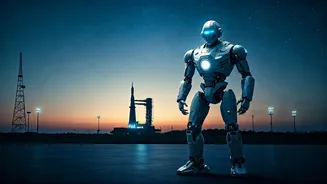
A key player in these uncrewed missions is Vyommitra, a name derived from the Sanskrit words for 'space' (Vyoma) and 'friend' (Mitra). Developed by ISRO, Vyommitra is a sophisticated female-coded humanoid robot designed to fly on the initial test missions. This half-humanoid, which has a torso, head, and arms but no legs, will act as a proxy for the human crew. Vyommitra is capable of mimicking astronaut functions, monitoring module parameters, operating switch panels, and communicating with ground control in both Hindi and English. During its flights, it will collect vital data on how the spacecraft's life support and environmental control systems perform, and how the body might react to vibration and microgravity, ensuring the cabin is perfectly safe for its future human occupants.
The Anatomy of a Test Flight
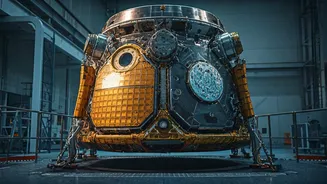
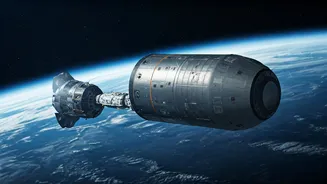
Each uncrewed Gaganyaan test flight is a complex operation involving thousands of precise steps. The mission begins with the launch atop the human-rated LVM3 rocket from the Satish Dhawan Space Centre. Once in orbit, the Orbital Module, consisting of the Crew Module and Service Module, will be put through its paces. ISRO engineers will test critical manoeuvres and systems. The most crucial phase is re-entry, where the Crew Module separates and endures extreme temperatures as it barrels through the atmosphere. A complex sequence of parachutes, including drogue and main chutes, will deploy to drastically slow the module's descent before it splashes down in the ocean, where recovery teams will be on standby. Numerous ground tests, including over 8,000 for structural integrity, and integrated air drop tests have already been completed to perfect this sequence.
The Road Ahead: A Calibrated Timeline
While initial timelines have shifted, in part due to the complexities of developing new technologies and pandemic-related delays, ISRO has established a clear, step-by-step roadmap. The program will involve multiple uncrewed missions before the first crewed flight. The first major uncrewed orbital flight, G1, carrying Vyommitra, is a critical upcoming milestone. This will be followed by further test flights to ensure every system has been validated multiple times. Only after these exhaustive and successful demonstrations of safety and reliability will ISRO proceed with the first human spaceflight, currently anticipated around 2027.