




The Menace of Moon Dust
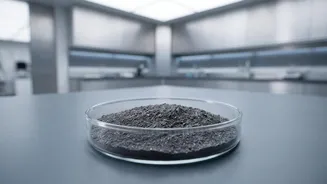
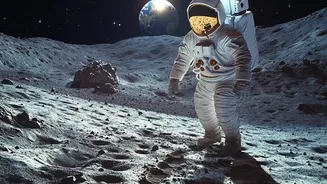
Unlike the rounded dust particles on Earth, which are weathered by wind and water, Moon dust is a serious threat. For billions of years, the lunar surface has been bombarded by micrometeorites, shattering rock and glass into microscopic, razor-sharp shards.
This material is not only abrasive but also electrostatically charged by solar radiation, causing it to cling to everything it touches. During the Apollo missions, this abrasive dust was more than just a nuisance. It scratched helmet visors, clogged mechanisms, and caused seals on sample containers to fail. Astronauts reported that the dust carried inside their modules caused respiratory irritation, a condition sometimes called “lunar hay fever.” For the long-term sustainability of the Artemis program, which aims to establish a permanent human presence on the Moon, understanding and mitigating this dust problem is not just a priority—it's essential for survival.
Sending Experiments to the Surface
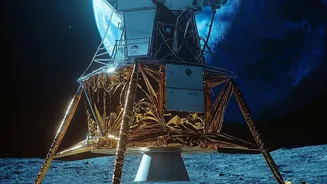
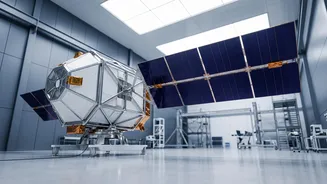
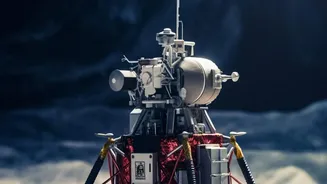
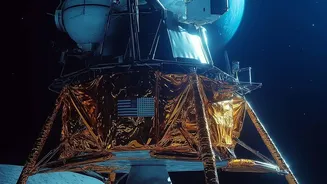
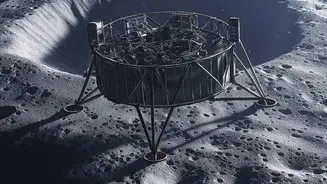
To understand how to fight back against lunar dust, NASA is sending a suite of experiments to the Moon, primarily through its Commercial Lunar Payload Services (CLPS) initiative. This program partners with commercial companies to deliver science and technology payloads to the lunar surface. One of the key experiments is the Regolith Adherence Characterization (RAC). Carried aboard Firefly Aerospace's Blue Ghost lander, the RAC instrument is designed to expose 15 different material samples—including advanced fabrics, coatings, and solar cell materials—to the lunar environment. Its goal is to measure how much dust sticks to each surface during landing and subsequent operations, identifying which materials are naturally better at repelling or shedding the problematic regolith.
Fighting Dust with Electricity
One of the most promising technologies NASA is developing is the Electrodynamic Dust Shield (EDS). This system uses a network of transparent electrodes embedded in a material to create an electric field. With the flick of a switch, this field can actively repel and clear dust from surfaces like solar panels, camera lenses, and even spacesuit fabrics. The concept isn't new, originating with an idea for an "electric curtain" in 1967, but modern advancements have made it a leading contender for dust mitigation. The technology has already been tested on the International Space Station and is slated for further demonstration on the Moon. Another experiment, the Electrostatic Regolith Interaction Experiment (ERIE), flew on a suborbital rocket to study how dust particles become charged through friction in microgravity, providing crucial data for improving these active mitigation systems.
Preparing for Human Return
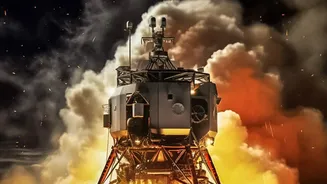
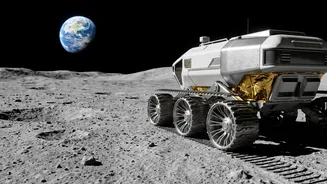
These experiments are not just for scientific curiosity; they are directly informing the design of hardware for future Artemis missions. At NASA's Johnson Space Center, the Lunar Development and Test Facility uses simulated lunar dust in vacuum chambers to test everything from spacesuits to rover components. At Langley Research Center, engineers are firing rockets into simulated Moon soil inside a giant vacuum chamber to understand how engine plumes kick up dust during landing. This data is crucial for designing safer landing protocols and protecting hardware already on the surface. Furthermore, the upcoming DUSTER instrument suite, set to be deployed by Artemis IV astronauts, will study the dust and plasma environment around the landing site to help crews manage the ever-present hazard in real-time. Together, these efforts form a comprehensive strategy to ensure that when humans return to the Moon to stay, they are prepared for its oldest and most persistent challenge.