

Redefine What 'Strength' Means to You
Before you even think about lifting a dumbbell, it’s helpful to redefine what strength training is. It’s not just about the number of kilograms on a barbell. At its core, strength is about control, stability, and the ability to move your own body through
space with confidence and without pain. Think about the ease of getting up from a low chair, lifting a heavy suitcase into an overhead bin, or playing with children in the park without feeling winded. That is functional strength, and it begins not with external weight, but with mastering the machine you live in every day: your body. Experts agree that starting with bodyweight exercises is the safest and most effective way to build a solid foundation. It allows you to learn the correct movement patterns and build crucial joint stability before you add the complexity of external loads, significantly reducing your risk of injury.
Master Your Body's Blueprint
Humans are designed to move in specific ways. Fitness experts have identified a handful of fundamental movement patterns that form the building blocks of nearly every activity we do. By focusing on these, you ensure you’re building a balanced, functional body. You don't need any equipment to start practicing them.
- The Squat (Level Change): This isn't just for the gym; it's how you sit down and stand up. Practice by sitting down onto a chair and standing back up without using your hands. Focus on keeping your chest up and driving through your heels.
- The Hinge: This is the pattern of bending over to pick something up. Practice by standing a few inches from a wall, facing away from it. Push your hips back until your glutes tap the wall, keeping your back straight.
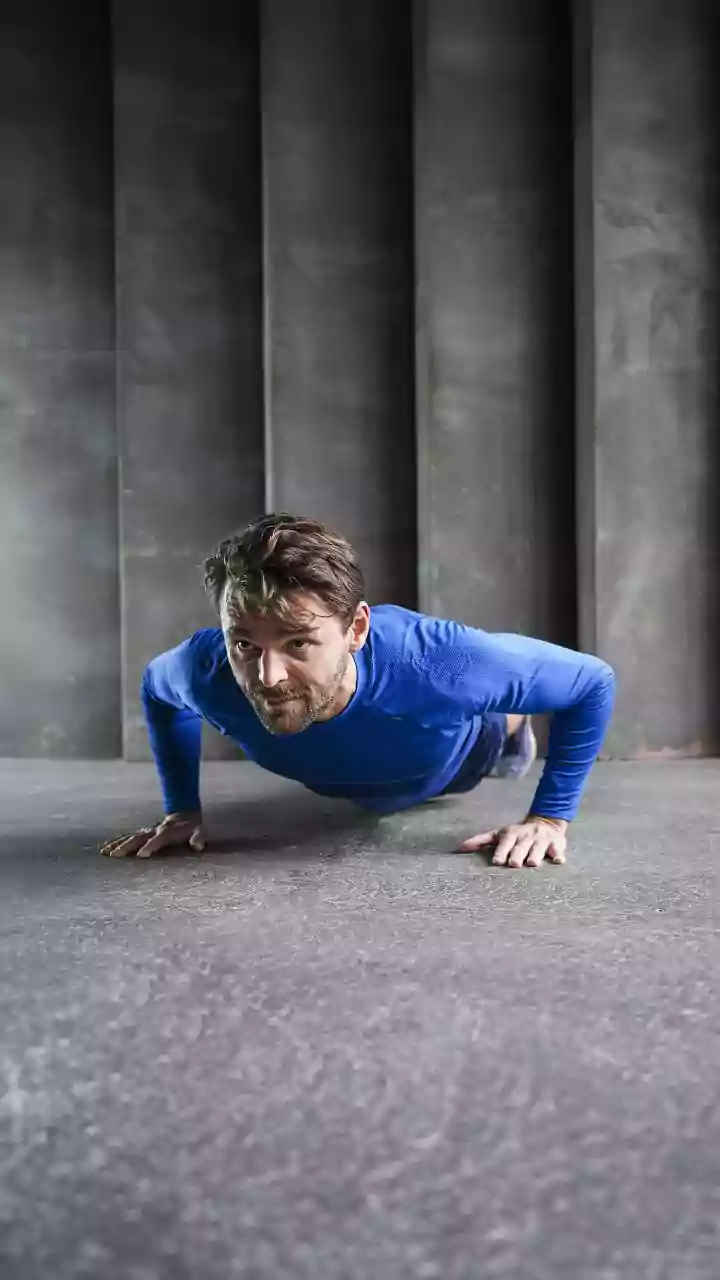
- The Push: This builds upper body strength. Start with wall push-ups, placing your hands on a wall and pressing your body away. As you get stronger, you can progress to incline push-ups on a table, and eventually knee push-ups on the floor.
- The Pull: This can be tricky without equipment, but you can use a sturdy table. Lie on the floor under the table, grab the edge, and pull your chest up towards it. Always ensure the table is stable and won't tip. Another option is a towel row: sit on the floor with legs extended, loop a towel around your feet, and pull the ends toward your chest, squeezing your back muscles.
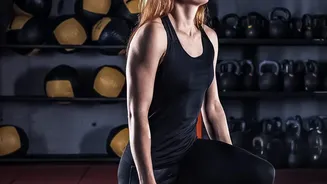
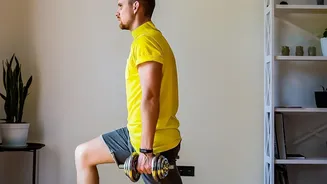
- The Lunge: This is crucial for single-leg stability and balance. Step forward with one foot, lowering your hips until both knees are bent at a 90-degree angle. Push off the front foot to return to the start.
The Art of Progress (Without More Plates)
A key principle in getting stronger is progressive overload—continually challenging your muscles to do more. But that doesn't always mean adding more weight. Once you're comfortable with a bodyweight exercise, you can make it harder in numerous ways.
- Increase Repetitions: If you can do 10 bodyweight squats with good form, aim for 12 next time, then 15.
- Add More Sets: Instead of doing two sets of an exercise, do three.
- Slow Down the Tempo: Try a 3-2-1 tempo on your push-ups. Take three seconds to lower your body, pause for two seconds at the bottom, and take one second to push back up. This increases the time your muscles are under tension, a powerful stimulus for growth.
- Reduce Rest Time: Shaving 15 seconds off your rest period between sets makes your workout more challenging and improves endurance.
- Increase Range of Motion: If you're squatting to a chair, try squatting to a lower surface, and eventually below parallel.
- Try a Harder Variation: Once you master knee push-ups, try a full push-up. After mastering lunges, try a reverse lunge or a walking lunge.
Listen to Your Body, Not the Noise
One of the biggest mistakes beginners make is 'ego lifting'—sacrificing good form to lift a heavier weight or do a more advanced exercise before they're ready. This is the fastest path to injury and discouragement. Bodyweight training teaches you to focus on the quality of a movement, not just the quantity. Instead of tracking the number on the dumbbell, start by tracking how the movement feels. Is your core engaged? Are your knees tracking over your toes in a squat? Is your back straight? Filming yourself with your phone can be a fantastic tool for checking your form. The goal is to build a mind-muscle connection, where you can feel the right muscles working. This internal focus is a skill that will serve you for your entire fitness journey, whether you eventually decide to join a gym or continue training at home.