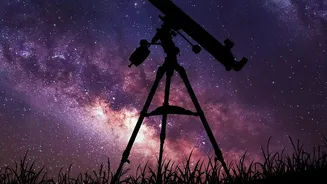




The Challenge of the City Sky
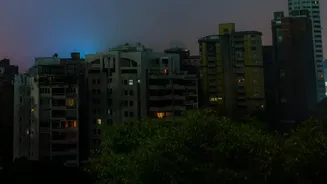
Living in a major Indian metropolis like Mumbai, Delhi, or Bengaluru offers countless opportunities, but a clear view of the night sky is rarely one of them. The phenomenon of 'skyglow'—where artificial lights from buildings, streetlamps, and advertisements
scatter in the atmosphere—creates a bright veil that washes out all but the most brilliant celestial objects. Where a rural sky might reveal thousands of stars, an urban one can reduce that number to a mere handful. This light pollution is the single biggest hurdle for any aspiring urban astronomer, making it nearly impossible to identify constellations or spot fainter objects with the naked eye.
A Planetarium in Your Pocket
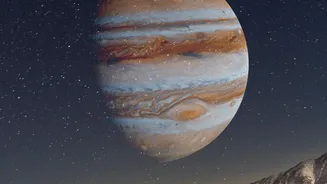
This is where stargazing apps like SkyView, Star Walk 2, and Stellarium have become game-changers. At their core, these apps use your smartphone’s GPS and compass to determine your precise location and the direction you are pointing it. They then generate an accurate, real-time map of the sky above you. The most transformative feature is Augmented Reality (AR), which overlays this celestial map directly onto your phone’s camera feed. Point your phone at a bright dot, and the app instantly tells you if you're looking at the planet Jupiter, a distant star, or the International Space Station (ISS) passing overhead. This removes the guesswork and makes the invisible universe visible.
Cutting Through the Urban Haze
Beyond simply identifying objects, many sophisticated apps are designed specifically with the urban user in mind. Some apps include features that simulate the sky with light pollution filters, helping you understand what is realistically visible from your location. By knowing which objects are bright enough to punch through the city glow, users can focus their attention on achievable targets like planets, the Moon, and prominent constellations, rather than getting frustrated searching for faint nebulae that are out of reach. This practical approach makes stargazing from a balcony or rooftop a rewarding experience rather than a futile one.
More Than Just a Star Map
The popularity of these apps also stems from the rich layers of content they provide. They are not just maps but interactive encyclopedias. Users can tap on any object to get detailed information about its distance, composition, and history. Many apps include constellation artwork and stories from mythology, bringing the patterns in the sky to life. Furthermore, they function as your personal astronomical calendar, sending notifications for upcoming meteor showers, eclipses, or optimal times to view planets. Some apps like Star Walk 2 even have a 'time travel' feature, allowing you to see the sky on any date in the past or future.
Finding the Darkest Spots and Community
For enthusiasts willing to travel for a better view, apps with integrated light pollution maps are invaluable. These maps help users find nearby parks or open areas with less skyglow, maximising their chances of seeing more celestial wonders. Beyond the technology, these apps also foster a sense of community. Features in some apps allow for virtual shared stargazing sessions, connecting users with friends or fellow enthusiasts for a guided experience. This transforms a solitary hobby into a shared journey of discovery, offering a new way for people to connect with both the cosmos and each other.