






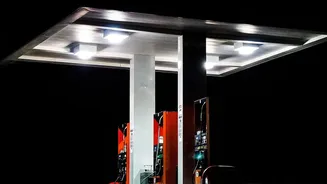
From Global Markets to Your Petrol Pump
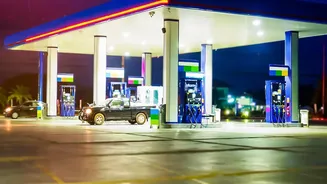
The price you pay for petrol or diesel begins with the global price of crude oil. As a major importer, India is directly exposed to fluctuations in international markets, which have been volatile due to geopolitical tensions. However, the price of crude is only
the first step. By the time the fuel reaches your vehicle's tank, its price has been built up through several layers. The base price, which includes the cost of crude oil, refining, and freight, often makes up only about half of the final retail price. The other half consists almost entirely of taxes. Both the Central Government (levying excise duty and cesses) and State Governments (levying Value Added Tax or VAT) take a significant share. This heavy tax component is why a sharp drop in global crude oil prices doesn't always translate into a proportional price cut at the petrol pump; the taxes act as a large, fixed buffer.
Aviation Fuel: The Airline's Biggest Bill
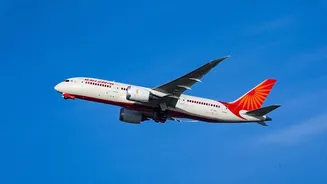
For airlines, the most critical petroleum product is Aviation Turbine Fuel (ATF). This specialised fuel is their single largest operational expense. Under normal market conditions, ATF accounts for about 40% of an airline's total costs. However, during periods of extreme price volatility, such as the market shocks seen in 2026, that figure can surge to as high as 60%. This immense cost pressure makes airlines highly sensitive to global energy markets. When ATF prices spike, airlines are often left with little choice but to pass on at least part of that increased cost to passengers in the form of higher fares or fuel surcharges to maintain their operations. This creates a direct, and often painful, link between global energy turmoil and the price of a flight ticket.
A New Shield Against Price Shocks
In response to a severe West Asia crisis that caused ATF prices to more than double in early 2026, the Indian government introduced a significant new policy to protect the aviation sector. In June 2026, the Cabinet approved a ₹10,000 crore Price Stabilisation Fund. This mechanism is designed to shield airlines from extreme volatility by setting a fixed price for ATF. For example, the price was established at approximately ₹115 per litre in Delhi for participating airlines. When market rates soar above this fixed price, the government uses the fund to compensate oil companies. This gives airlines predictability in their largest cost item, preventing sudden operational disruptions. While it helps avoid catastrophic fare hikes during a crisis, it also means that airlines may not benefit immediately from minor dips in global oil prices, as they are locked into the fixed rate.
More Than Just Fuel in the Fare
While fuel prices are a major factor, they aren't the only variable determining your travel costs. Airfares are ultimately governed by the laws of supply and demand. Airlines use sophisticated pricing models that account for competition on a particular route, the time of year, holiday seasons, and overall passenger demand. A flight ticket for a popular destination during Diwali will likely remain expensive regardless of a slight dip in fuel costs. Similarly, airlines sometimes 'hedge' their fuel, which means they agree to buy a certain amount of fuel at a predetermined price in the future, insulating them from short-term price swings. The government has also signalled that it monitors airfares and may engage with airlines to reassess surcharges if fuel prices stabilise at lower levels for a sustained period.