
The Problem of Packing Light
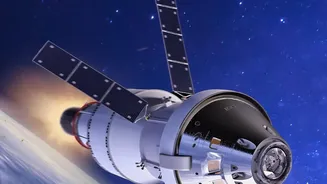
Establishing a long-term human presence on the Moon, a cornerstone of NASA's Artemis program, presents a colossal logistical challenge. Every kilogram of supplies—from food and water to equipment and breathable air—must be launched from Earth. This is incredibly
expensive and limits the scale and duration of missions. Oxygen is especially critical. It's not just for life support; it's also a major component of rocket propellant, needed for vehicles to travel to, from, and around the Moon. Bringing all that oxygen from Earth is simply not sustainable for a permanent lunar settlement. This has pushed scientists to embrace a concept long-imagined in science fiction: living off the land, or what NASA calls In-Situ Resource Utilization (ISRU).
An Ocean of Oxygen in the Dust
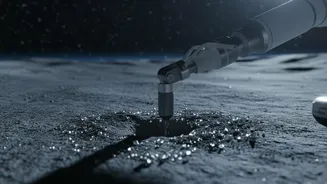
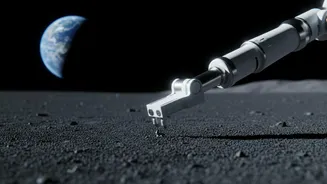
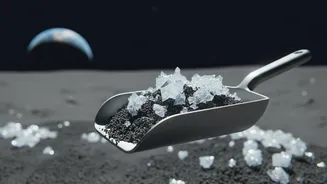
It might sound strange, but the Moon is incredibly rich in oxygen. In fact, the lunar regolith—the fine layer of dust and crushed rock covering the surface—is about 45% oxygen by mass. The catch is that this oxygen is not free-floating gas. It's chemically locked inside oxide minerals, combined with elements like silicon, aluminum, and iron. The challenge for NASA has been to develop a reliable and efficient way to break these strong chemical bonds and release the oxygen. Successfully doing so would transform a barren landscape into a vital resource depot, providing breathable air for habitats and oxidizer for rockets, dramatically reducing the dependence on Earth.
The Recipe: Heat, Sunlight, and a Reactor
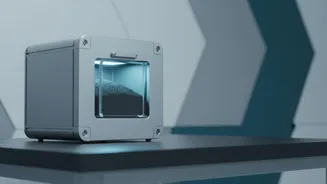
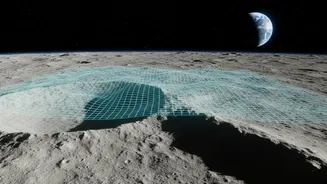
NASA is pursuing several methods, but one of the most promising is carbothermal reduction. The process essentially involves cooking the moon dust at very high temperatures. A recent project, the Carbothermal Reduction Demonstration (CaRD), successfully tested a prototype system. It works by using a solar concentrator—a set of precision mirrors—to focus intense sunlight, heating the regolith to over 1,700°C inside a specialized reactor. This intense heat causes the oxygen-bearing minerals to break down. In the CaRD process, this reaction produces carbon monoxide (CO) gas. This gas is then collected and can be processed by other systems to separate the oxygen. Recent tests in vacuum chambers that simulate the lunar environment have proven the technology works, a major step toward deploying it on the Moon.
More Than Just Breathable Air
The benefits of this technology extend far beyond life support. The extracted oxygen can be used as a key component in rocket propellant, meaning future missions could refuel on the Moon for journeys back to Earth or even onward to Mars. Furthermore, the extraction process leaves behind useful byproducts: a mixture of molten metals. These metals, including iron, aluminum, and silicon, could potentially be used in the future for 3D printing tools, spare parts, or even building materials for lunar structures. This turns a single process into a multi-faceted production plant, creating a foundation for a true lunar economy and infrastructure. The entire system is being designed to be automated and powered by sunlight, making it a sustainable and long-term solution.
From Lab Prototypes to Lunar Missions
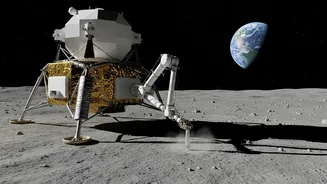
NASA and its commercial partners, like Sierra Space, have moved this technology from theory to reality. The CaRD project integrated components from multiple NASA centers to successfully demonstrate a complete, solar-powered extraction process using simulated lunar soil. The next logical step is to test these systems on the Moon itself. Future missions under the Artemis program are expected to carry demonstration payloads to the lunar surface. These early missions will provide crucial data on how the hardware performs in the actual lunar environment—with its fine, abrasive dust and low gravity—paving the way for larger-scale oxygen production plants that will support the first generation of lunar inhabitants.