







The Annual Price Crash
The apple industry is the backbone of Kashmir's economy, supporting millions of people. Yet, for decades, a successful harvest paradoxically led to financial hardship. Come autumn, a flood of fresh apples would hit the market simultaneously. This glut
in supply gave buyers the upper hand, forcing farmers to accept low prices in what is often called a distress sale. The alternative was to watch their perishable produce rot. With inadequate traditional storage options, farmers had little bargaining power and were often at the mercy of middlemen and volatile market conditions. This annual cycle suppressed incomes and created immense uncertainty for a community reliant on this single crop.
A Technological Game-Changer
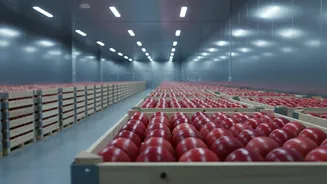
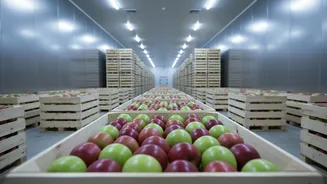
The arrival of modern Controlled Atmosphere (CA) storage has begun to rewrite this narrative. Unlike conventional cold storage, CA facilities are airtight chambers that carefully manage the environment inside. By lowering oxygen levels and controlling carbon dioxide, temperature, and humidity, the technology dramatically slows down the ripening process. Apples that would spoil in weeks can now be preserved in prime condition for up to ten months. This innovation allows farmers to move beyond the short post-harvest window and hold their produce safely, transforming a perishable good into a durable asset. The government has encouraged this shift by providing subsidies and technical support for establishing these advanced facilities.
Shifting the Power Dynamic
The ability to store apples for months gives farmers unprecedented market flexibility. Instead of selling during the autumn glut, they can now wait for off-season periods when supply is low and demand is high. This strategic shift has had a profound economic impact. Farmers report earning significantly more for their produce, in some cases more than doubling their income for the same box of apples compared to harvest-season prices. By regulating the release of apples into the market, CA storage helps stabilise prices throughout the year, preventing the drastic crashes that once defined the industry. This gives growers more control over their financial destiny and strengthens the entire horticulture economy.
Beyond Better Prices
The benefits of CA storage extend beyond immediate financial gains. It significantly reduces post-harvest losses, a major issue that previously saw up to a quarter of the produce getting damaged or destroyed before it could be sold. This means more of what is grown reaches the consumer, improving efficiency across the supply chain. The infrastructure has also become a source of rural employment, creating jobs in sorting, packing, and managing the facilities year-round. Furthermore, it ensures that consumers across the country have access to high-quality Kashmiri apples throughout the year, not just during the brief harvest season. This year-round availability helps local apples compete with imported varieties.
Challenges on the Horizon
Despite its success, the adoption of CA storage is not a silver bullet. The technology is an investment, and ensuring access for small and marginal farmers, particularly in remote areas, remains a priority. The capacity of existing stores is rapidly being met, and while more are being built, unplanned expansion could lead to increased competition and lower profitability for storage owners. Moreover, the effectiveness of CA storage depends on the quality of the fruit that goes in; it can preserve quality but not improve it. Recent seasons have shown that if poor-quality fruit is stored due to adverse weather or premature harvesting, the financial returns can be disappointing.