



Curation Over Accumulation
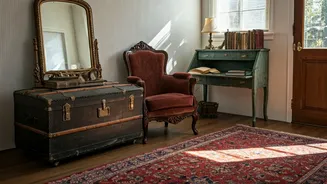
The fundamental difference between a stunning maximalist interior and a cluttered room is intention. Maximalism is about thoughtfully curating and displaying the things you love, not just accumulating stuff for its own sake. Every object should tell a part
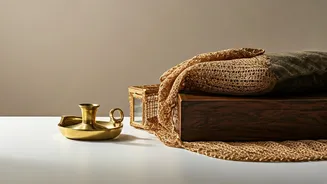
of your story, whether it’s a family heirloom, a flea market find, or a piece of art that speaks to you. To achieve this, group similar items together. A collection of vintage teacups or colourful glass vases has a much greater impact when displayed as a cohesive unit on a bookshelf or mantel, creating a deliberate 'vignette' rather than scattered randomness. This approach turns your belongings into a personal museum, where every piece has a purpose and a place.
Find Harmony in a Bold Palette
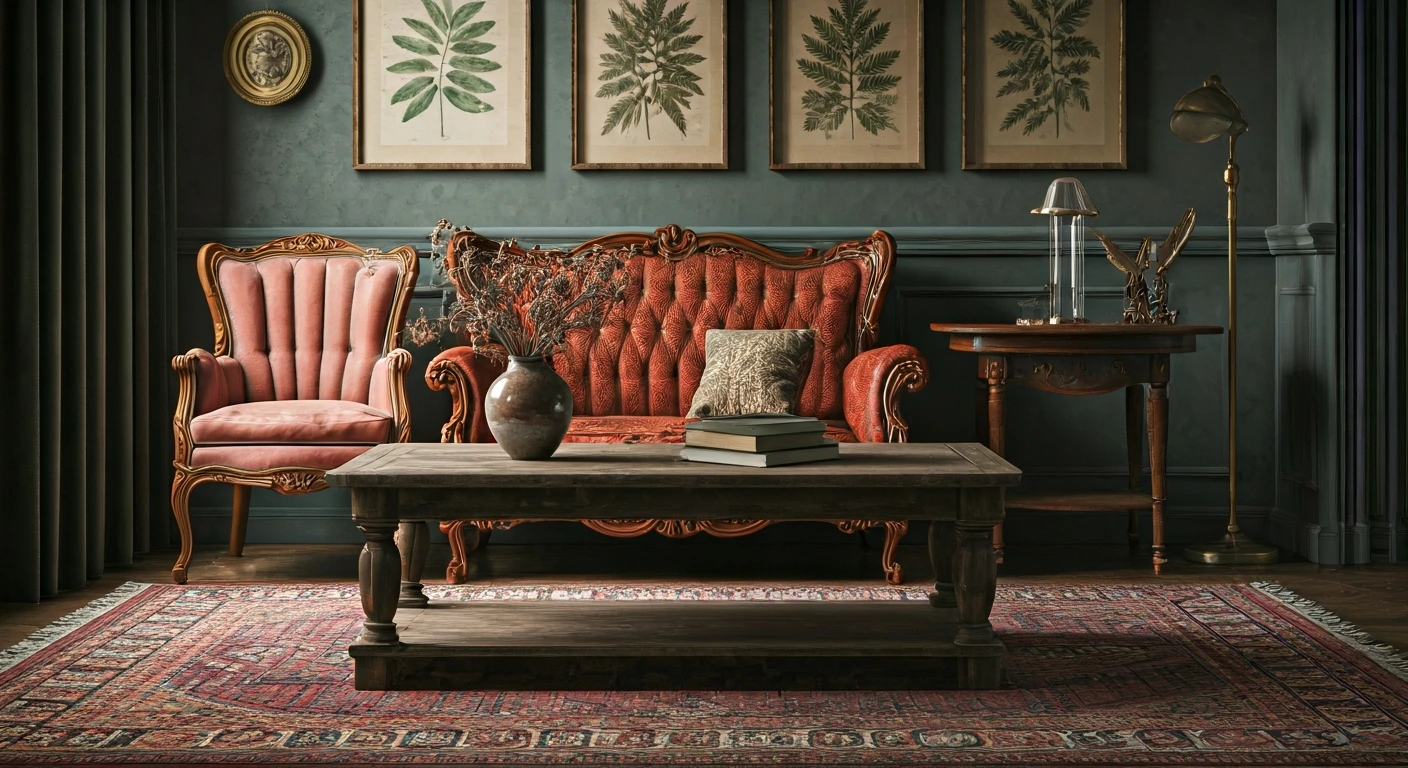
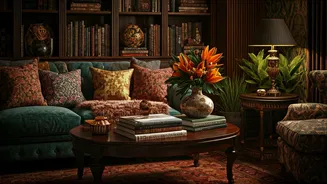
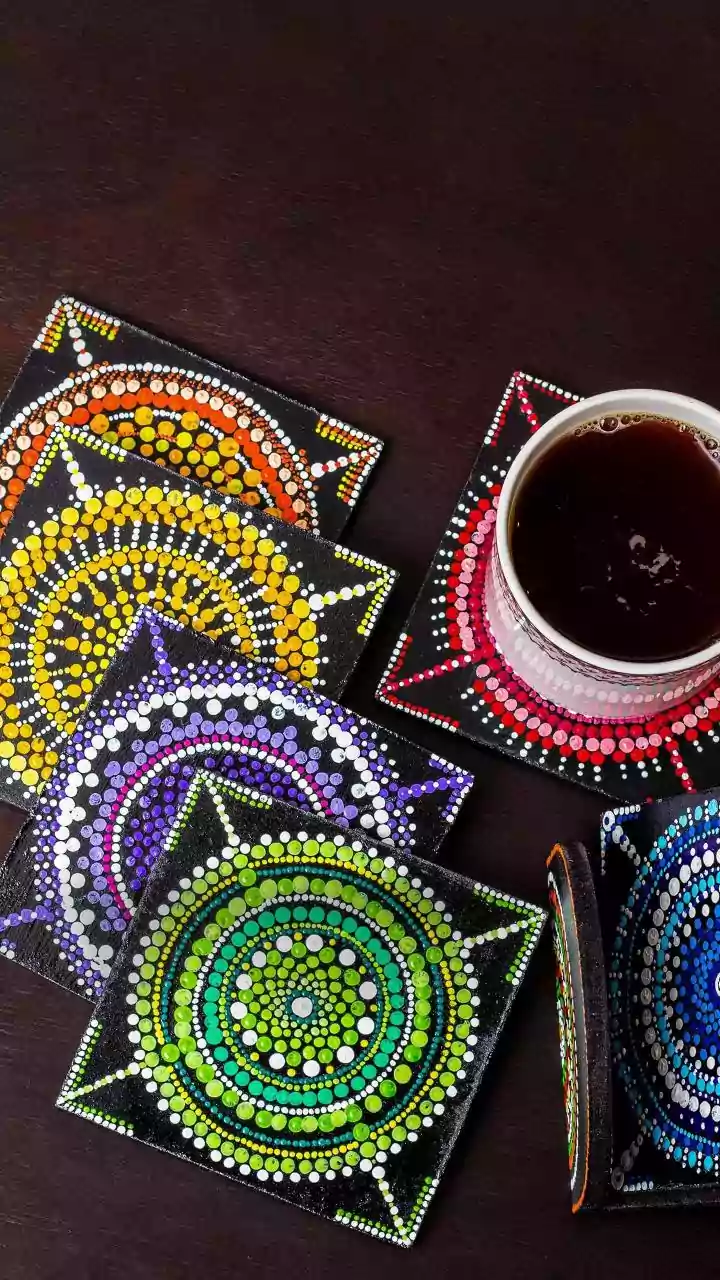
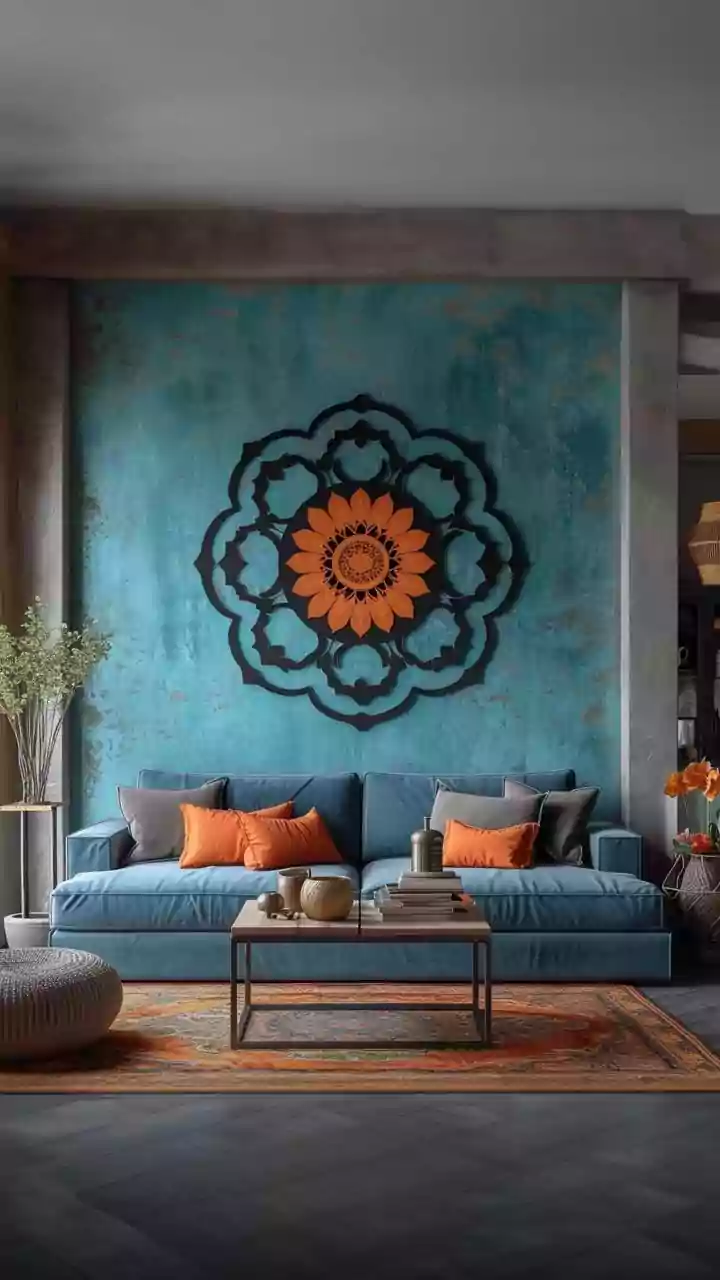
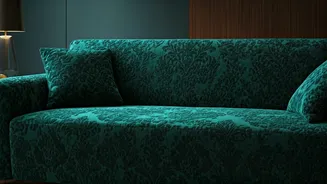
Colour is the backbone of a maximalist room, but a free-for-all can quickly look messy. The secret is to establish a cohesive colour palette that ties everything together. Choose three to five main hues and repeat them throughout the space in your textiles, art, and accessories. Jewel tones like emerald green, sapphire blue, and ruby red are classic choices that create an immediate sense of richness. You can also build a palette around a statement piece you already own, like a colourful rug or a bold sofa. This thread of consistent colour creates harmony, allowing you to mix different patterns and styles without the room feeling disjointed.
Master the Art of Mixing Patterns
Mixing patterns adds energy and sophistication, but there is a method to the madness. The golden rule is to vary the scale of your prints. Combine a large-scale pattern, like a floral wallpaper, with a medium-scale geometric rug and small-scale striped cushions. This creates a visual hierarchy that prevents the patterns from competing with each other. To ensure the mix feels intentional, make sure the different patterns share at least one or two common colours from your established palette. Don't be afraid to pair different styles, such as organic florals with structured geometric shapes, to create a look that is dynamic and deeply personal.
Layer with Texture and Scale
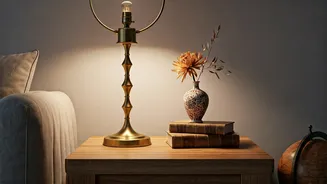
A successful maximalist space is rich with layers, which add visual and physical depth. Think beyond just cushions and throws; layering can involve placing rugs over carpets, leaning smaller art pieces in front of larger ones, or using books as risers to create varying heights on a console table. Texture plays an equally important role. Mixing different materials like plush velvet, natural wood, sleek metal, and woven jute makes a space feel more complex and inviting. Varying the scale of your decor is also crucial. Instead of many small, scattered items, anchor the room with larger statement pieces, like an oversized lamp or a big piece of art, to avoid a cluttered feel.
Embrace the Power of Breathing Room
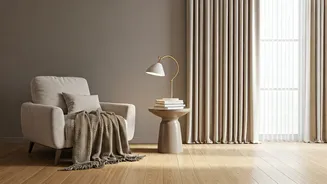
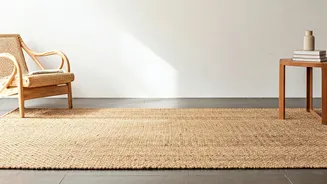
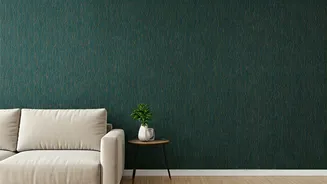
It may sound counterintuitive, but one of the most important elements of successful maximalism is negative space. Also known as white space, this is the empty area around and between objects. Leaving some wall areas blank or a surface clear allows the eyes to rest, which helps to highlight the curated collections and statement pieces you want to show off. This visual pause prevents the room from feeling overwhelming and brings a sense of calm amidst the organised chaos. It's the balance between the fullness of your collections and the emptiness of negative space that creates a harmonious and sophisticated maximalist interior.