






What Is a Planetary Convergence?
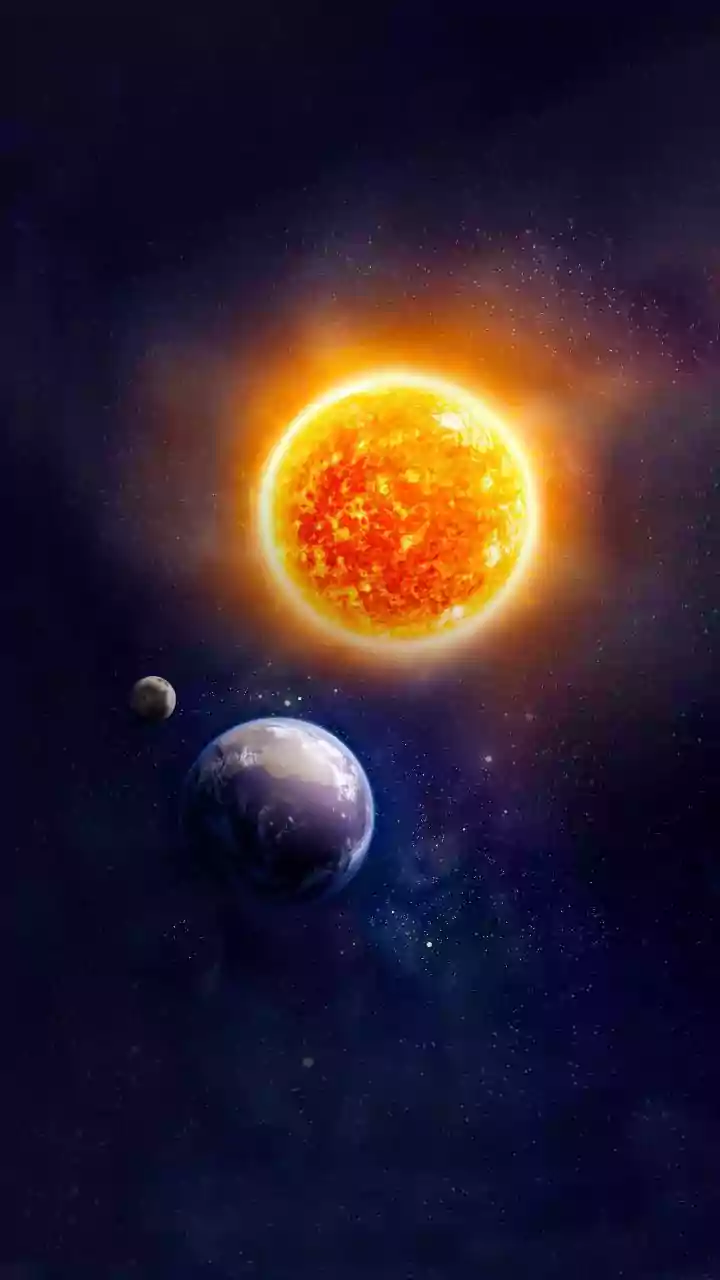
When you hear about planets 'converging' or forming a 'conjunction', it doesn’t mean they are about to collide. These planets are still hundreds of millions of kilometres apart from each other and from Earth. What’s happening is a beautiful trick of perspective.
From our vantage point on Earth, these planets appear to line up in a small patch of the sky. As they orbit the Sun at different speeds and on different paths, their positions relative to us are constantly shifting. Occasionally, their orbits bring them into the same line of sight, creating the illusion that they are close neighbours. It's like seeing two distant ships on the ocean appear right next to each other, even though they are miles apart.
Meet the Celestial Trio
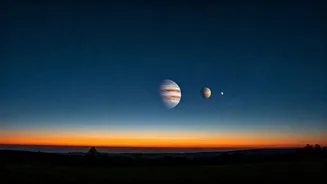
Tonight's cosmic get-together features three distinct personalities. The brightest of the trio will be Venus. Often called the 'Evening Star' or 'Morning Star', Venus is the second planet from the Sun and is shrouded in thick, reflective clouds, making it the most brilliant point of light in the sky after the Sun and Moon. Then there's Jupiter, the undisputed king of the planets. It’s the largest planet in our solar system and will appear as a very bright, steady, star-like object. Even without a telescope, its regal presence is unmistakable. Finally, there's Mercury. As the planet closest to the Sun, it's often lost in the solar glare, making it notoriously difficult to spot. Conjunctions like this offer a rare opportunity to catch a glimpse of this elusive little world, as it will be guided into view by its much brighter companions.
How and When to Watch
Timing and location are everything for this celestial event. The convergence will be visible low on the western horizon. The best time to look is shortly after sunset, during the brief window of twilight when the sky is dark enough for the planets to shine but before they dip below the horizon. Start looking about 30 to 45 minutes after the sun has completely set. The trio won't be high in the sky; you’ll need to scan the area just above where the sun went down. Venus will be your anchor point—it will be unmistakably bright. Once you spot it, look nearby for the other two, fainter points of light. Jupiter will be the second brightest, and Mercury the dimmest and closest to the horizon.
Do You Need a Telescope?
The great news is that you don't need any special equipment to enjoy this show. All three planets are visible to the naked eye. However, if you have a pair of binoculars, bring them along! Binoculars will make the view much more rewarding. They will help you distinguish the planets more clearly, especially the faint light of Mercury. Through a decent pair of binoculars, you might even be able to spot Jupiter's four largest moons—Io, Europa, Ganymede, and Callisto—which appear as tiny pinpricks of light huddled close to the giant planet. A telescope would, of course, offer even more detail, but it’s not essential for appreciating the simple beauty of the alignment itself.
Tips for the Best Viewing Experience
To maximise your chances of a great view, follow a few simple steps. First, find a location with an unobstructed view of the western horizon. Rooftops, balconies, open fields, or parks away from tall buildings and trees are ideal. Second, try to get away from city lights. Light pollution can wash out fainter objects like Mercury. The darker your surroundings, the better the view. Third, give your eyes time to adjust. It takes about 15-20 minutes for your eyes to become fully adapted to the dark, so be patient. Finally, consider using a stargazing app on your phone (like Star Walk or SkyView). You can point it at the sky, and it will identify the planets for you, taking all the guesswork out of your celestial search.