





From Emergency Room to Orbit
Anil Menon’s journey to the stars is paved with a remarkable breadth of experience on Earth. Born in Minnesota to Indian and Ukrainian immigrants, his resume reads like a list of high-stakes professions. He holds degrees in neurobiology from Harvard and both
a medical degree and a master's in mechanical engineering from Stanford. Menon isn't just an academic; he's a hands-on emergency physician who has served as a first responder in disaster zones, including the 2010 earthquake in Haiti and the 2015 earthquake in Nepal. As a lieutenant colonel in the U.S. Air Force, he flew over 100 sorties in an F-15 fighter jet and treated wounded soldiers. This unique blend of skills in medicine, engineering, and high-pressure environments made him a perfect fit for the world of space medicine, first as a NASA flight surgeon and then as SpaceX’s first-ever flight surgeon, where he helped launch the company's first human spaceflights.
The Ultimate Training Regimen
After being selected as a NASA astronaut candidate in 2021 from a pool of over 12,000 applicants, Menon embarked on a grueling two-year training program that he completed in March 2024. This isn't just about getting physically fit; it’s a complete overhaul of one's skills and knowledge. Candidates learn everything from the intricate systems of the ISS and the Russian Soyuz spacecraft to robotics, geology, and orbital dynamics. A significant portion of training is dedicated to preparing for the unexpected. This includes intense water and wilderness survival courses to handle off-nominal landings. To prepare for spacewalks, or Extra-Vehicular Activities (EVAs), astronauts spend hours underwater in a massive pool called the Neutral Buoyancy Laboratory, which simulates the weightless environment of space. Menon also had to become proficient in Russian, as it is one of the official languages of the ISS and crucial for communication with his Roscosmos crewmates.
A New Definition of Daily Life
For an astronaut assigned to a mission, 'everyday planning' takes on a whole new dimension. The physical and mental preparation is relentless. Daily routines are dominated by mission-specific training, flight simulations, and maintaining peak physical condition to counteract the muscle and bone density loss that occurs in microgravity. Family life also undergoes a significant shift. Training often requires long periods away from home, including time spent in Russia at the Gagarin Cosmonaut Training Center in Star City. Menon, who is married to Anna Menon (a lead space operations engineer at SpaceX) and has two children, has had to balance these immense professional demands with his family life. The preparation is also psychological, building the resilience needed to live and work in a confined, isolated environment for months on end, all while performing complex tasks under pressure.
An Eight-Month Mission of Science
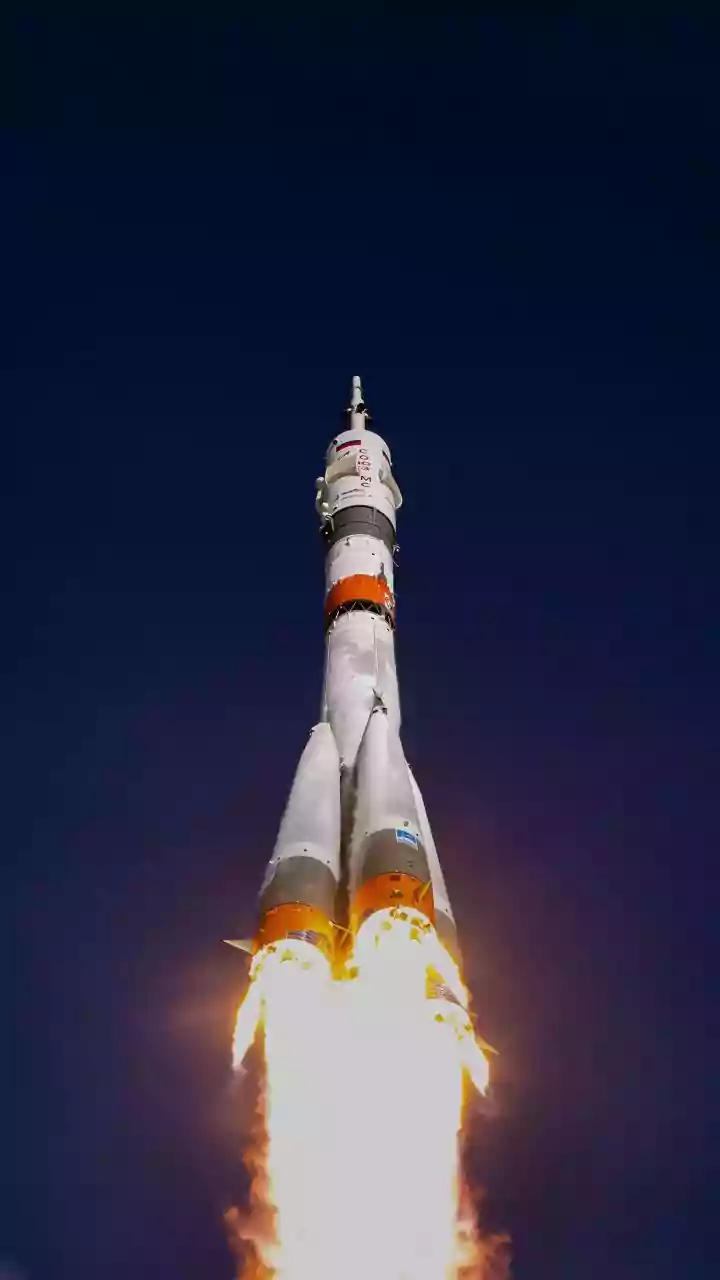
Menon's first spaceflight is scheduled to launch on July 14, 2026, from the Baikonur Cosmodrome in Kazakhstan. He will serve as a flight engineer for Expedition 74/75, an eight-month mission aboard the ISS alongside Roscosmos cosmonauts. His time in orbit will be far from a simple sightseeing trip. Astronauts on the station work on a packed schedule of scientific experiments that are impossible to conduct on Earth. Menon will be involved in research critical for future deep-space missions to the Moon and Mars. His experiments will include studying how microgravity affects astronaut vein structure and blood composition. He will also test new technologies, such as methods for producing intravenous fluids from the station’s drinking water—a vital capability for future long-duration missions where resupply is not an option.