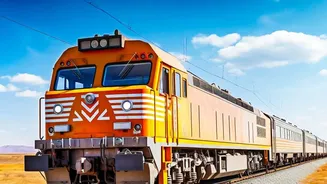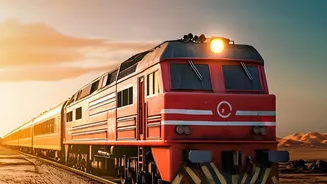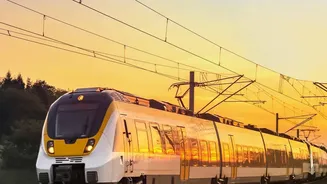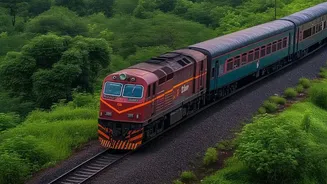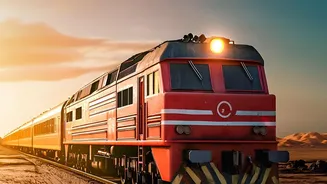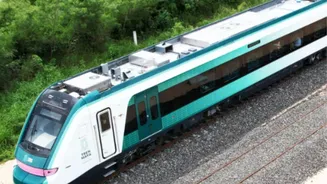




A sleek, modern train gliding through the timeless, arid landscapes of Rajasthan is a powerful image of a changing India. The state's Vande Bharat Express routes do more than connect cities; they bring the entire Vande Bharat mission into sharp focus.
A New Era of Travel in Rajasthan
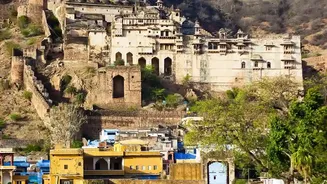
Rajasthan, a state known for its majestic forts and historic grandeur, is now home to several key routes of the Vande Bharat Express, including the Jodhpur-Sabarmati and Udaipur-Jaipur lines. These services have fundamentally altered the travel calculus for tourists and residents alike. The journey between Jodhpur and Sabarmati (Ahmedabad), for example, now takes approximately six hours, a significant reduction from previous options. The trains themselves, running at a top speed of 130 km/h on these routes, offer a travel experience previously unseen in the region. This blend of modern speed and scenic heritage, cutting through the desert expanse, has become a symbol of India’s infrastructural aspirations meeting its rich cultural tapestry.
What Exactly Is a Vande Bharat Train?
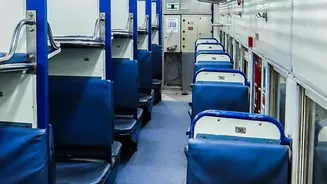
The Vande Bharat Express is not just another train; it's a leap in Indian Railways' technology. These are indigenously designed and manufactured semi-high-speed trainsets. Unlike conventional trains pulled by a locomotive, Vande Bharat trains are self-propelled, which allows for faster acceleration and deceleration, trimming down journey times significantly. Inside, passengers are greeted with amenities that rival airlines, including automatic doors, GPS-based information screens showing the next station and current speed, bio-vacuum toilets, and seats that are ergonomically designed for comfort. Safety is also paramount, with the trains equipped with the indigenous KAVACH automatic train protection system to prevent collisions.
The 'Make in India' Success Story
At its core, the Vande Bharat project is a flagship achievement for the 'Make in India' initiative. Manufactured primarily at the Integral Coach Factory (ICF) in Chennai, these trains represent India's growing capability in advanced manufacturing. With high levels of localisation, the project boosts the domestic economy by creating jobs and fostering a local supply chain for complex components. This success has not only enhanced India's reputation on the global stage but also has economic benefits, as locally produced rakes can be more cost-effective than imported ones. The project showcases a vision where India is not just a consumer of high-end technology but also a creator.
Connecting India, One Route at a Time
The services in Rajasthan are part of a much larger national rollout. Since the first train was flagged off in 2019, the Vande Bharat network has expanded rapidly. By late 2025, over 160 services were operational, connecting 274 districts across the country and having served more than 7.5 crore passengers. These routes are strategically chosen to link major economic, cultural, and religious hubs. From connecting IT centres like Bengaluru and Hyderabad to facilitating pilgrimage on the Delhi–Varanasi and Srinagar–Katra routes, the Vande Bharat network is designed to be a catalyst for both business and tourism.
The Journey Ahead: Challenges and Future Plans
Despite its successes, the journey is not without its challenges. To unlock the train's full speed potential of 160 kmph and beyond, significant upgrades to the existing track infrastructure are necessary across the country. While the ride quality is a major improvement, some passengers note it's not yet at par with the smoothness of international highspeed rail like Japan's Shinkansen, a reminder of the track–related work that lies ahead. Looking forward, Indian Railways has ambitious plans, including the introduction of Vande Bharat sleeper trains for overnight journeys and Vande Bharat 4.0, which aims for speeds up to 350 kmph. The government's vision is to have around 4,500 Vande Bharat trains in service by 2047, making it the backbone of modern Indian rail travel.