

Your Window to the Universe
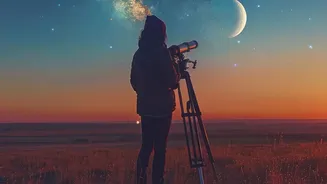
The secret to binocular astronomy is choosing the right tool, but 'right' doesn't mean expensive. A standard pair of 7x50 or 10x50 binoculars is perfect for a beginner. The first number refers to magnification (7x or 10x), while the second is the diameter
of the main lenses in millimetres. Larger lenses gather more light, which is crucial for viewing faint objects in the night sky. Many popular and affordable models from brands like Celestron or Nikon will do the job beautifully. More important than the brand is your location. Find a spot away from city lights, as light pollution can wash out dimmer objects. The post-monsoon period in India, particularly October and November, offers some of the clearest, dust-free skies of the year, making it a golden window for stargazing.
Finding Jupiter and Its Court of Moons
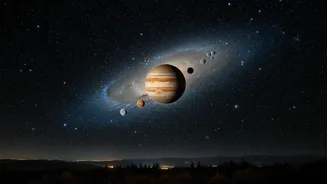
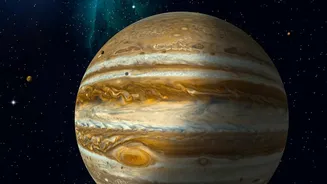
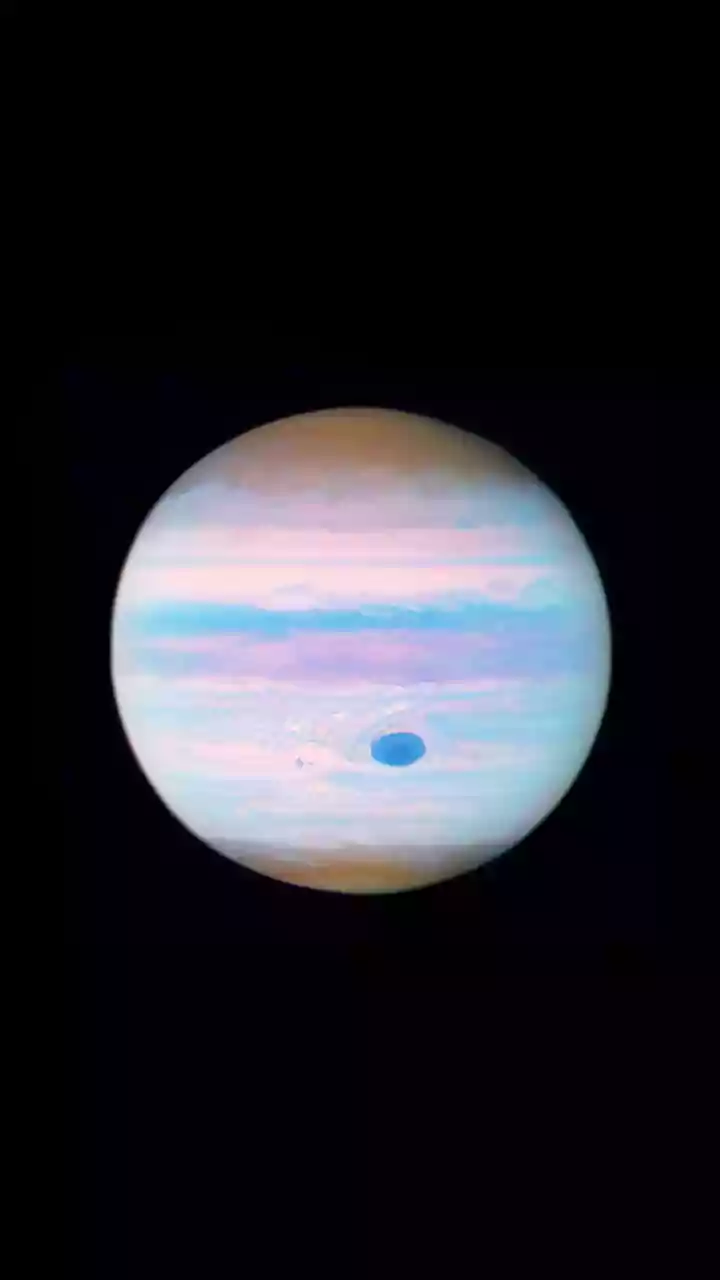
Jupiter is one of the brightest objects in the night sky, making it an easy first target. During the autumn months of 2026, it will be a prominent evening object. To find it, you can use a free stargazing app on your phone, which will point you directly to the gas giant. Through your binoculars, Jupiter will appear not as a point of light, but as a distinct, small disc. The real magic, however, is seeing its four largest moons—Io, Europa, Ganymede, and Callisto. Known as the Galilean moons, they look like tiny pinpricks of light arranged in a nearly straight line on either side of the planet. The key to spotting them is stability. Brace your arms on a fence, a car roof, or mount the binoculars on a tripod to eliminate the natural shaking of your hands, which can easily hide these tiny companions from view. Check on Jupiter over several nights and you'll notice the moons have changed their positions as they orbit the planet, a celestial clockwork first witnessed by Galileo in 1610.
Hunting for the Ghostly Andromeda Galaxy
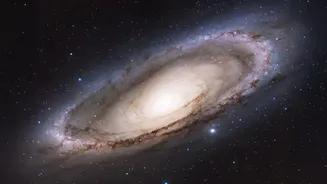
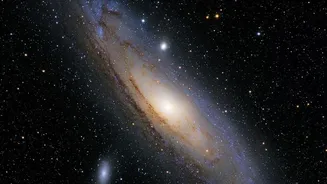
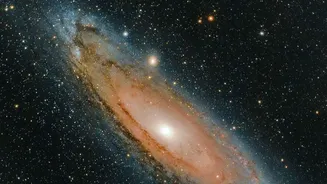
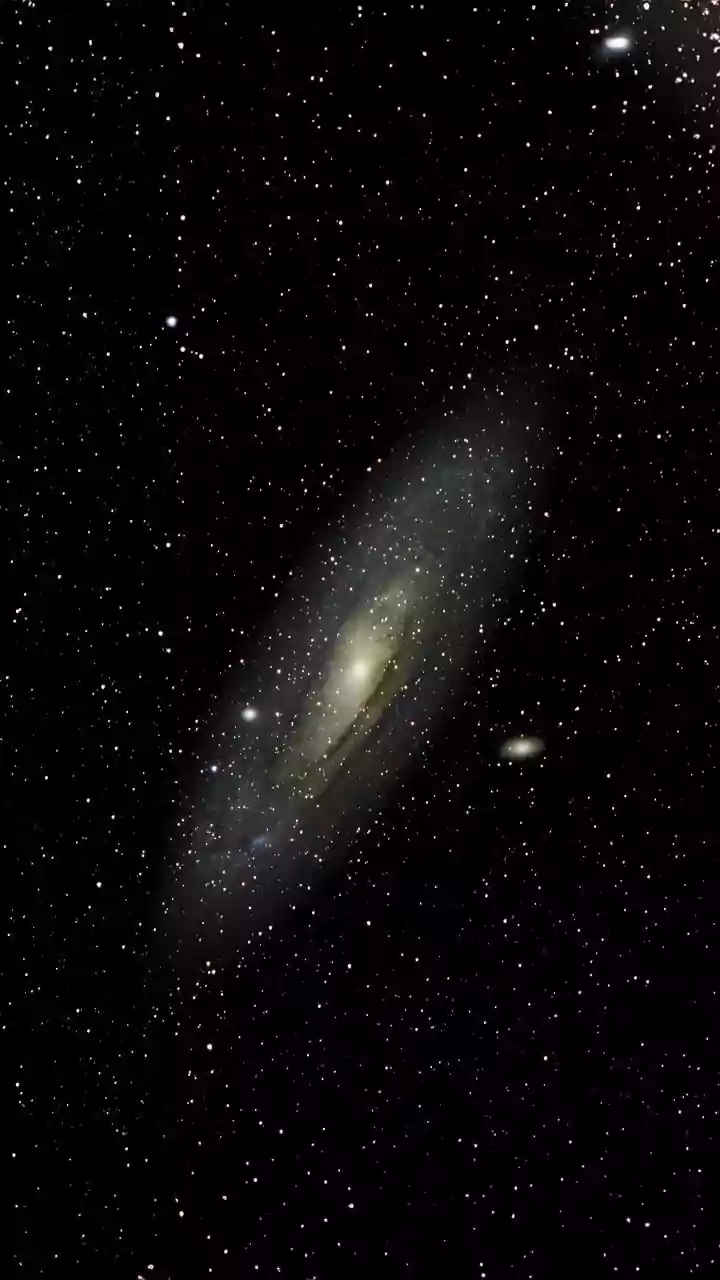
At 2.5 million light-years away, the Andromeda Galaxy (M31) is the most distant object you can see with your unaided eye, and it becomes a fantastic target in binoculars. Finding it requires a bit of 'star-hopping'. First, locate the W-shaped constellation of Cassiopeia, which will be high in the sky on autumn evenings. The right-hand 'V' of the 'W' acts like an arrow, pointing roughly in the direction of Andromeda. Alternatively, find the Great Square of Pegasus and star-hop from there. Through binoculars, don't expect a brilliant spiral like in photographs. You are looking for a faint, fuzzy, oval-shaped smudge of light. It may seem underwhelming at first, but take a moment to consider what you're seeing: the combined glow of a trillion stars, with light that has travelled for 2.5 million years to reach your eyes. It is a humbling and unforgettable sight.
More Autumn Sky Treasures
Once you've found Jupiter and Andromeda, your binocular tour of the autumn sky is just beginning. Another breathtaking sight is the Pleiades star cluster (M45), also known as the Seven Sisters. To the naked eye, it looks like a tiny, misty dipper. But through binoculars, it explodes into a brilliant cluster of dozens of glittering blue-white stars. It’s one of the most rewarding binocular targets in the entire sky. Another great object is the Double Cluster in the constellation Perseus. Here, your binoculars will reveal two separate, dense knots of stars located close to each other, a stunning sight in a single field of view. Both of these deep-sky objects are easy to find and highlight the power of basic binoculars to reveal the sky's hidden gems.
Tips for a Great Night Out
To make your stargazing session successful and comfortable, a few simple preparations go a long way. First, give your eyes time to adjust to the darkness. It takes about 30-40 minutes for your pupils to fully dilate and achieve true 'night vision'. Avoid looking at your bright phone screen during this time. If you need a light, use a red flashlight, as red light has a minimal effect on your dark adaptation. As the nights get cooler, be sure to dress in warm layers. Even a mild evening can feel cold when you’re standing still for a long time. Finally, bring a comfortable chair. Stargazing should be a relaxing experience, not a strain on your neck. A reclining lawn chair can make all the difference, allowing you to scan the heavens in comfort.