



More Than Just Rocket Science
When we picture space exploration, we think of powerful rockets, daring astronauts, and breathtaking views. We rarely consider the more mundane challenges. Yet, for those planning humanity's return to the Moon and first steps on Mars, one of the biggest
headaches is dust. This isn't the sort of dust that collects on a bookshelf; extraterrestrial regolith, as it's known, is a significant hazard. The very success of long-duration missions could depend on how well crews can clean it off their suits and equipment before re-entering their habitat. This seemingly simple task is proving to be a complex engineering problem, one that could add hours to an astronaut's daily routine.
A Microscopic Menace
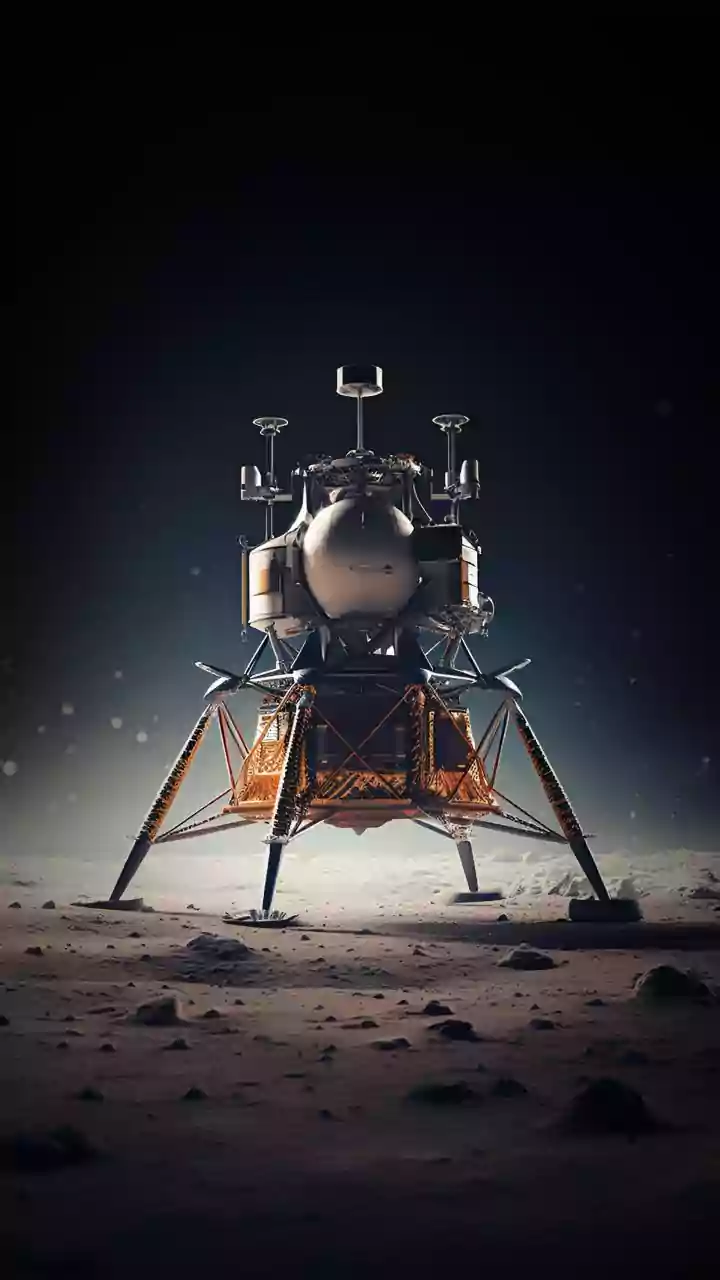
On Earth, dust particles are weathered by wind and water, making them relatively smooth and round. On the Moon, which lacks an atmosphere, no such erosion occurs. Lunar dust is composed of tiny, jagged shards of glass and rock, created by billions of years of micrometeoroid impacts. These particles are not only highly abrasive but also electrostatically charged, causing them to cling to everything. During the Apollo missions, this dust proved to be a major nuisance. It wore through layers of spacesuit boots, clogged mechanisms, scratched helmet visors, and caused equipment to overheat. More alarmingly, all 12 astronauts who walked on the Moon experienced respiratory irritation, a condition nicknamed "lunar hay fever," when the fine powder was inevitably tracked back into the lunar module. The long-term health risks of inhaling this sharp, silicate-rich dust are still unknown but are a serious concern for future missions.
Lessons from the Apollo Era
The Apollo program provided the first, and so far only, real-world data on the problems of lunar dust. Astronauts reported that it got everywhere, coating surfaces with a gritty film that was nearly impossible to remove with brushes. Apollo 17 commander Gene Cernan called the dust "one of the most aggravating, restricting facets of lunar surface exploration." He and other astronauts noted how the dust interfered with seals on equipment and suits, with some joints becoming progressively harder to move after just a few days on the surface. The dust even had a distinct smell, which astronauts frequently compared to spent gunpowder. This was likely a chemical reaction occurring when the long-dormant particles were exposed to oxygen inside the lander. These experiences underscored a critical lesson: for stays longer than a few days, a simple brush-off won't be enough.
The Decontamination Gauntlet
To prevent the contamination seen during Apollo, future habitats will require a much more rigorous cleaning process. The headline's prediction of crews spending "significant time" cleaning is rooted in concepts for multi-stage decontamination. Instead of stepping directly from the surface into the living area, astronauts will likely pass through a series of specialized airlocks. This process could involve robotic brushing, gas jets to blow off particles, and even specialized vacuum systems. The goal would be to remove the vast majority of dust from the exterior of a spacesuit before the astronaut even enters the habitat's pressurized environment. This could be a time-consuming, multi-step procedure at the end of every excursion, adding a significant chunk of time to an already demanding workday on another world. This is in addition to concerns about personal and clothing hygiene, for which NASA is also developing waterless laundry solutions and antimicrobial fabrics.
Designing a Cleaner Future
Recognizing dust as a top priority, space agencies are developing innovative solutions. One of the most promising is the Electrodynamic Dust Shield (EDS). This technology involves embedding a transparent, wire-laced grid into surfaces like solar panels, visors, and even suit fabrics. When an electric current is applied, it creates a field that repels or lifts dust particles, effectively cleaning the surface in seconds. An EDS system was successfully tested on the Moon in early 2025, proving its effectiveness. Other concepts include developing new suit materials that are less prone to dust adhesion, specialized coatings for equipment, and even systems that would spray a polymer resin on the ground around landing pads to lock the dust in place. These technologies are crucial for enabling a sustainable human presence on the Moon and beyond.