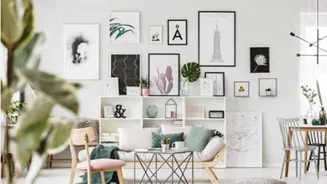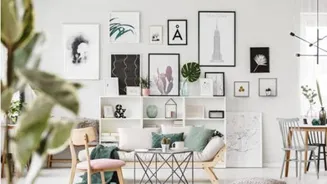




Establish a Unifying Element
The secret to a successful mixed-frame gallery wall is cohesion, not conformity. Before you hang anything, identify a common thread that will tie the different styles together. This doesn't mean everything has to match. Instead, choose one or two consistent
elements. A limited colour palette is often the easiest starting point. You might decide to use a mix of black, wood, and gold frames, repeating these finishes throughout the display. This repetition makes the collection feel intentional. Alternatively, the unifying element could be the artwork itself—perhaps all the pieces are black-and-white photos, botanical prints, or have a similar mood. Consistent matting, such as using a white or cream mat for all pieces, can also create a sense of harmony and give the art breathing room.
Find Your Anchor and Build Outward
Every gallery wall needs a focal point to prevent it from looking like a random assortment of pictures. Start with an 'anchor' piece. This is typically your largest or most visually striking piece of art. It could be a large oil painting in an ornate frame or a significant modern print. Place this anchor slightly off-center at eye level (around 57-60 inches from the floor) and arrange the other frames around it. This creates a visual center of gravity and makes the layout process much more manageable. You can then add your medium and smaller pieces, filling in the gaps organically.
Master the Art of Balance
When mixing ornate and simple frames, balance is crucial to avoid overwhelming the wall. A good rule of thumb is to use ornate frames as accents rather than the dominant style, especially if they are particularly detailed. For instance, if you have ten frames, perhaps two or three are ornate, and the rest are simple. This creates moments of visual interest without creating clutter. Think about distributing the 'visual weight' evenly. For example, if you have a heavy, gilded frame on the top left, balance it with another visually interesting element on the bottom right. This could be another detailed frame or a cluster of smaller, simpler frames.
Pay Attention to Spacing
Consistent spacing is the invisible glue that holds a gallery wall together. Even in an eclectic, salon-style arrangement, maintaining a relatively uniform distance between frames makes the entire composition feel polished and deliberate. Aim for a gap of about 2 to 4 inches between each frame. Uneven gaps can make the wall feel disconnected and messy, drawing attention to the spaces instead of the art. If you're creating a more organic, free-flowing arrangement, the spacing can vary slightly, but try to keep it within a consistent range to maintain a sense of rhythm.
Plan Your Layout on the Floor First
Before you pick up a hammer, lay out your entire arrangement on the floor. This is the single most effective way to prevent unnecessary holes in your wall and ensure you love the final composition. Trace each frame onto craft paper, cut out the templates, and tape them to the wall. This allows you to live with the layout for a day or two, making adjustments until it feels just right. This step lets you experiment with different combinations, check your spacing, and see how the balance of ornate and simple frames works in your actual space before making any permanent decisions.